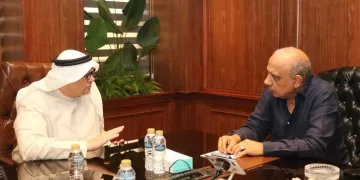








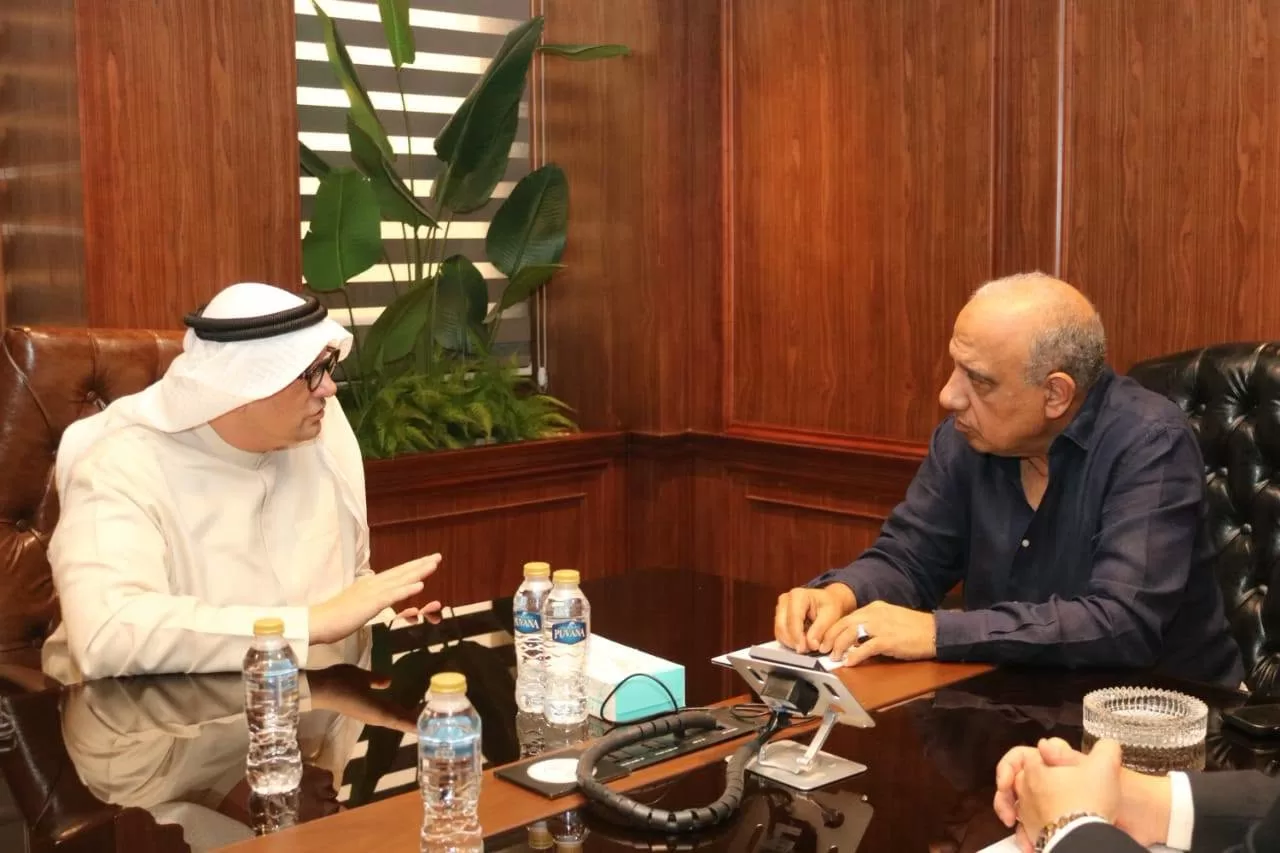
Minister of Electricity and Renewable Energy Mahmoud Esmat met on Saturday with a delegation from UAE-based Abu Dhabi Future Energy Company (Masdar), led by CEO Mohamed Jameel Al Ramahi. The tweo sides discussed ways to strengthen co-operation and expand the partnership in electricity and renewable energy.
The meeting came as part of Egypt’s energy transition plans, the National Energy Strategy and the Ministry of Electricity and Renewable Energy’s work programme, which focuses on diversifying electricity sources, expanding renewable energy projects and reducing reliance on fossil fuels.
The talks reviewed the latest developments in Masdar’s projects to generate electricity from solar and wind power, as well as battery energy storage systems and other projects covered by existing co-operation agreements.
The two sides discussed ways to accelerate project implementation and connect the new facilities to the national grid. Esmat stressed the importance of completing the projects and bringing them into operation in line with Egypt’s plan to add new generation capacity and increase reliance on renewable energy to secure electricity supplies in the coming period.
The meeting also addressed efforts to increase the share of solar and wind power in Egypt’s energy mix.
Esmat reviewed progress on the 200-MW wind power plant in the Gulf of Suez, which is scheduled to be connected to the national electricity grid in December next year.
The meeting also covered projects being developed by the Infinity-Hassan Allam consortium, including a 1,000-MW wind power project in Ras Ghareb, a 1,000-MW solar power project in Minya, and 600 MWh of battery energy storage capacity.
The consortium is also developing a 200-MW solar power project in Benban, supported by 120 MWh of battery storage capacity, which is scheduled to be connected to the national grid by the end of this year.
Esmat said meetings with companies active in renewable energy were part of the government’s energy transition plans and the ministry’s programme to expand the use of clean and sustainable energy as a key driver of comprehensive development.
He stressed that work was continuing to add renewable generation capacity alongside both grid-connected and standalone energy storage systems, in line with the government’s drive to reduce fossil fuel consumption and increase reliance on renewable energy to secure electricity supplies for all sectors and maintain the stability of the national grid.
Esmat highlighted Egypt’s National Energy Strategy, which targets raising the share of renewable energy in the country’s energy mix to 45 per cent by 2028 through co-operation and partnerships with local and international private-sector companies.
He also stressed the importance of expanding private-sector participation in renewable energy and praised co-operation with Masdar, a leading company in the renewable energy sector.

