











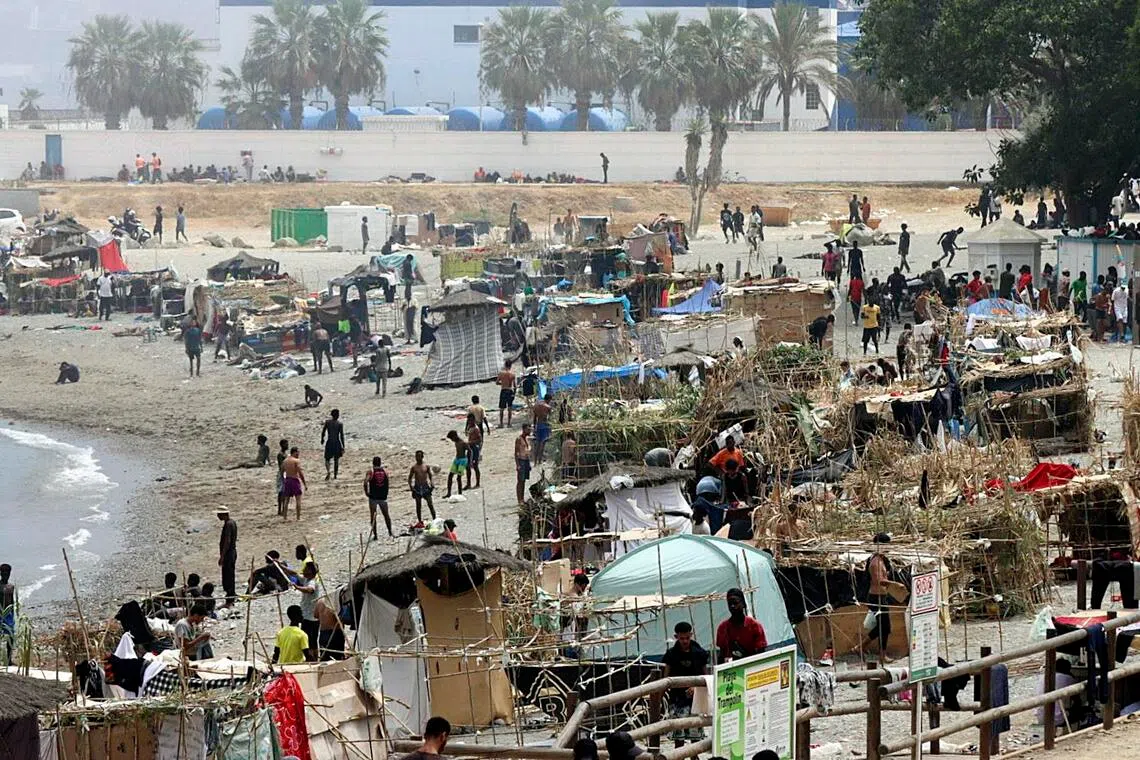
In the weeks before a rush of more than 70,000 migrants into the Spanish enclave of Ceuta, border workers warned Spain’s central government that more people, spurred on by social media, were arriving by sea, adding they feared an escalation.
Spain’s government did not heed their warnings and took little action, they told Reuters.
A Spanish court ruling, published on June 29, stated migrants could only be immediately pushed back from entering Ceuta if they crossed a physical barrier, specifying that anyone swimming to the enclave did not.
News of this ruling and videos of migrants successfully entering Ceuta encouraged more and more to try their luck.
Spain’s government blamed the deadly rush of July 29-30 on misinformation about the ruling spread by criminal networks.
However, public and private warnings issued by trade unions representing border workers, seen by Reuters, highlight that Spanish authorities were warned weeks earlier that arrivals to the enclave in North Africa could escalate and urged to act fast.
Spanish authorities say 80 people died in the rush and Moroccan authorities said 14 bodies were recovered in their territory, putting the number of confirmed deaths at 94. Human rights groups say more remain missing and the number could be higher.
Rachid Sbihi, spokesperson for Spain’s Civil Guard police trade union AUGC in Ceuta, said no one could have imagined the scale of what eventually took place on July 30.
“[But] we understood the ruling would trigger more arrivals. The ruling, the criminal gangs, and social media networks were an explosive cocktail,” he told Reuters.
Asked about comments that Spain did not act in time, a Spanish Interior Ministry spokesperson said authorities had studied various options after the court ruling before installing a floating barrier on the ocean on August 1.
“This prior assessment and analysis work allowed the floating barrier to be put in place just 48 hours after the decision to install it was made, following the massive arrival on July 30,” they said in a written statement to Reuters.
Reuters reviewed six instances of written statements and letters to the national government representative in Ceuta and the enclave’s police chief from Spanish border unions calling for guidance and action from government after the court ruling.

