



Egypt has opened a museum tracing how a single river helped build and sustain one of the world’s earliest civilisations.
The Irrigation Museum, inaugurated last week in the New Capital, showcases maps, instruments, engineering records and royal relics that officials say document one of the world’s oldest water-management traditions.
It brings together restored 19th- and 20th-century documents, water-measuring instruments and models of dams and barrages, alongside artefacts linking the pharaonic past to the country’s modern hydraulic infrastructure.
Officials at the opening said the museum was intended to preserve and explain Egypt’s rich and long heritage in water management, which they described as central to the country’s economic development across the ages.
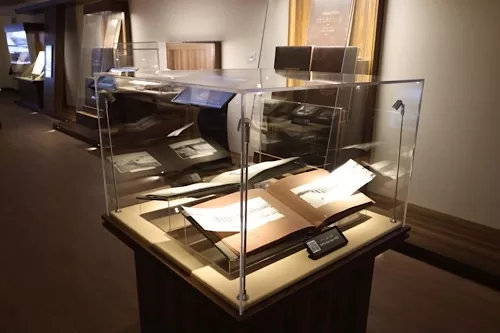
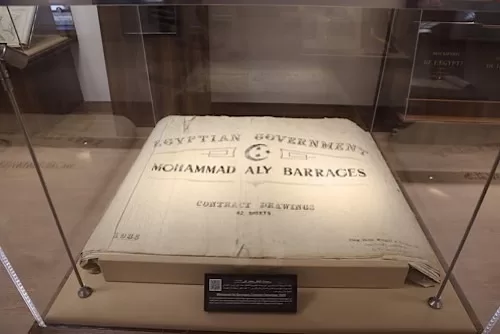
The collection includes restored books, maps, engineering reports and photographs, as well as instruments once used to measure water levels in the Nile and its canals.
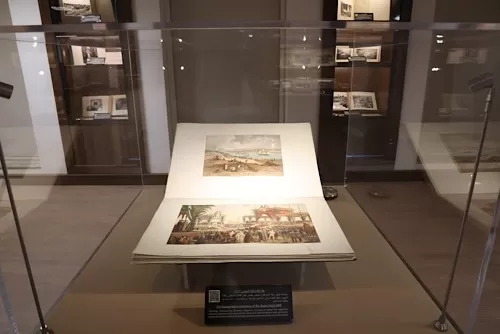
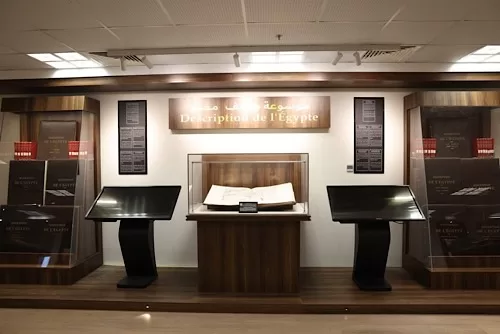
Among the rarer volumes are the Description of Egypt, the monumental study produced during Napoleon Bonaparte’s expedition at the end of the 18th century; an album commemorating the opening of the Suez Canal in 1869; and a 1928 atlas of Egypt’s maps.
Egyptologist Magdy Shaker said Egyptian civilisation emerged when communities settled and began farming along the Nile Valley, creating what he called one of history’s most advanced societies, sustained by agriculture, industry, art and architecture.
“The ancient Egyptians viewed the river as a father and the land as a mother, and believed the Nile’s continued flow was tied to the survival of their state,” he told The Gazette.
“Funerary texts even listed refraining from polluting the river, or blocking a neighbour’s access to it, among the virtues required to enter the afterlife,” Shaker said.
The Greek historian Herodotus even said that Egypt is the gift of the Nile, a phrase he may have heard from one of Egypt’s priests.
Kingship itself was closely tied to the river. Early rulers such as Menes were depicted wielding a hoe to dig canals, while the Palermo Stone, a king list dating to the Fifth Dynasty, recorded annual flood levels beside the names of monarchs.
The museum traces an engineering tradition that stretches back thousands of years. Ancient farmers relied on basin irrigation, opening and closing earthen channels to trap floodwater on fields. The method survived in parts of Egypt until the construction of the Aswan Dam in the 20th century.
Farmers also built the Bahr Yusef canal to carry Nile water to land far from the riverbanks, and raised water with the shaduf, a hand-operated lifting device, followed later by ox-driven waterwheels known as saqias.
Egypt’s dam-building tradition is also ancient. Near Helwan, south of Cairo, the remains of a stone structure built around 2650 BC, sometimes known locally as the Dam of the Infidels, are regarded by researchers as among the world’s earliest large-scale water dams.
Centuries later, Middle Kingdom rulers Senusret III and Amenemhat III diverted floodwater into Lake Moeris in the Fayoum, reclaiming about 25,000 feddans of land. The Lahun Dam, built to regulate the lake, remains in operation today.
The museum places that engineering lineage, from Nilometers and flood calendars to the modern High Dam, within a single account of how the Nile shaped Egypt’s statehood for more than 5,000 years.
It is divided into seven sections. One features manuscripts, encyclopaedias and atlases illustrating state planning and water management. Another contains albums documenting major milestones in the country’s irrigation history.
A dedicated instruments hall displays compasses, clocks, voltmeters, theodolites and current meters. A technical heritage section contains office equipment once used by irrigation engineers, including a calculator and slide projector.
Another room houses royal furniture from the Mohamed Ali dynasty, taken from a rest house in Aswan, alongside scale models, including one of the Zefta Barrage, a historic water-control structure on Egypt’s Damietta branch of the Nile. Built in 1901–1902, it regulates water levels and supplies major regional irrigation canals.
A panorama dedicated to the Aswan High Dam completes the exhibition.