









Elisa Bracamonte has lived in Arizona her whole life, so she’s used to adjusting her schedule and outdoor activities around high temperatures, especially during the summer months.
But the 74-year-old retired nurse from Tucson said she feels the heat has been impacting more of her day-to-day: summer plans with family members across the region, meetups with friends, road trips and her daily morning walk routine.
“I’ve noticed at least a 10 degree difference in the weather,” Bracamonte said. “Every summer, it seems to be getting hotter and hotter.”
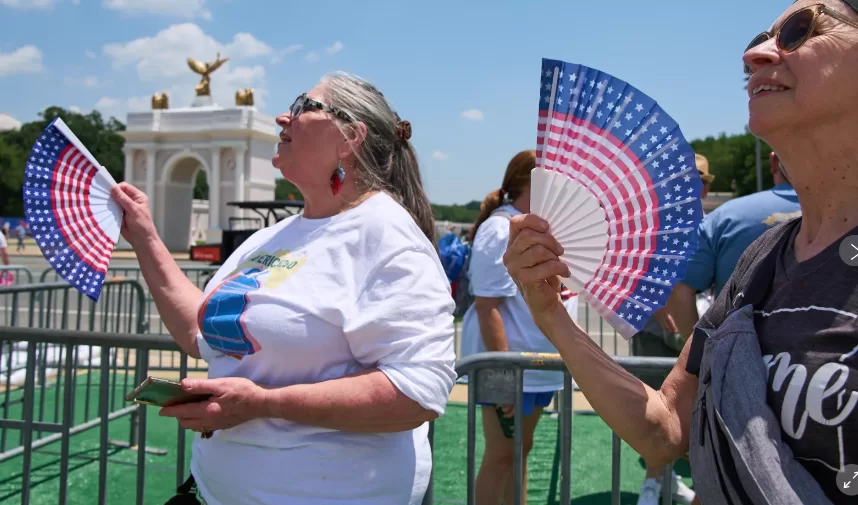
With record-breaking temperatures this summer, most adults are experiencing impacts from the extreme heat, including higher electricity bills and disruptions to summer activities and routines.
Four in 10 adults say extreme heat has had a major impact on their electricity bills over the last year, and another 30% say it has had a minor impact. A majority also note that outdoor activities have been affected.
About 40% say extreme heat has impacted their sleep, exercise routine, and their pets.
Yet, the intense heat is having a disproportionate impact on some groups. For example, Hispanic (51%) and Black (44%) adults are more likely to say that extreme heat has had a major or minor impact on their sleep than white adults (33%).
Nearly half of adults in households making less than $30,000 per year report impacts to their sleep compared to a third of higher income adults.
Democrats are more likely to report impacts from extreme heat than Republicans.
The vast majority of the public reports an impact of extreme weather or weather-related events. Over 80% experienced some sort of severe weather event within the last five years.
Extreme heat is most common, affecting 71%, followed by severe cold weather at 34%. These figures are similar to ones from September and April of 2023.
Among the people affected by weather events or natural disasters, 69% say those events occurred, at least in part, because of climate change.
Twenty-two percent of adults have cancelled or changed travel plans because of severe weather events.
About 40% had unexpected expenses on their utility bills due to storms, flooding, heat, or wildfires, while a quarter say their homeowner’s insurance premiums increased.
About 1 in 10 adults report unexpected health care expenses because of weather-related issues.
Seventy percent of adults think climate change is happening. Among the rest, 13% say it’s not happening and 18% aren’t sure. Forty-nine percent have become more concerned about climate change in the past year, while 42% say their levels of concern remain unchanged.
A similar share of the public felt the same when last asked in April of 2024 and September of 2023.
Sixty-one percent of adults attribute human activity as a cause of climate change, including 41% who believe climate change is happening and primarily driven by human activity.
Most Democrats believe that climate change is occurring and that human activities play a sizeable role. Republicans and independents are less convinced.
Most adults who have experienced a weather event or natural disaster believe climate change is happening and attributable, in full or in part, to human activity.
Even when considering the impact of partisanship and other demographics, people impacted by severe weather events are more likely to believe climate change is caused mostly by human activities.
About two-thirds of adults feel that climate change is having a negative impact on the country and world, and 40% are experiencing a negative impact personally. Democrats are more likely than independents or Republicans to feel climate change is negatively impacting the world, the country, or their own lives.

