




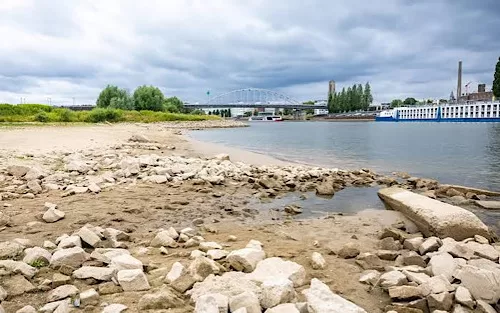
The Rhine has dropped to its lowest recorded level at the point where it flows into the Netherlands and is due to drop further due to drought, officials said Thursday.
Human-caused climate change has intensified a drought across Europe — with extreme heat, rather than low rainfall, driving the exceptionally dry conditions, a team of international scientists said last week.
“The drought in the Netherlands continues to worsen,” the Dutch infrastructure and water management ministry said Thursday.
“At the Lobith (east) measuring station, the Rhine has never been this low,” it added.
“And due to the lack of rain abroad, the Meuse is bringing little fresh water into the country.”
Rijkswaterstaat — the national water management agency, which is part of the ministry — said it expected the Rhine’s water level to fall further over the coming days.
The river is the second longest in western and central Europe after the Danube and one of the world’s most important commercial transport arteries.
It rises in the Swiss Alps and flows through four other countries before reaching the Netherlands and emptying into the North Sea, 1,230 kilometres (765 miles) to the northeast.
Nine European countries depend on it for drinking water, freshwater, hydropower or shipping.
The Netherlands has suffered from an officially recognized water shortage since July 16, the ministry said.
Restrictions on water use have been imposed across most of the country, particularly affecting agricultural use.
Vessels are obliged to wait longer at certain locks because their use has been restricted to prevent river water flowing directly into the sea.
Countries across Europe are facing a major drought, with parched rivers, water restrictions and devastating wildfires after a historic heatwave in June.
Today’s hotter climate has accelerated moisture loss from Europe’s soils, lakes and rivers, increasing the likelihood of bone-dry conditions, according to a study published on July 23 by the World Weather Attribution group of scientists.

