



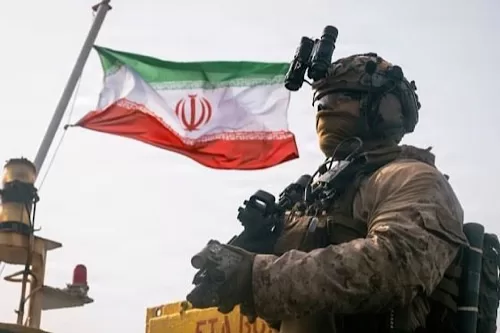
Iran’s army warned on Sunday that the Middle East war would widen if the United States chose to press ahead with attacks on the Islamic republic, ahead of the visit of Israeli Prime Minister Benjamin Netanyahu to Washington.
“I believe that if the Americans once again fall for the Zionists’ deception, or move in line with them, and insist on continuing the war, particularly through air strikes, geographically this will expand further,” army spokesman Mohammad Akraminia told state television.
He said the war had already expanded to the Bab Al-Mandab Strait at the entrance of the Red Sea, referencing the recent military flare-up between Yemen’s Houthi rebels and Saudi Arabia.
“The scope of our operations now encompasses the entire region, from US bases in Jordan to the countries along the Arabian Gulf,” he said.
Akraminia said the situation in the Middle East for the United States is “difficult and unsettled,” predicting that Washington was now looking “for a new strategy.”
“We are prepared for each of the options and scenarios that appear likely,” he added.
On Friday, Israel said Netanyahu will meet US President Donald Trump at the White House on Tuesday.
Iran said on Sunday it had made progress in talks with Oman on management of the Strait of Hormuz, the strategic waterway crucial for oil and gas trade that both countries border.
The latest talks come after the United States resumed attacks on Iran in an effort to end Tehran’s control of the strait, following a June memorandum of understanding aimed at ending the war that had briefly eased tensions.
Foreign ministry spokesman Esmaeil Baqaei said several rounds of negotiations were held in Iranian capital Tehran on Friday and Saturday between Iranian and Omani deputy foreign ministers.
The discussions focused on “common principles and operational mechanisms” for ensuring the safe passage of shipping through the strait while respecting the sovereign rights of the two states, Baqaei said.
He described the talks as “useful” and said progress had been made, adding that “technical and political consultations between the two sides were continuing.”

