







Temperatures reached more than 44C (111F) in south-west France this week and 40C (104F) in Paris.
Across Europe, the average high temperature has hit the late 30s, almost 20 degrees above average for June.
The current heatwave has been unusual in that temperatures have soared in northerly areas. Yet the expectation among meteorologists is that regular patterns will resume as the summer unfolds, meaning scorching conditions in southern Europe in line with recent years, but cooler in the north. Indeed, these soaring temperatures are changing the way we travel, with Booking.com saying 54 per cent of holidaymakers are ruling out destinations deemed too hot – with a further quarter actively seeking ‘cooler’ trips.
So maybe it’s time for you to try what we might call a ‘coolcation’.
Here are some top tips for enjoying some warmth, without overheating, in July and August.
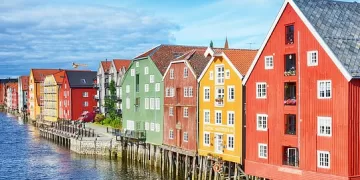
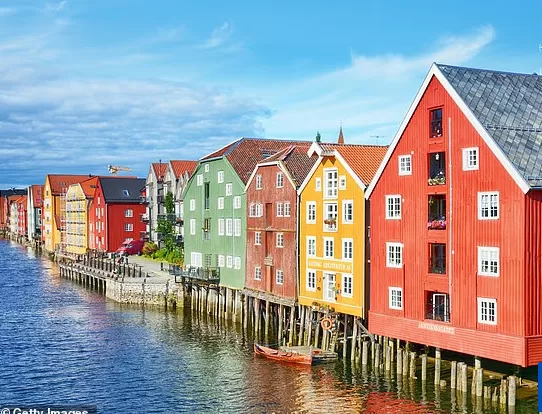
Fly to Bergen on the west coast of Norway and – after exploring the colourful fishing port during a two-night stay – set off on a 400-mile road trip northwards to Trondheim, the Viking capital in the early Middle Ages.
This ten-day fly-drive, offered by Scandinavian specialist Regent Holidays, is a brilliant way of seeing some of Norway’s most charming towns including Alesund (home to many elegant Art Nouveau buildings), Bryggan and Kristiansund.
The road twists along rugged coastline, with spectacular bridges linking islets. Expect miles of woodland, remote beaches and spectacular fjords.
Temperatures can drop to 12C (54F) at night in Denmark during the summer though highs regularly touch the early 20Cs. A great way to see the country is on a fly-drive from Copenhagen, Denmark’s vibrant capital.
Stay in the city centre close to Tivoli Gardens, one of the world’s oldest amusement parks (complete with a wooden rollercoaster from 1914), and check out the unusual anarchic community of Christiania, plus the National Museum of Denmark, housing many Viking artefacts.
Explore the countryside and visit one of Denmark’s many beaches – there are more than 4,600 miles of coastline. Also drop by LEGOLAND and visit Hans Christian Andersen’s former home, now a museum, in the pretty city of Odense.
You could spend an entire week in Tallinn, Estonia’s elegant capital, with its interesting churches, medieval winding lanes, museums, galleries, flea markets and food markets. A must-visit is Iglupark, a sauna complex by the Baltic Sea, where the idea is you heat up in a sauna then cool down in the chilly sea (£210 for two hours, iglupark.com). Outside of Tallinn, explore Lahemaa National Park, with its peat bogs, lakes and vast forests (home to brown bears), or go kayaking in Soomaa (the ‘land of swamps’). There are endless islands to visit, with quiet rural communities; the most popular being Saaremaa, while others worth seeking out by ferry include Ruhnu, Aegna, Naissaar, Vormsi and Kihnu.
Galicia is the far north-western region of Spain with a much milder climate than the south – temperatures often ten degrees cooler in the summer. The region is home to Santiago de Compostela, the pilgrimage site, where the cathedral is famous for its shrine to St James. Many pilgrims hike hundreds of miles along the Camino de Santiago trails to pay their respects.
There’s also nearby A Coruna to visit, where attractions include a 1st-century AD Roman lighthouse, nicknamed the Tower Of Hercules, and its many striking glass-fronted buildings.
The beach of Praia de Rodas on Cies Islands National Park is a gorgeous sweep of white sand beside rocky cliffs and deemed one of Europe’s most beautiful; it’s a 40-minute ferry to reach it.
OK, France has been in the midst of a horrific heatwave this week but it’s usually a good bet for pleasant temperatures in its northern regions in the summer.
Explore the rugged coastline of Brittany and enjoy its many fine sandy beaches, while taking time to visit the striking island of Mont-Saint-Michel and the charming village of Pont-Aven, where Paul Gauguin (1848-1903) led its school of art from 1886.
The port of St Malo’s characterful old town with its fortifications and winding lanes is another draw, as are Nantes and Rennes, with art galleries, chateaux and laid-back markets.

