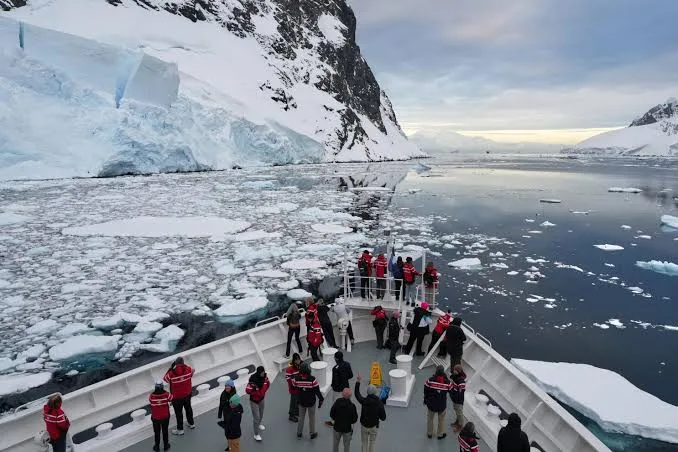











When a deadly hantavirus outbreak struck passengers on the MV Hondius earlier this year, it drew the world’s attention to a kind of travel most people know only from photographs.
The ship had been on a polar voyage lasting several weeks. As countries worked out how to receive and treat its passengers, the story became about more than one ship. It showed how complicated an emergency can become when a holiday takes people far from a major hospital.
Few voyages will face anything like it. But interest in Antarctica is growing, and travellers considering the trip can learn something practical from the story. Before choosing a cabin, they should ask what help is available on their route, what their ship requires and what their insurance policy says.
Help may be days away
In its travel advice for Antarctica, the British government warns that search and rescue teams called to ships may be far away. They could take several days to arrive, particularly in bad weather. They can offer only basic transport and medical care, and are unlikely to be able to provide advanced life support.
There is no single route out. On the Antarctic Peninsula, one documented option is for the ship to take a patient to King George Island, where a medical flight can leave for Punta Arenas in Chile. In other cases, the ship may head for a port such as Ushuaia in Argentina or Stanley in the Falkland Islands. The choice depends on the patient, the ship’s position, the weather and the transport available.
This is where insurance is easily misunderstood. A policy may list a large sum for medical evacuation, but that figure isn’t a promise that an aircraft can reach the ship.
“An evacuation benefit lists a financial limit. The route depends on the patient’s needs and the transport the expedition team can arrange safely.”
Al, Expedition Insure
Medical evacuation and search and rescue aren’t the same thing either. Evacuation moves a patient to suitable care, while search and rescue finds or recovers someone in distress. One incident could involve both, so travellers should look for each of them separately in the policy.
Every ship sets its own rules
Many polar operators won’t accept passengers without insurance. Expedition Insure, which specialises in insurance for polar and safari travel, tracks what Antarctic operators publish. Of the 36 in its current count, 28 say cover is mandatory for every passenger.
The amounts vary widely. Published minimums run from $100,000 to $500,000, and $200,000 is the most common figure. Some of these figures come from an insurance plan the operator promotes rather than a requirement, so travellers should check which one applies. The company’s table of Antarctic insurance minimums lists its sources and any conditions.
Even one company’s rules can change with the destination. Oceanwide Expeditions, the Dutch company that operates the MV Hondius, asks for at least 50,000 euros or US dollars per person for evacuation and repatriation in the Arctic. In Antarctica and the sub-Antarctic islands, the minimum is 100,000. In the Ross Sea, it is 300,000.
A policy that was enough for one voyage may not be enough for the next. Travellers should ask for the rules for their own ship, route and departure date, and get them in writing.
The fine print may not say “Antarctica”
The right amount of cover is no use if a policy leaves out the destination. An exclusion might refer to polar regions or set a boundary at a particular latitude, without ever naming Antarctica. Searching the document for one word could miss it.
Activities need checking too. A ride to shore in a small inflatable boat may feel like an ordinary part of the day, but a policy may deal with it under boating or transfers. Hiking, kayaking, skiing and diving can all raise questions of their own.
Reading all this can feel like a job for a lawyer. Al, the founder of Expedition Insure, says it shouldn’t.
“You shouldn’t need to be an expert in law and legalese to buy a policy suited to your trip.”
Al, Expedition Insure
His company starts with the itinerary, the planned activities and the operator’s rules, then compares them with the wording of the policy. It calls a policy “expedition-grade” when its wording and limits stand up to those questions. The term is the company’s own, not an official insurance category. No single policy suits everyone, and the plans available depend on where a traveller lives.
The journey starts before the ship sails
For many travellers, a polar voyage begins with several flights, and a delay on the way can be as disruptive as a problem at sea.
Oceanwide advises passengers on its Antarctic trips to reach Ushuaia a day before departure. It says the ship won’t wait for a few delayed passengers, only for large groups. Its Arctic advice is different. Most passengers arrive on the same flight on the day they board, and the ship will wait if that flight is delayed.
Travellers flying from Cairo, or anywhere else, should ask when they need to arrive and whether they could join the ship later if they miss it. Then they should read the policy’s sections on missed connections, delays and trip interruption. The names sound alike, but the causes, waiting periods and limits can be very different.
Why timing matters
It’s tempting to leave insurance until the trip feels close. But some policies set a deadline for certain terms, including those on pre-existing medical conditions, so the choices can narrow with time. Cancellation cover also deserves attention as soon as travellers start paying for the trip.
“Finding a question weeks before departure can leave you with fewer options than you had when you booked.”
Al, Expedition Insure
Five questions to ask before booking
- What medical care is on board? Ask where the ship could go in an emergency, and how a patient would be taken ashore.
- What insurance does this voyage require? Get the amounts, currency and deadline for sending proof in writing.
- Does the policy include the whole route and every planned activity? Read the exclusions as well as the summary, and use the version for where you live.
- Who must approve and arrange an evacuation? Find out where it could take you, and keep the emergency number where you can find it offline.
- What happens if I miss the ship? Compare the operator’s answer with the policy’s sections on delays and missed connections.
Travellers who already have insurance can compare it with the operator’s rules now. Those still choosing can request a quote from Expedition Insure with their route and plans.
No policy can make the Antarctic less remote. But asking these questions before booking gives travellers time to act on the answers.