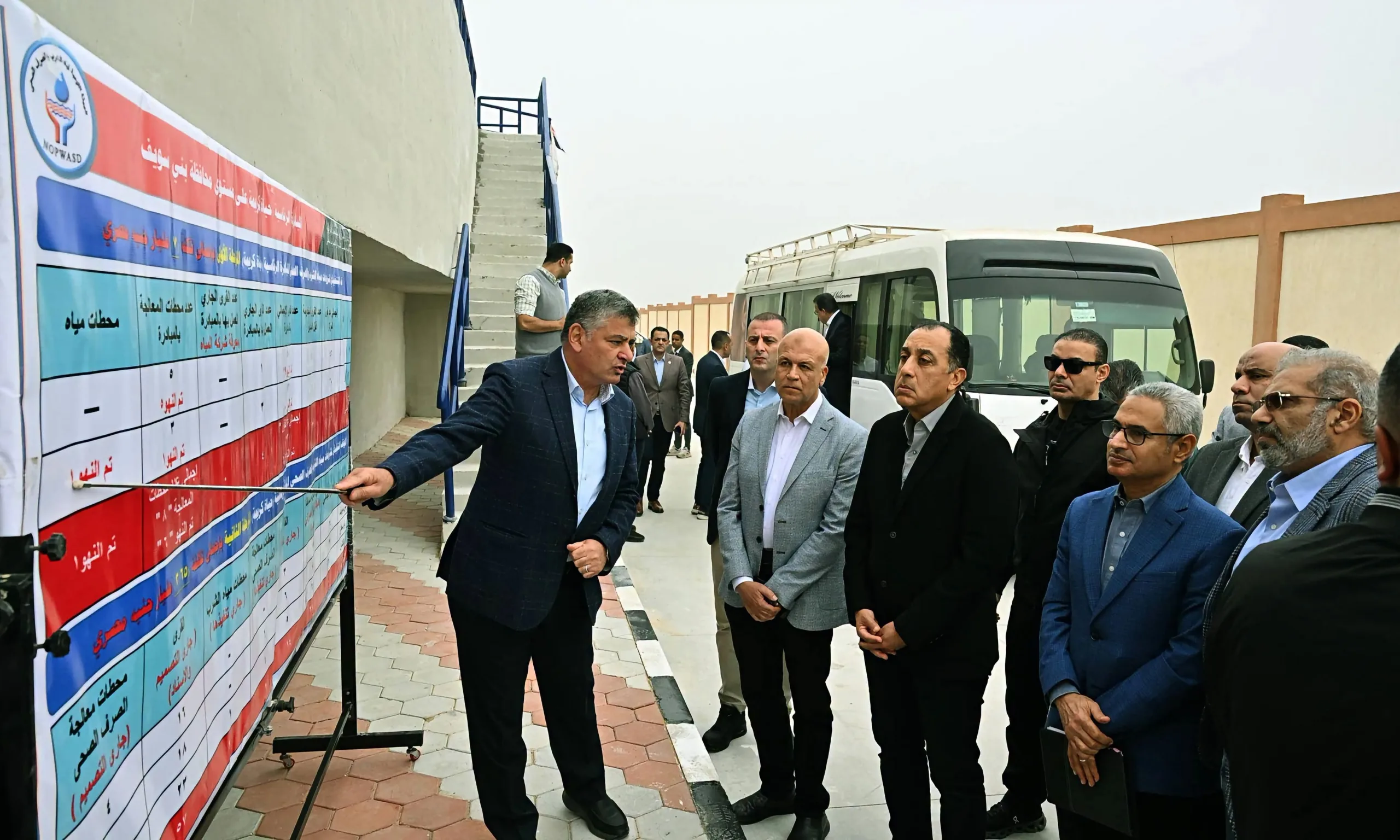





Egypt’s Prime Minister Mostafa Madbouly on Saturday inspected the “Decent Life” projects in Beni Suef governorate.
During the visit, Madbouly stressed the importance of prioritising drinking water and sanitation projects, particularly those implemented under the Decent Life Initiative, given their direct impact on citizens’ daily lives, public health and living standards.
He also emphasised the need to adhere to technical specifications, maintain quality standards and ensure projects are completed on schedule.
Amin Shawky, chairman of the National Organisation for Potable Water and Sanitary Drainage, said investments allocated to the first and second phases of the initiative in the governorate exceed LE10.65 billion.
The first phase, with investments of LE7 billion in the districts of Biba and Nasser, has completed sewage network connections in 49 of 53 villages, with work continuing in the remaining four villages.
Six of the eight planned wastewater treatment plants have been completed, alongside a drinking water plant in Nasser.
The second phase covers Beni Suef, Al-Wasta and Al-Fashn districts, with investments of LE3.65 billion.
It targets 72 villages out of a total of 100, as 28 villages are already served by existing sanitation networks.
Construction is currently underway in 14 villages, including two wastewater treatment plants and a drinking water plant.
Meanwhile, projects in 57 villages, along with eight treatment plants, are in the design and contracting stages.
Madbouly also inspected the facility’s reception and pumping units, primary and biological treatment systems, sedimentation tanks, sludge-drying beds, basins and control systems.
Shawky said the plant covers 35 feddans, has a treatment capacity of 80,000 cubic metres per day, and is approaching completion.
The facility will serve Nasser city and surrounding villages, treating wastewater in accordance with environmental standards before it is discharged or reused.
The project is expected to improve sanitation services, prevent the discharge of untreated wastewater, protect public health, preserve soil and groundwater resources, safeguard drainage networks, and support urban expansion while enhancing residents’ quality of life.