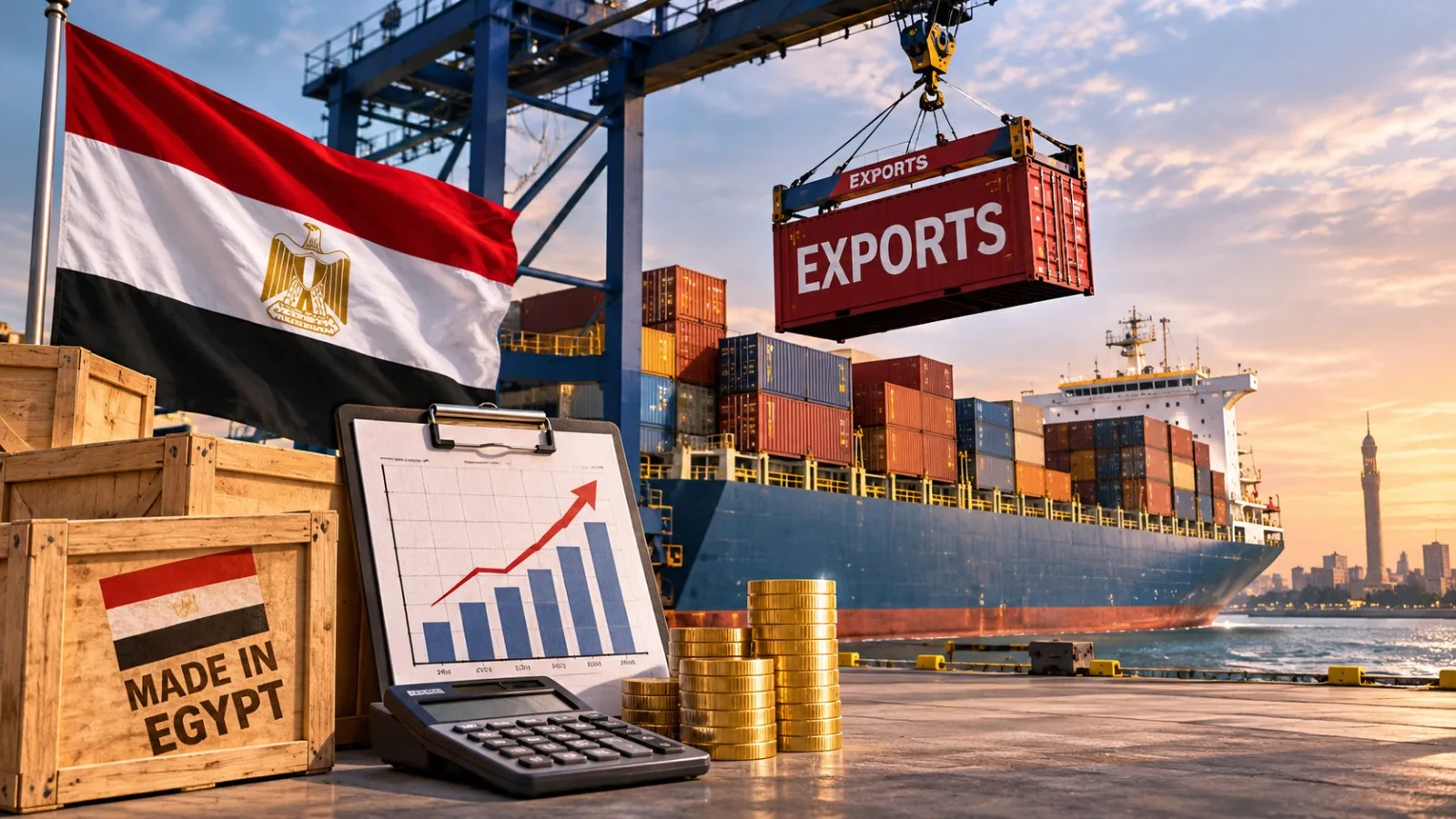










Because exports are a major indicator of a strong economy, governments devote effort to increasing them. Export development is not only about increasing production, but also managing the anticipated risks of foreign trade.
Although opening up new horizons and markets would be considered a good opportunity for companies, it also bears unforeseen challenges, mainly non-payment issues, market changes and rising transport costs.
In this regard, Egypt’s government has recently called for the acceleration of the export credit guarantee agency’s operations, in order to support exporters and alleviate the risks associated with expanding into foreign markets.
This move is part of a broader scheme to boost Egyptian exports by combining financial support, insurance against non-payment risks, and facilitation of shipping services, without neglecting the need to meet global market quality standards.
The government is targeting small and medium-sized enterprises (SMEs) that may have export-ready products but are still hesitant to enter new markets due to fears over risks and challenges of delayed payments or the loss of shipment value.
MP Mohamed Sheha stressed the importance of ensuring that SMEs benefit from the services provided by the Export Credit Guarantee Agency.
“Exporters need a comprehensive support system starting even before signing contracts and continuing throughout the export process, rather than merely providing financing and guaranteeing only,” Sheha told the House of Representatives last week.
Indeed, this initiative is also aimed at helping companies to enter new markets, especially in Africa, with greater confidence. Although Africa is currently offering various growth opportunities, there are still additional challenges related to financing, banking services, transportation, and insurance.
Through these mechanisms, banks may become more confident in providing financing to exporters willing to enter new markets. For small businesses, this can provide a valuable opportunity to accept larger deals and offer more competitive payment terms, helping them reach wider markets.
For MP Amr Fahmy, the success of the agency should be assessed through several indicators, including the number of factories that have expanded, the new markets reached by Egyptian products, as well as the number of jobs created.
He also emphasised the importance of supporting products with high added value, ensuring that the agency’s services reach SMEs, and that such benefits are not limited to large corporations.
For Egyptian exporters, entering new markets is generally perilous. Therefore, the agency is not designed to completely remove these risks, but rather to help companies manage them effectively and expand into new markets with greater confidence.