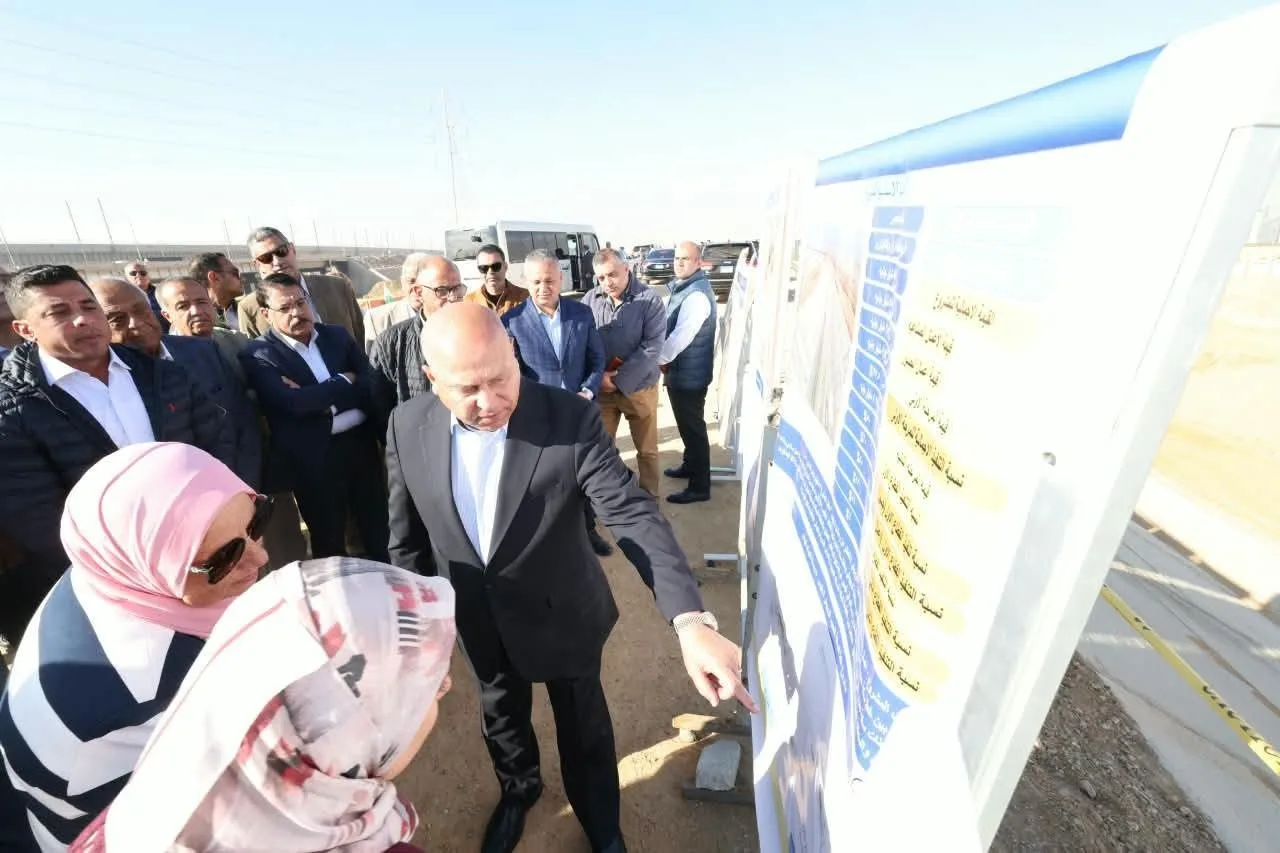










Minister of Transport Kamel El-Wazir has called for accelerating construction works on the Robbiki–10th of Ramadan–Belbeis railway project, stressing the need to meet the scheduled completion dates and speed up track installation on its first phase to connect the dry port in 10th of Ramadan City with Sokhna Port.
El-Wazir made the remarks on Tuesday during an inspection of the 64-kilometre project, which forms part of the Sokhna–Alexandria logistics corridor.
The visit comes in line with President Abdel Fattah El-Sisi’s directives to complete mass transportation projects according to their timetables. It also supports the Transport Ministry’s plan to establish eight integrated international logistics corridors, positioning Egypt as a regional hub for transport, logistics and transit trade.
During the inspection, the minister reviewed construction works on railway embankments and 18 engineering structures, including bridges, tunnels and culverts. He also followed up on track installation and construction works at six new passenger stations: Hadayek Al-Assema, Leather City, Industrial Zone 2, Industrial Zone 1, Obour 1 and Kilometer 27.
Obour 1 and Industrial Zone 1 stations will provide interchange connections with the Light Rail Transit (LRT) system. The project also includes the upgrading of Belbeis station.
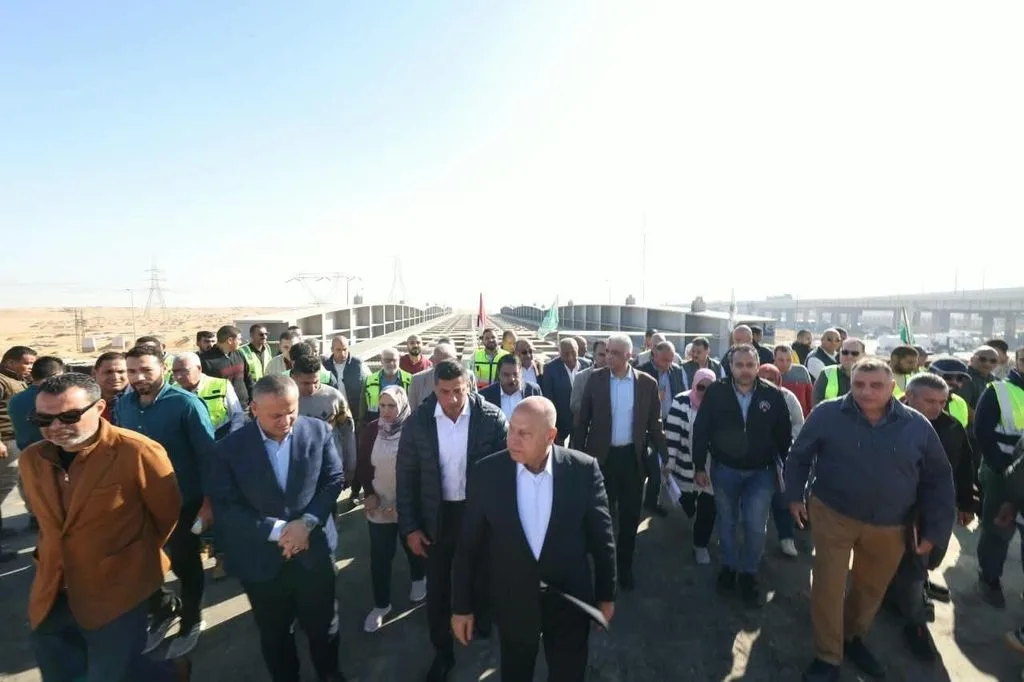
The works are being carried out by Egyptian national companies.
The project is being implemented in two phases as a double-track railway. The first extends from Robbiki to the junction leading to the dry port in 10th of Ramadan City, while the second runs from the junction to Belbeis.
Construction progress on embankments and engineering structures has reached 97.5 per cent in the first phase, where 2.6 kilometres of tracks have already been laid. Work on the second phase has reached 30 per cent.
El-Wazir stressed that the railway would serve both passenger and freight transport. It will connect with the Adly Mansour–Suez railway line at Robbiki and the Shibin El-Qanater–Belbeis–Zagazig line at Belbeis.
The project is expected to facilitate the daily commute of workers to industrial zones, particularly as around 90 per cent of workers currently travel from Belbeis using private transport.
It is also expected to ease road congestion, reduce traffic accidents, fuel consumption and emissions, and lower road maintenance costs.
In addition, the railway will help maximise the economic returns of ports and logistics zones, facilitate the movement of freight and containers, ease congestion at ports and enhance railway safety and security.