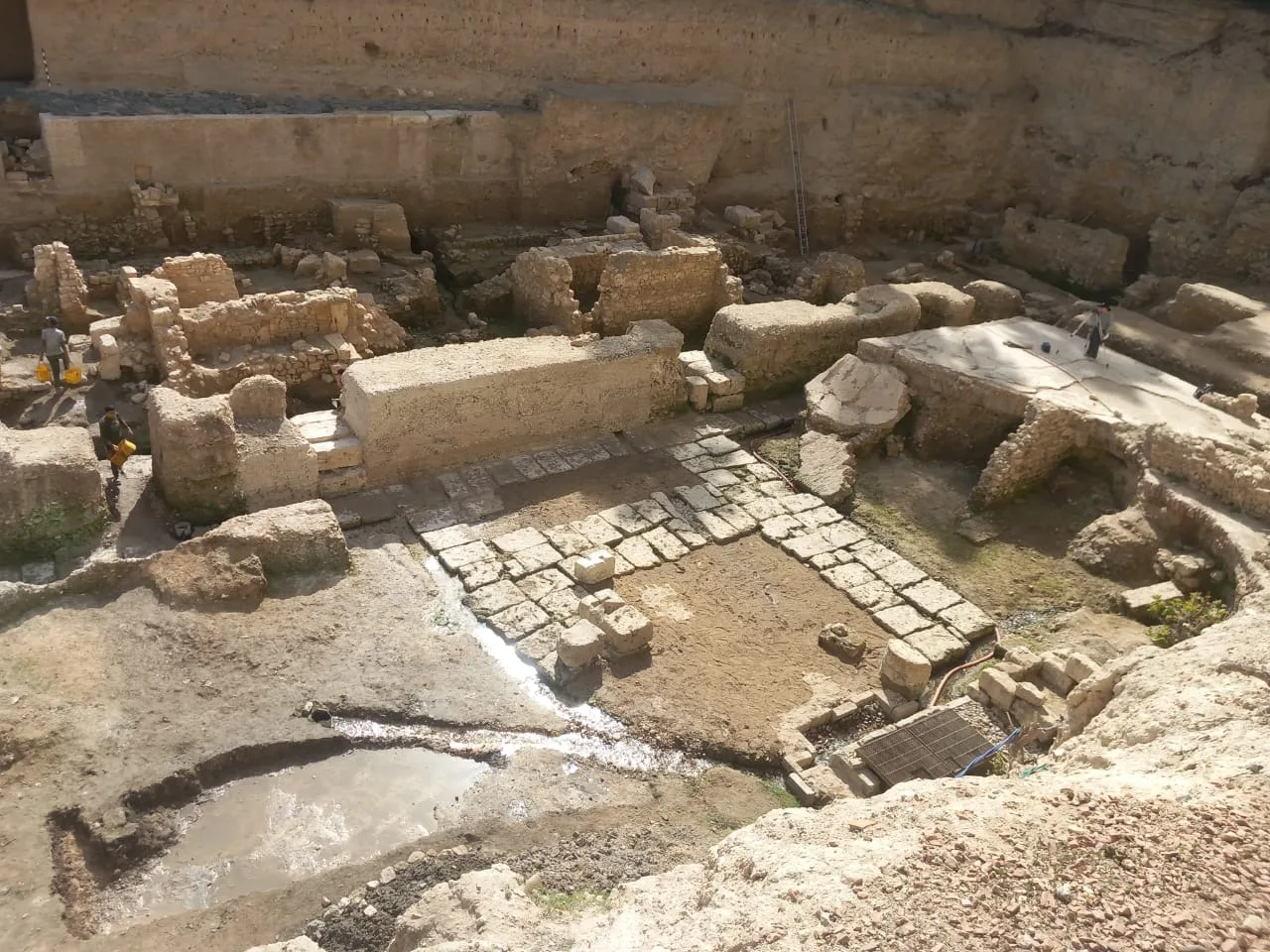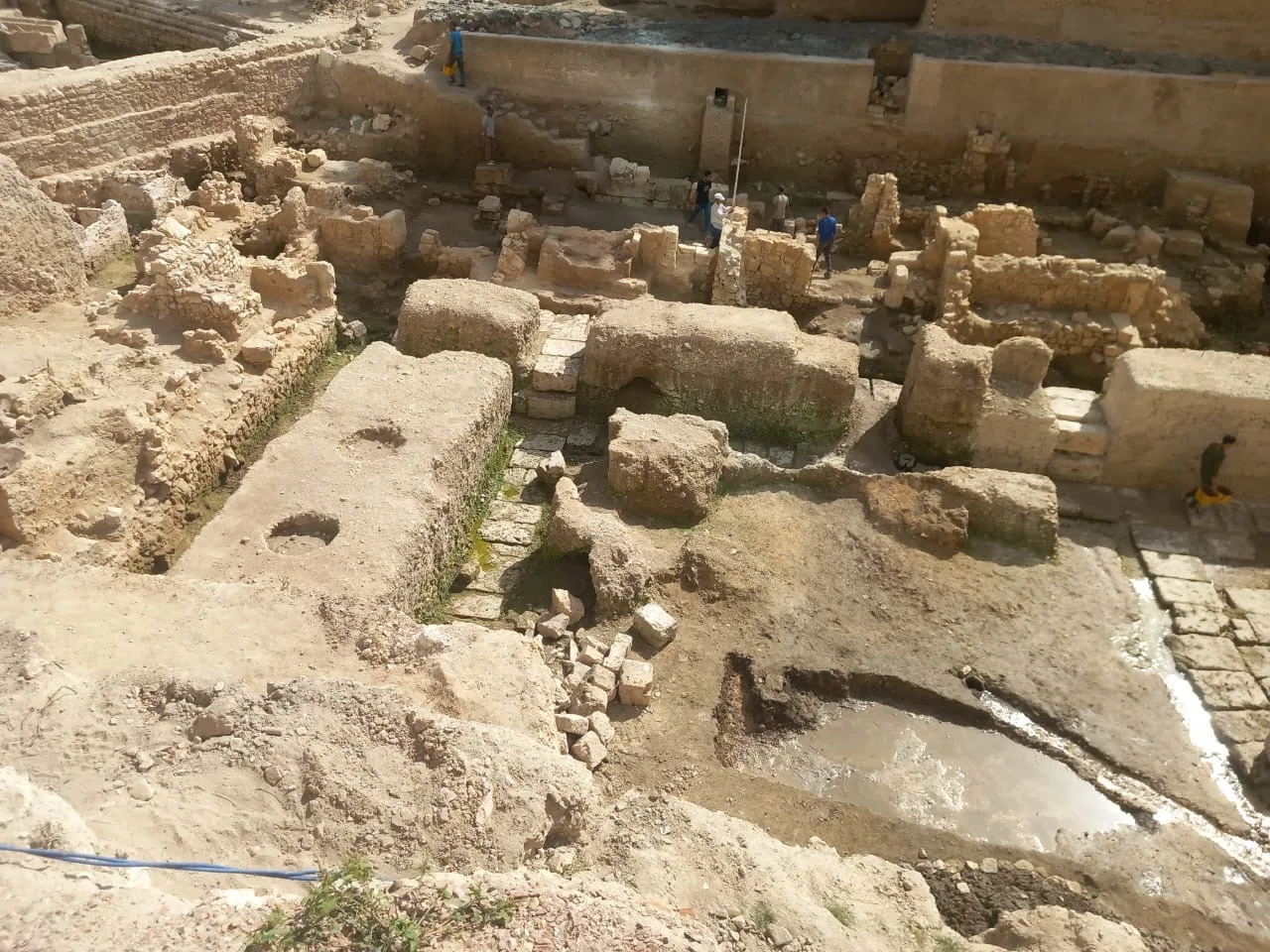












Archaeologists have uncovered the foundations of a massive limestone building in ancient Alexandria’s royal quarter that may have been linked to a Ptolemaic royal tomb, Egypt’s antiquities ministry said.
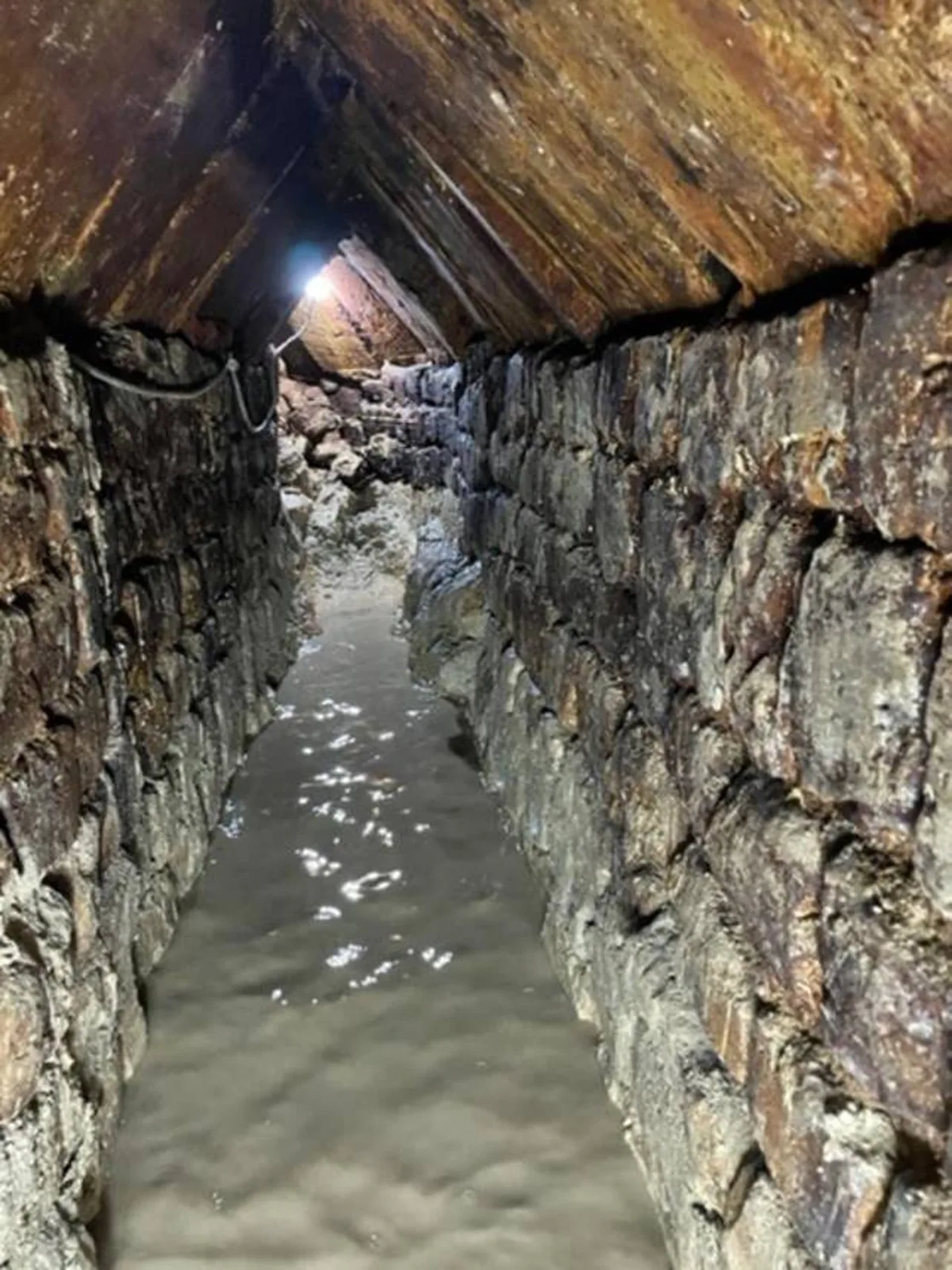
The Greek archaeological mission found the foundations surrounded by walls, as well as a tunnel running north beneath the building, according to a ministry statement.
A scientific committee appointed to assess the discovery said the square foundations suggested they had supported a large, tall structure. Its architectural features raised the possibility that it had a funerary function, the ministry said.
If so, the building could be the royal tomb that ancient sources say was established by Ptolemy IV Philopator, who ruled from 221 to 204 BC, and described by the Greek geographer Strabo, the committee said.
The proposed link remains a preliminary hypothesis, and further excavation and research are needed to establish the building’s identity and purpose, committee head Ayman Ashmawy said.
The Greek mission, led by archaeologist Calliope Limneos-Papakosta, has worked for around 20 years in Alexandria’s Shallalat Gardens, the ministry said.