





Nuclear medicine is transforming modern healthcare by enabling earlier disease detection, more precise diagnoses and targeted treatments, particularly in oncology. As demand for advanced healthcare services grows, developing specialized expertise, expanding access to medical radioisotopes and strengthening scientific infrastructure are becoming increasingly important for countries seeking to improve patient outcomes.
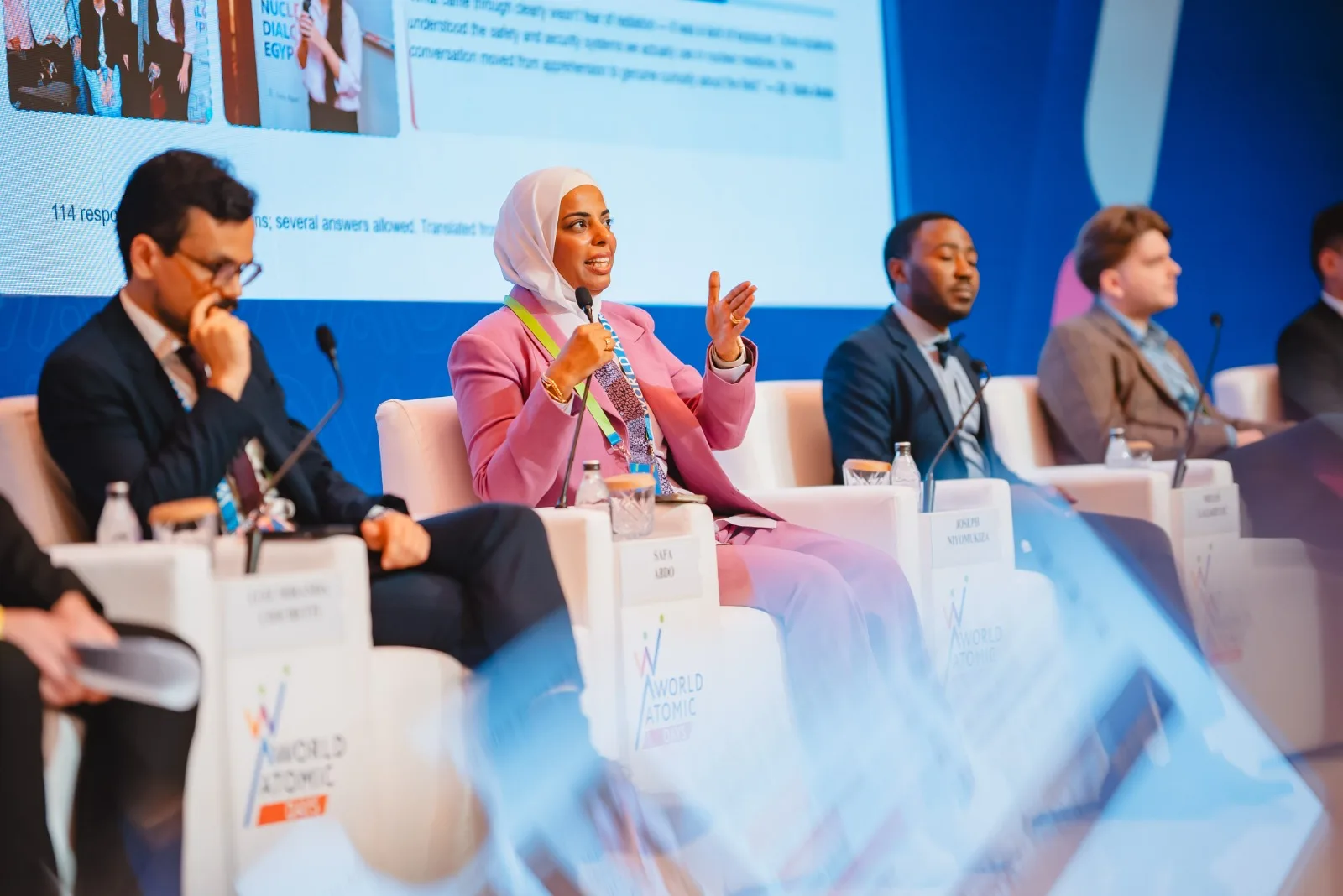
Within this context, Dr. Safa Abdo, nuclear physicist and member of Rosatom’s Impact Team 2050 initiative, International Youth Advisory Council to Rosatom Director General, believes Egypt has a significant opportunity to advance nuclear medicine by investing in young professionals, strengthening radiation-safety education and building on its existing scientific capabilities.
According to Dr. Safa Abdo, one of the main barriers discouraging young medical professionals from entering the field is the misconception that working with radiation inevitably poses serious health risks.
She explained that nuclear medicine operates under rigorous international radiation-protection standards, with occupational exposure monitored through personal dosimeters and controlled measures through established principles of time, distance and shielding.
“Young professionals are not asked to ignore the risk. They are taught to measure it, manage it and master it,” she emphasized.
Dr. Abdo stressed that introducing radiation physics and radiation safety education during the early stages of medical and scientific studies, supported by practical training and supervised facility visits, can help students develop confidence and a lasting culture of safety.
Reflecting on her experience during the recent National Youth Nuclear Dialogue at the Egyptian Syndicate of Medicine in Cairo, she highlighted how interactive discussions helped students reconsider their perceptions of nuclear medicine.
Some initially associated the field exclusively with complex physics, but later recognised its practical role in diagnosing diseases and improving treatment outcomes. Personal accounts involving family members facing serious illnesses further demonstrated the human impact of these technologies.
She noted that tailoring scientific communication to the audience, using relatable experiences, open discussions and engaging activities, can make nuclear science more accessible while encouraging informed career choices.
Beyond education, Dr. Abdo emphasized the distinctive contribution of younger generations, whose digital capabilities, innovative thinking and awareness of global challenges can help advance nuclear technologies across healthcare, energy and other development sectors.
Rosatom’s Impact Team 2050 initiative provides an international platform for engaging young professionals in discussions about the future of nuclear technologies and sustainable development. Through its International Youth Advisory Council, the initiative encourages dialogue, international networking and the participation of young specialists in shaping forward-looking approaches of these sectors.
Drawing on this experience, Dr. Abdo underlined the importance of international partnerships in providing specialized fellowships, research exchanges, access to advanced equipment and mentorship opportunities.
“Partnerships turn local talent into global capability,” she stated, emphasizing that international cooperation can help young Egyptian scientists gain experience while contributing to the development of national expertise.
Regarding Egypt’s regional potential, Dr. Abdo pointed to the Egyptian Atomic Energy Authority, the ETRR-2 research reactor located in the city of Inshas, and the country’s existing radioisotope-related capabilities as important foundations for expanding nuclear medicine.
She explained that closer integration between research institutions, healthcare providers and international partners could strengthen local radioisotope supply, expand specialised training and improve access to advanced diagnostic and therapeutic services.
With sustained investment, Egypt could also establish regional training programmes for medical professionals and nuclear specialists from Africa and the Arab world, positioning itself as a centre for knowledge exchange and scientific co-operation.
Dr. Abdo concluded that Egypt’s opportunity lies in connecting its established scientific infrastructure with healthcare institutions, international expertise and emerging talent. Such an approach could strengthen access to advanced diagnosis and treatment, build sustainable national capabilities and position Egypt as a regional centre of excellence in nuclear medicine.

