








Last week’s passenger train collision near Ayat town, around 55 kilometres south of Giza governorate, has left the nation in shock, given the fatalities it left behind, around seven.
The collision, which also left over 100 passengers injured, also raised questions about the enormous investments poured in the railway sector in the past decade.
A passenger train travelling from Giza to Fayoum rammed into another one travelling from Cairo to Aswan, causing the derailment of several carriages in the two trains, according to the Railways Authority, the government operator of the nation’s trains.
President Abdel Fattah El-Sisi ordered a swift investigation into the incident, calling for bringing those responsible to account.
The Public Prosecutor said, meanwhile, that investigations were underway to determine the technical reasons behind the crash.
Despite its enormity, the latest train mishap also offers insights into the efforts the government made in the past years to overhaul the railways, transport experts said.
They argue that while more effort needs to be done in the coming period, the investments poured by the government in modernizing the national railway system have contributed to reducing train accidents and consequently fatalities connected with these accidents.
Egypt has developed a comprehensive plan to upgrade the railway system as part of a broader strategy, initiated in 2014, to modernise the transport sector.
This plan aimed to address long-standing issues affecting infrastructure, the fleet of locomotives and carriages, signalling and control systems.
According to government data, roughly LE366 billion were allocated to the railway network development plan until 2026.
The funding covered several key areas, including LE73 billion for new railway lines and duplication of existing routes.
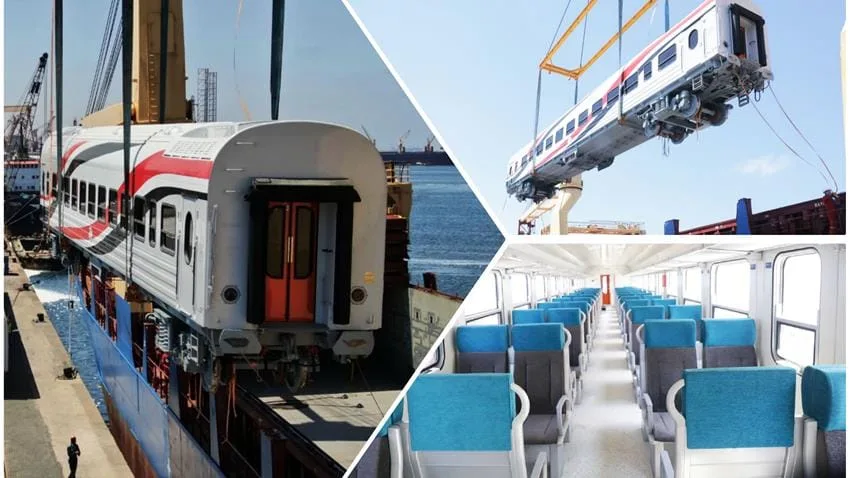
Around LE48 billion were earmarked for new locomotives and carriages, in addition to LE46.8 billion for signalling systems, and LE32.5 billion for track and level-crossing improvements.
Roughly LE27 billion were allocated for track renewal and machinery, and LE5 billion for improving railway workers’ performance and safety.
Specialists credited these investments for reducing train accidents in Egypt.
The number of train accidents fell by 22.7 per cent to 170 in 2025, from 220 in 2024, according to the Central Agency for Public Mobilization and Statistics.
Minister of Transport Kamel el-Wazir said last week that the work done to overhaul the railways aimed primarily to protect the lives of people using the trains.
Confronting the parliament, the minister descried the protection of passengers’ lives as his ministry’s “top priority”.
He conceded, however, that challenges still remained, despite all the development projects initiated in the past years.
“Risks also continue to remain within the railway system,” the minister said. “They require continued efforts to address shortcomings and prevent their recurrence.”
He appealed to the members of the public not to buy into rumours or lies.
“Every train leaving maintenance workshops undergoes a comprehensive technical inspection at the hands of a team of 20 engineers and technicians,” the minister said.
He added that the development of the railway network is an ongoing responsibility that requires further work and sustained efforts.
Experts said, meanwhile, that railway safety depends not only on infrastructure, but also on the interaction between technology, maintenance, operational discipline and human factors.
Hassan al-Mahdi, professor of transport and road engineering at Ain Shams University, underscored the importance of training for railways’ workers to prevent accidents.
He was quoted by a local newspaper as calling for improving the skills of train drivers, signalling operators, technicians and other railway personnel.
“Modern equipment alone cannot guarantee safety unless staff are properly trained, operational procedures are strictly followed and maintenance standards are consistently enforced,” Professor al-Mahdi said.
He added that infrastructure upgrades and the procurement of new trains must go hand in hand with better management, regular maintenance and workforce training.
Member of the Committee on Defence and National Security in the House of Representatives, Mohamed Radi, blamed human errors for most train accidents.
He called on the relevant authorities to improve railway management, raise staff salaries and provide adequate training, warning that accidents would continue to happen unless these issues were addressed.
The modernisation of locomotives and passenger and freight carriages is a major component of Egypt’s railway development programme, the Ministry of Transport says.
This process aims to improve service quality, reduce breakdowns and enhance operational efficiency, it adds.

