





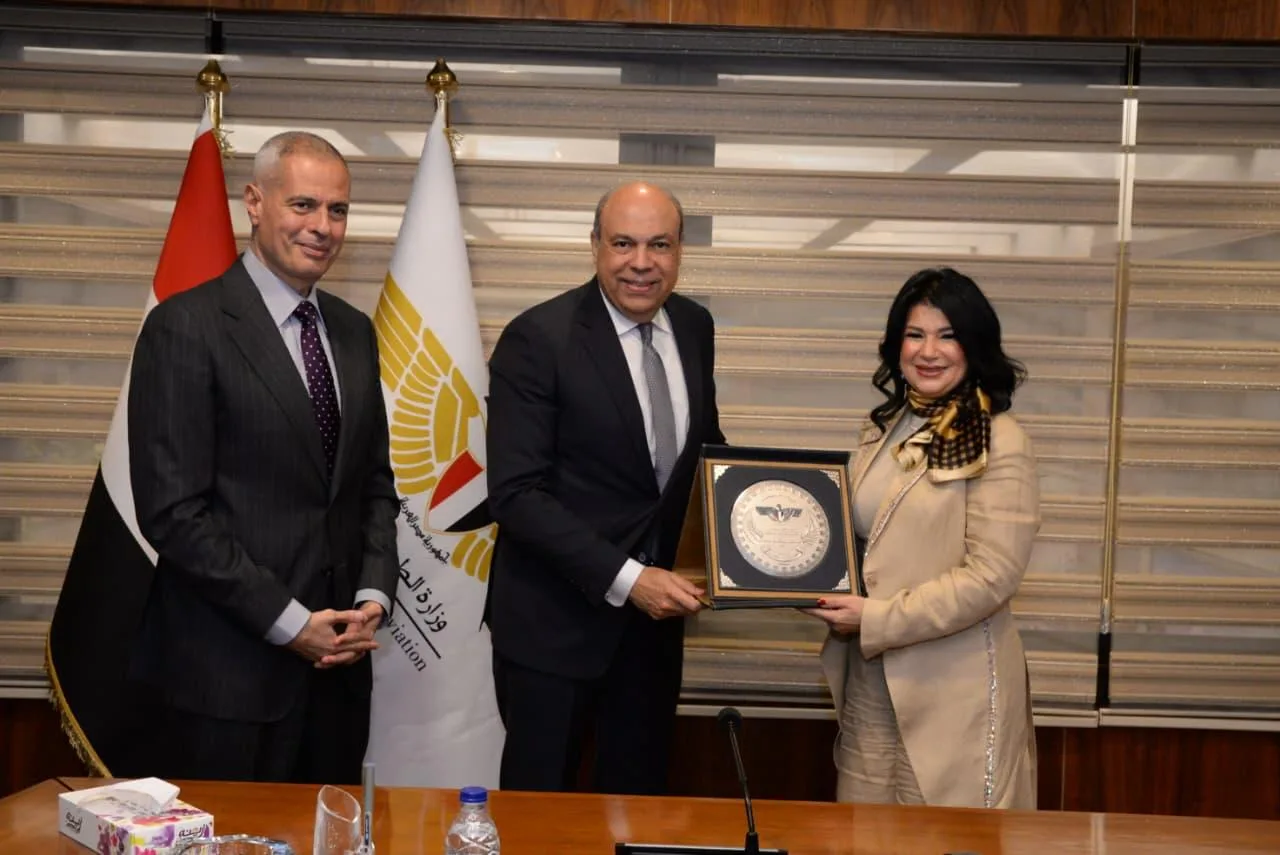






Dr Osama Al-Azhari
Minister of Awqaf
(Charitable Endowments)
The discussion continues in refuting the idea of jahiliyyah (labelling people of belonging to the pre-Islamic era), which constitutes the most dangerous root of extremist currents. I was particularly struck by the words of Sayyid Qutb in Fi Zilal al-Qur’an (In the Shade of the Qur’an), in his commentary on Surat Yusuf, where he appeared to clash with Prophet Muhammad’s (peace and blessings be upon him) hadith reported in Sahih Muslim on the authority of ‘Abd al-Rahman ibn Samurah: “Do not ask for imarah (leadership).”
This means: do not seek the position of hukm (government), do not become enslaved to power, and do not make your intellect and life revolve around issuing judgements based on the foundational principles of religion rather than its subsidiary matters.
Nor should one become obsessed with hukm (government) and imarah (leadership) in a distorted manner that leads to forming groups seeking to seize power by force.
This hadith contains a general directive. The principle among the scholars of usul al-fiqh (Principles of Jurisprudence) is that the default in the address of shar’ (Islamic Legal Theory) is generality unless evidence establishes specification, and specification is contrary to the default.
For the default in legal discourse is that it applies to all legally responsible members of the Ummah. For example, in the saying of Allah: “O Prophet, when you [Muslims] divorce women, divorce them for [the commencement of] their waiting period and keep count of the waiting period.” [Qur’an: 65 :1].
Here, the address shifts from singular to general.
Thus, the prohibition of seeking hukm (government) is a general legal principle for all morally responsible individuals.
The continuation of the previously-started hadith states: “If you ask for it [i.e., leadership], you will be left to it; but if you are given it without asking, you will be helped in it.” There is a clear difference between one who is assigned government and one who dedicates his life to pursuing it.
This, in their educational model, particularly within the (MB), became a method of training followers towards seeking power.
Sayyid Qutb, in his commentary on Surat Yusuf, states: “We will continue to seek leadership.” He justifies this through the verse spoken by Prophet Yusuf: “Appoint me over the storehouses of the land.”
He also rejects the hadith prohibiting seeking leadership, claiming that the time is a time of jahiliyyah (pre-Islamic era), meaning that there is no longer a believing society in which ahkam al-shar’ (Islamic Legal Theory rulings) are
operative.
Thus, he suspends an explicit text while selectively employing Qur’anic verses through a distorted reading.
In his memoirs, ‘Ashmawi mentions that Sayyid Qutb once did not attend Friday prayer, claiming that there was no believing society in which Jumu’ah could be established.
When ahkam al-fiqh (juristic rulings) are suspended under the claim that the Islamic society has disappeared, this becomes a purely subjective selection of rulings—accepting some and discarding others. It becomes as if one claims a hidden form of prophetic authority, while simultaneously mocking Islamic thought and its juristic heritage.
At that point, hukm (government) becomes the ultimate expression of divinity. He also cites Hasan al-Banna, founder of the
(MB), who said: “The retreat of reformers from seeking the positions of government is an unforgivable crime.” This represents a serious deviation from the straight path of shari’ah (Islamic Legal Theory), which is as clear as a white path upon which no one deviates except the destroyed.
Thus, the idea of jahiliyyah (labelling people of belonging to the pre-Islamic era) produces extremely dangerous consequences.
However, the major problem is that a group of scholars did not undertake a critical reading of this intellectual project, nor did they present its strongly antagonistic concepts to society – concepts that are primarily hostile to shari’ah (Islamic Legal Theory) before being hostile to innocent lives.
This is essentially a fierce intellectual war. Its battlefield is not merely armed conflict or physical violence; rather, it takes place within minds and souls. It is a struggle against the possibility of the birth of takfir (labelling someone as an apostate) in individuals, even if they never carry weapons.
If the extremist mindset takes root, real victory cannot be achieved merely by eliminating armed actors while leaving the
underlying ideology intact. The true battle is against destructive ideas embedded in consciousness.
For example, the group known as ISIS is not structurally destined for permanence; it is an idea rejected by existence and by divine laws governing creation. It will inevitably collapse, as will organised armed movements such as the (MB). However, the mode of thinking they have spread remains present – even in the minds of those who oppose them.
ISIS may disappear as an operational entity, but its way of thinking may persist in varying degrees among individuals – even among those who condemn it.
Observation shows that extremist movements share the same cognitive structure, differing only in terminology while preserving the underlying concepts. Their minds often deceive them into believing they are exercising fairness.
The human psyche contains deeply complex layers, resembling an interwoven forest. It produces a distorted cognitive scale that
consistently selects deviant intellectual paths.
This is why the Prophets were sent to purify the soul (tazkiyat al-nafs – purification of the self).
The core issue lies in a deviant, aggressive psyche seeking intellectual justification for violence, often by extracting partial texts from the Qur’an or other sources to legitimise killing and cover it with a veneer of moral justification.
We reiterate what has been stated in their own writings. In Ma’alim fi al-Tariq (Milestones), Sayyid Qutb states: “The existence of the Muslim nation has been cut off for many centuries.” This implies, in his view, that the Muslim community is engulfed in disbelief, since hukm (government) is considered a foundational component of creed in his thought, as inherited from Hasan al-Banna.
In the same book, he also states: “This nation, with its characteristics, has ceased to exist since the cessation of governance by Allah’s Shari’ah (Islamic Legal Theory) over the earth.” This reflects a deeply dark and pessimistic conception.
In his book al-’Adalah al-Ijtima’iyyah fi al-Islam (Social Justice in Islam), he writes: “We know that Islamic life in this form has stopped long ago throughout the earth, and therefore the existence of Islam itself has also ceased.”
He draws this from Hasan al-Banna’s statement in Risalat al-Mu’tamar al-Khamis (Fifth Conference Message), where it is stated: “Hukm (government) is classified in our juristic books as part of creed and fundamentals, not as jurisprudential branches.”
This intellectual methodology leads directly to the idea of jahiliyyah (labelling people of belonging to the pre-Islamic era).
Ultimately, confronting extremism does not begin by dismantling organisations, but by dismantling the ideas that produced them and correcting the interpretive frameworks that transformed religion from guidance into a tool of exclusion and division.
Until we meet again, Allah Willing.

