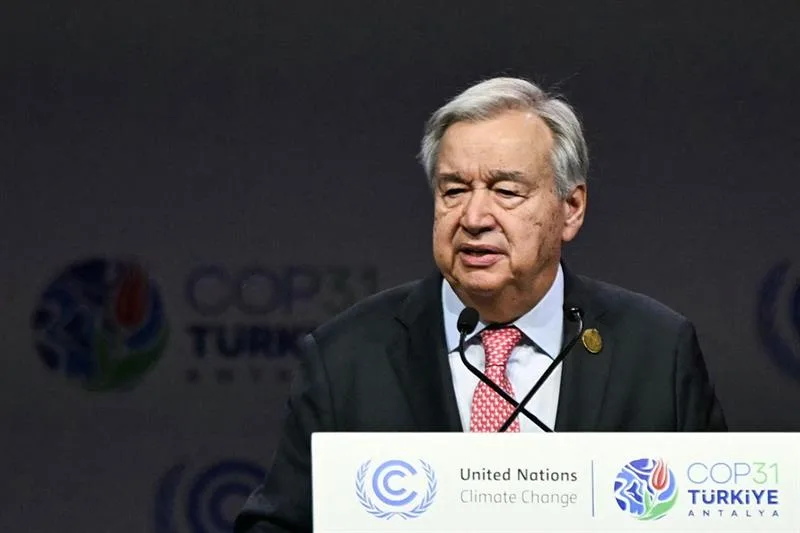










UN Secretary-General Antonio Guterres on Friday called for an “immediate and drastic reduction” in greenhouse gas emissions, as divisions over fossil fuels dominated the first week of COP31 climate talks in Turkey.
Big fossil fuel producers and consumers at the talks are resisting any deal that would specify firm new targets or a shift away from oil, gas and coal, observers said as the first week of talks drew to a close.
That poses a challenge for summit host Turkey and lead negotiator Australia, which have another week to land the kind of ambitious agreement climate advocates such as Guterres say is needed.
“The central question is in the hands of member states, particularly the big emitters.
They must recognise the need for an immediate and drastic reduction in emissions to keep the 1.5 goal still possible by the end of the century,” he said, referring to the warming limit countries had agreed to pursue under the 2015 Paris Agreement.
A UN report last month found the world is on course to exceed the 1.5 degrees Celsius (2.7 degrees Fahrenheit) warming threshold, a limit scientists say should prevent the worst effects of climate change.
As temperatures have risen, this year has been marked by extreme heatwaves across Western Europe and a glacier collapse in Nepal that triggered a flood that killed more than 1,450 people.
Thousands more are still missing.
Major oil producers such as Saudi Arabia and Russia have traditionally resisted language constraining fossil fuels, while large developing economies such as India have opposed measures they say could limit their development and energy choices, a dynamic that has compromised the outcomes of past deals.
The world’s biggest oil consumer, the United States, meanwhile, has skipped the talks for the second year in a row under President Donald Trump, who has called global warming a hoax and promoted continued use of fossil fuels.
“We must confront the disproportionate influence of the fossil fuel lobby.
The future of our planet cannot be negotiated on the terms of those profiting from its destruction,” said Guterres, who is leaving his job at the end of December after two five-year terms.
But I remain hopeful. I’ve also seen something extraordinary over these 10 years. Renewable energy has moved from the margins to the mainstream.
The economics have changed. The technology has advanced. A cleaner, safer, and more secure energy future is in our hands. The question is whether we have the courage and speed to reach for it.”

