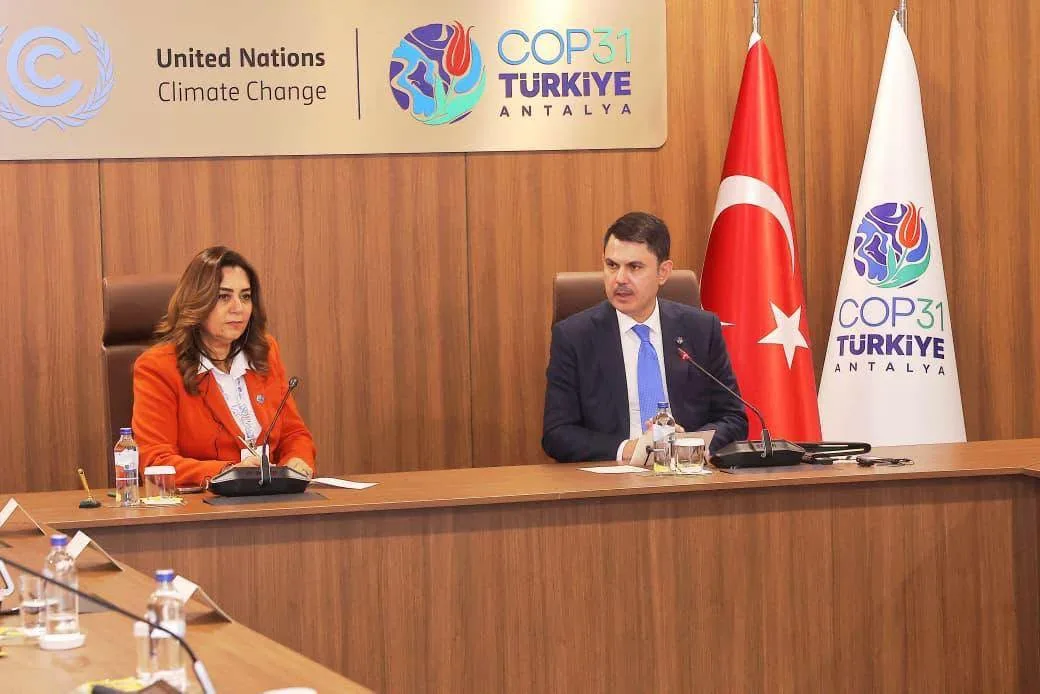








Egypt’s Minister of Local Development and Environment, Manal Awad, held talks on Friday with Türkiye’s Minister of Environment, Urbanisation and Climate Change and President of the 31st UN Climate Change Conference (COP31), Murat Kurum, on ways to strengthen Egyptian-Turkish co-operation in key environmental areas.
The talks focused on activating the memorandum of understanding signed between the two countries in 2024, which covers biodiversity conservation, the development of monitoring, reporting and verification (MRV) systems, early warning systems for extreme weather events, combating coastal and marine pollution, sound waste management, environmentally friendly technologies, and environmental education and awareness.
The meeting also addressed key issues on the COP31 agenda and opportunities to enhance bilateral cooperation on shared environmental and climate priorities.
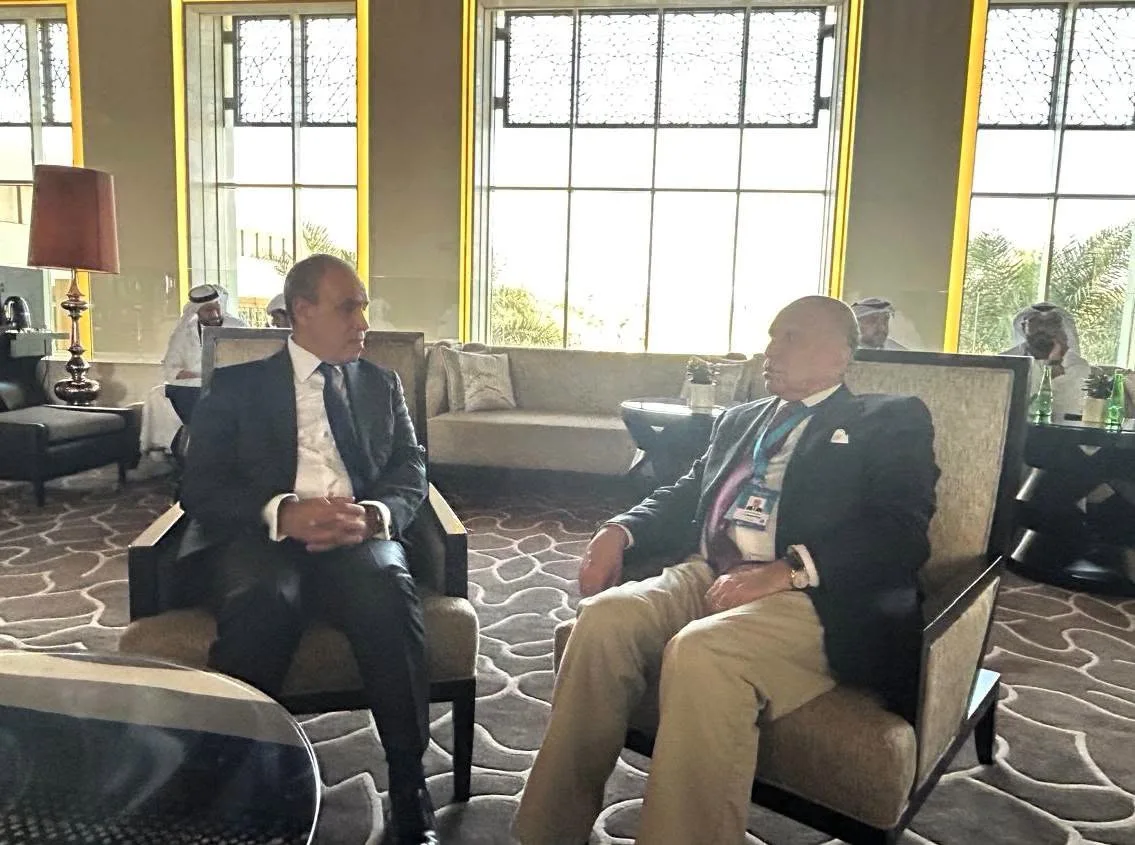
The meeting was part of a series of bilateral discussions held by Awad with ministers and officials on the sidelines of the UN Climate Change Conference in Antalya, Turkey, which runs from November 9 to 20 under the theme “Towards a Sustainable, Resilient and Just Future.”
Minister Awad said the discussions focused on translating the shared ambitions of Egypt and Turkey into practical cooperation in environmental protection, climate action and local development.
She stressed the importance of ensuring that the conference produces recommendations and outcomes that serve the interests of developing countries and strengthen their capacity to address climate change.
The minister also emphasized the need to ensure that COP31 decisions do not impose binding quantitative emissions-reduction targets on developing countries, warning that imposing additional obligations could place considerable pressure on their economies.
Awad further highlighted the importance of joint efforts to turn shared commitments into tangible results and increase climate financing for developing countries, noting that available funding to help these nations address climate change remains insufficient and has declined.
For his part, Kurum outlined Türkiye’s COP31 presidency framework, which is built around five key implementation goals and 10 main pillars forming the backbone of the conference’s climate action agenda.
He said the Turkish presidency had adopted the theme of “implementation,” emphasizing the need to move beyond pledges toward concrete action and measurable results.
The five priorities include climate finance, electrification, climate change adaptation, strengthening the resilience of communities and infrastructure against disasters and escalating climate impacts, and protecting oceans and preserving marine ecosystems.

