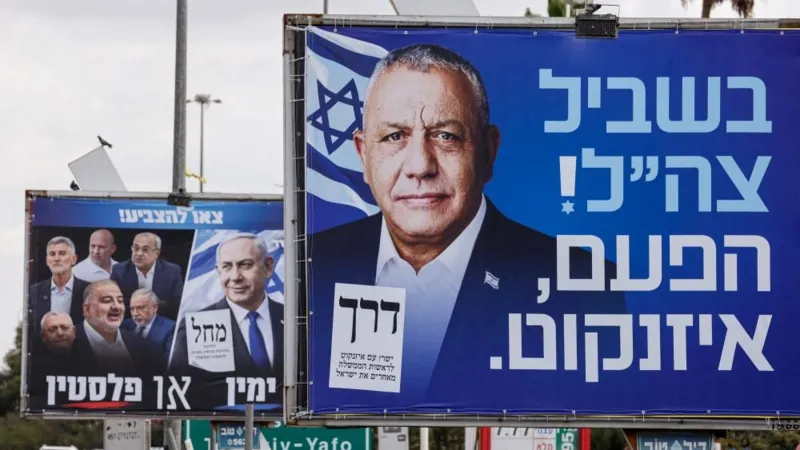






Israel’s new parliament will be sworn in on Tuesday, as opposition leader Gadi Eisenkot seeks to oust caretaker Prime Minister Benjamin Netanyahu.
The former army chief was tasked with forming a government by the president, after he received the backing of 67 members of the 120-seat Knesset, compared to 46 for Netanyahu.
But Eisenkot faces an uphill struggle. His bloc of four parties won 48 seats in last month’s election, while Netanyahu’s bloc won 53, leaving both short of a majority. He has 28 days to build a coalition, with a possible two-week extension.
Almost half of the MKs being sworn in did not serve in the previous parliament, while Arab-led parties have a record number of seats.
The outcome of the election, which was widely seen as a referendum on Netanyahu, means there is a period of uncertainty over who will form the next government. Netanyahu will remain caretaker prime minister until then – a process which could take from days to months.
One of the most dramatic results was the performance of Israel’s two Arab-led alliances – the United Arab List and the Joint List – which won an unprecedented 19 seats between them following a surge in turnout among Arab voters.
The Arab parties could therefore hold the balance of power, although Netanyahu has ruled out governing with them and three of the parties in Eisenkot’s bloc have opposed including them in a coalition.

