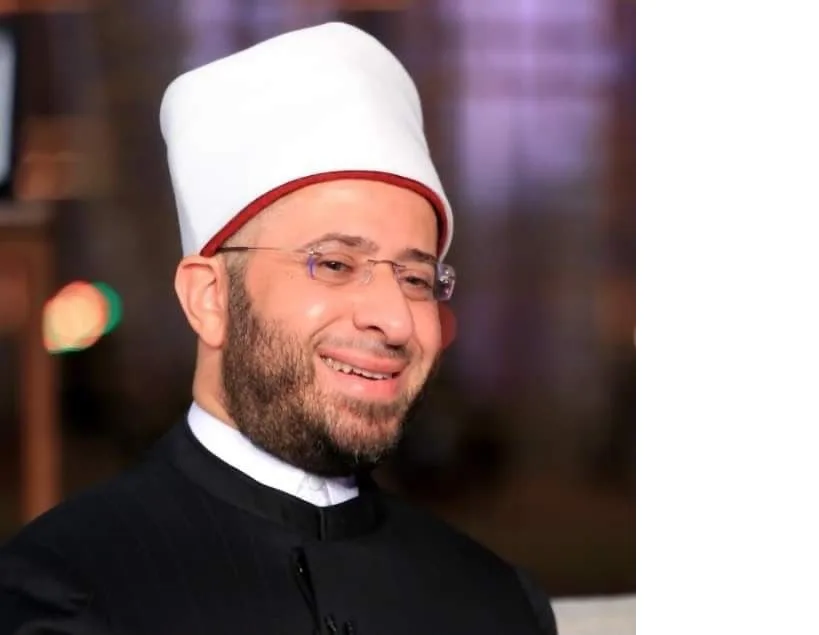










Dr Osama Al-Azhari
Minister of Awqaf (Charitable Endowments)
As a result of extremist movements clinging to the concept of takfir (labeling someone as an apostate) from various angles and dimensions, the notion of Jahiliyyah (ignorance or pre-Islamic disbelief) emerged among them. Gradually, this gave rise to the idea that a particular group alone exclusively represents the true Muslims. This belief fosters a sense of superiority over all humanity leading to the perception that others have no share in salvation. The intellectual trajectory that transformed latent takfir into retaliatory takfir can be traced to Sayyid Qutb, ultimately leading individuals to declare all those around them as disbelievers. Moreover, certain factions within the Muslim Brotherhood and Salafi movements employ takfir in different forms. Many young people affiliated with these groups go even further moving beyond takfir to embrace the concept of Jahiliyyah and subsequently the notion of the saved sect, which, in their view, cannot exist without takfir.
The Prophet Muhammad (PBUH) said: “The Jews split into seventy-one sects, the Christians split into seventy-two sects, and my nation will split into seventy-three sects.” A careful and knowledgeable reading of Islamic law reveals that this hadith opens the door to inclusivity rather than exclusivity. Despite the occurrence of division, one must recognize that difference is inevitable, and that one is obligated to engage with it through understanding and accommodation even when disagreement persists without claiming the right to domination, aggression, or excommunication. Imam Abu al-Hassan al-Ash’ari, on his deathbed, declared: “Bear witness that I do not excommunicate any member of the qiblah for a sin,” despite authoring Maqalat al-Islamiyyin (The Doctrines of the Muslims) and being among the earliest commentators on the hadith of division. Likewise, Imam al-Shafi’i stated: “My opinion is correct but may be mistaken, and the opinion of others is mistaken but may be correct.”
Islamic law aspires to the salvation of all humanity and to embody mercy to the worlds. Therefore, the purpose of verses describing some people as destined for Hell is to ultimately affirm the principle: “To you is your religion, and to me is my religion,” without presuming authority over anyone’s final fate, for ultimate outcomes rest with Allah Almighty alone.
The civilizational approach of Muslims in dealing with others is illustrated by historical examples: the Abbasid Caliph Abu Ja’far al-Mansur appointed the Christian physician Jurjis Ibn Bakhtishu’ as his personal doctor, accompanying him in travel and residence. Similarly, Caliphs al-Mahdi, al-Hadi, and Harun al-Rashid appointed his son as their physician. Harun al-Rashid later appointed Jibril Ibn Bakhtishu’ as chief physician, granting him authority over other doctors. Subsequently, Caliphs al-Ma’mun and al-Amin up to the time of al-Mutawakil, employed the distinguished Christian physician Yuhanna Ibn Masawayh, whom the Abbasid rulers of Banū Hāshim honored greatly and would not dine without his presence.
When an individual believes himself to be among ‘the saved,’ this often leads to the conviction that he alone represents Islam on earth. Consequently, when reading the Qur’anic promises of divine empowerment, he perceives himself as the sole recipient of such promises and the only one deserving of victory over others because he is from the saved sect. These individuals manipulate the texts of divine revelation and resist revising their views, convinced that Allah’s promise cannot fail as they interpret it.
Extremist currents claim that only one group will be saved from the torment of Allah. Under psychological strain, this notion may shrink further until salvation is confined to a single individual. In doing so, they restrict what Allah has made vast. In contrast, salvation is not limited to any one person, faction, or sect, but encompasses all who affirm: “There is no god but Allah.”
Regarding non-Muslims, a thoughtful Muslim perspective recognizes that many have not received the message of Islam in its true form, but rather in a distorted presentation that does not inspire reflection or genuine inquiry. This intersects with the concept of Ahl al-Fatrah (those unreached by revelation). Following the discovery of the Americas, Imam al-Alus noted in his exegesis that such discoveries imply the continued existence of people unreached by the message even into later times, prompting scholars to further examine this concept and those who have received a distorted message.
The true Muslim is one who walks the earth carrying the light of mercy and security, not the flame of anger and hostility. He does not impose his choices upon others but seeks to build bridges of mutual understanding hoping that others may recognize the goodness he carries. Ultimately, “You are not in any way a dominator over them.”
Islamic law inclines toward freedom, it does not wish for any human being to remain enslaved. It has opened numerous avenues for emancipation, linking human freedom to expiations for oaths, zihar, and accidental killing. This reflects a profound inclination toward liberation, guidance, the removal of hardship, the avoidance of conflict, the pursuit of purity, the preservation of contracts, the rectification of transactions, and the avoidance or minimization of punishments. These principles are deeply embedded in classical books of Fiqh.
The term tashawwuf (aspiration) denotes eager inclination, strong desire and striving. Allah says: “And in case they (both) strive with you that you associate with Me that of which you have no knowledge, then do not obey them, and keep them company in the present (life) (Literally: the lowly “life”, i.e., the life of this world) with beneficence.” This exemplifies the conduct of a Muslim. Likewise, Prophet Ibrahim, after disputing with his father, said: “Peace be upon you.”
Until we meet again, Insha’Allah.

