




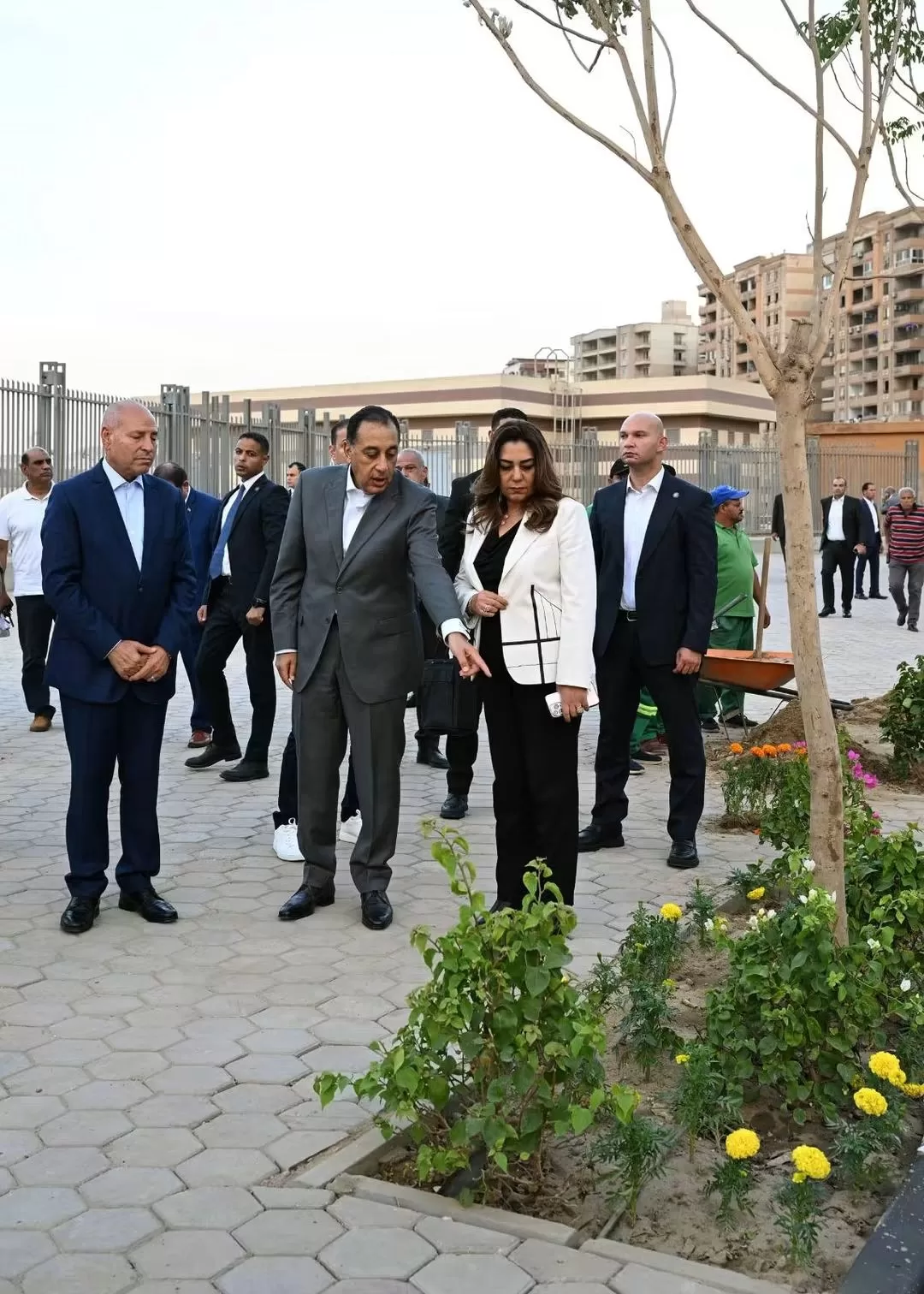
Prime Minister Mostafa Madbouly inspected on Sunday a number of agricultural and afforestation projects in Cairo Governorate following a meeting to review progress on the implementation of President Abdel Fattah El-Sisi’s directives for the “Greening Greater Cairo” project.
Accompanied by Minister of Local Development and Environment Manal Awad and Cairo Governor Ibrahim Saber, the prime minister stressed the importance of implementing an integrated national programme to transform vacant and unused land, following its clearance, into parks and green spaces.
He said efforts were being monitored to expand tree cover along major corridors, roads, central medians and city entrances, with the aim of increasing green space per capita and improving quality of life.
The tour included tree-planting works beneath Ibrahim Al-Orabi Bridge, formerly known as the “Tenth” Bridge, the Athar El-Nabi Bridge area and beneath the Civilisations Axis.
The prime minister called for the initiative to be extended across all governorates.
Cairo Governor Ibrahim Saber, for his part, presented the governorate’s “Greening Cairo” implementation plan, which is based on three pillars: government bodies, including the Cairo General Authority for Cleaning and Beautification, environmental NGOs and civil society organisations, including banks and political parties, and citizens, shop owners and school and university students.
The plan combines public awareness campaigns on tree planting and the preservation of green spaces with intensified planting along major roads, streets and suitable vacant sites.
Developed with the support of a specialised consultancy, the plan prioritises species suited to Egypt’s climate, offering shade, rapid growth, resilience and low water requirements.
Selected species include Acacia, Cassia nodosa, Khaya, Bauhinia, Delonix regia, Cassia fistula and Jacaranda.
More than 3,000 trees and nearly 700,000 shrubs and plants have already been planted.
Cairo aims through this plan to plant one million plants within a year, including 60,000 trees, with at least 1,500 trees allocated to each district according to its size and available planting areas, alongside 800,000 shrubs and plants.
Each district will also develop a distinct botanical identity.

