








The Minister of Education and Technical Education, Mohamed Abdel-Latif, has affirmed that Japan is Egypt’s primary strategic partner in education, stressing the tangible outcomes of the two countries’ co-operation and their shared commitment to investing in education and human development.
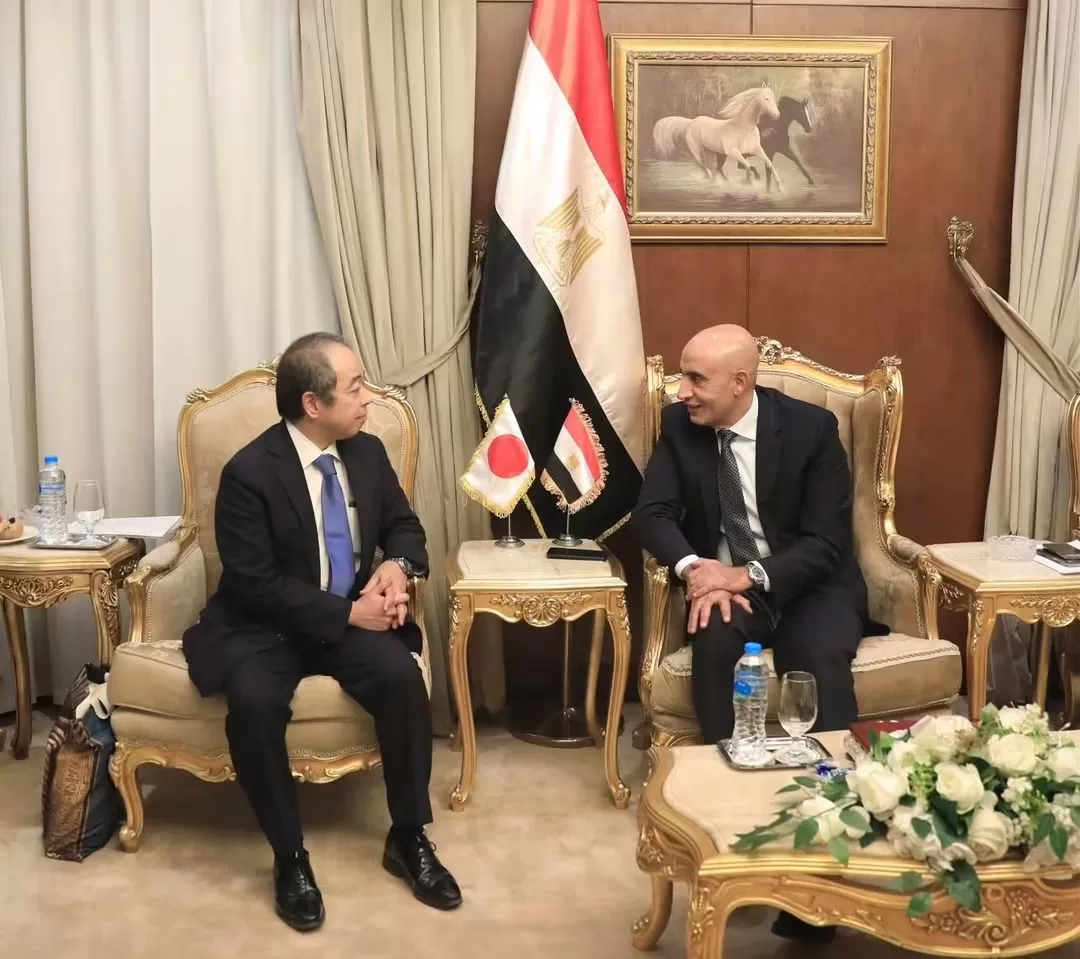
Speaking during a meeting with the Director-General of the International Co-operation Bureau at Japan’s Ministry of Foreign Affairs, Takao Imafuku, Ambassador of Japan to Egypt, Fumio Iwai, and Chief Representative of the Japan International Co-operation Agency (JICA) in Egypt, Yu Ebisawa, the minister said Egypt is seeking to build on existing achievements and establish sustainable educational models tailored to the needs of the Egyptian system.
The meeting reviewed the expansion of Egypt-Japan Schools, Tokkatsu activities, teacher training, curriculum development, programming and artificial intelligence, technical education, support for students with special needs, and co-operation with Japanese universities, institutions and companies.
The Egypt-Japan Schools network has reached 103 schools, with the ministry targeting 500 by 2030.
Japanese-language teaching has also been introduced in 10 schools.
The partnership includes a Tokkatsu diploma with Fukui University, involving around 320 trainees, and a year-long advanced teacher-training programme with Hiroshima University.
The two sides also discussed increasing Japanese experts and supervisors supporting the schools to around 100.
Curriculum co-operation includes updating mathematics for Grades 1–3 and science for Grades 4–6, alongside developing science and mathematics curricula for the Egyptian Baccalaureate with Japanese expertise.
Future-ready skills initiatives include programming and artificial intelligence through Japan’s Kiryu platform, as well as financial literacy for secondary students with Hiroshima University and Sprex.
Co-operation also covers upgrading 20 technical schools into international technical schools based on Japanese curricula and standards, while supporting students with special needs.
Director-General Takao Imafuku praised the scale and diversity of the partnership, noting its potential for wider international application after visiting an Egypt-Japan School.
Chief Representative Yu Ebisawa reaffirmed JICA’s support for joint projects and the transfer of Japanese expertise to strengthen institutional and human capacity.
The two sides agreed to expand successful initiatives, maintain quality, explore new areas of co-operation, and share the Egyptian-Japanese educational experience with Arab and African countries.

