







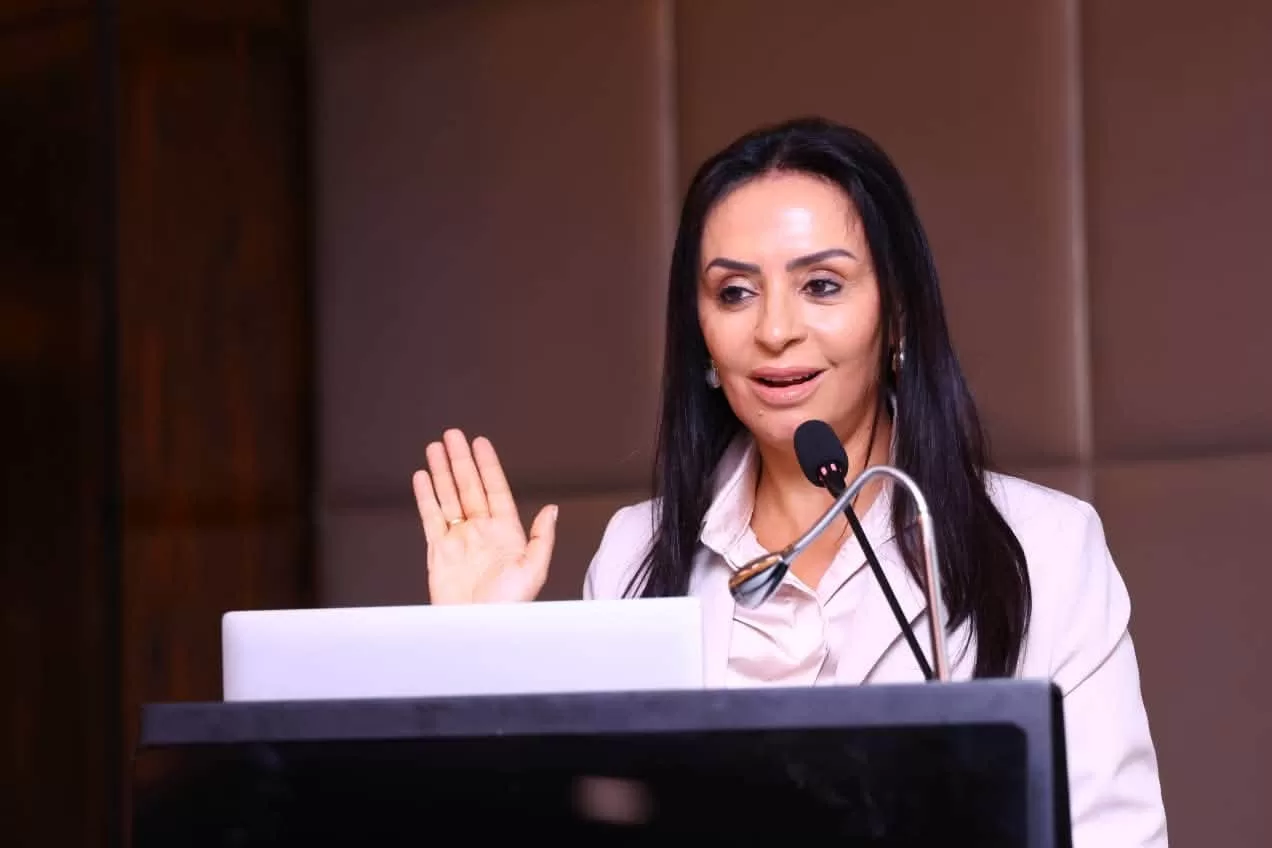
The Arab Strategy for Promoting Voluntarism is a strategic document that should now proceed towards implementation through a clear action plan, Egypt’s Minister of Social Solidarity Maya Morsy said.
Addressing a high-level event on implementing the Arab Summit Strategy for Promoting Voluntary Work on Monday, Morsy said the Arab world has all the necessary elements for success, including a supportive legislative environment, promotion of volunteerism, digital transformation, impact measurement, crisis and disaster response, and emergency management.
She stressed that political will and institutional support, clear roles and responsibilities, good governance, trust, sustainable resources and funding, and flexible volunteering opportunities suitable for different age groups are essential to the strategy’s success.
Morsy described volunteering as an integral part of advanced societies and a noble human value reflecting individuals’ sense of responsibility toward their communities.
She said it is also deeply rooted in the teachings of the three monotheistic religions, which promote solidarity, cooperation and helping others without expecting anything in return.
She highlighted Egypt’s long-standing culture of volunteerism, citing the Egyptian Red Crescent as a key example. Its network includes more than 75,000 volunteers who respond to emergencies, provide relief and humanitarian support, and deliver health and community services in Egypt and abroad. She said its response to the Gaza crisis provided an exceptional example of Egypt’s humanitarian commitment.
Morsy also highlighted the “Decent Life” Foundation, established in 2019 as an umbrella for organising youth volunteer efforts, as well as initiatives providing millions of hot meals and food packages during Ramadan 2026 and throughout the year.
She noted that volunteering also extends to universities through social solidarity units, addiction prevention programmes, the Mawadda programme for marriage preparation and public service programmes engaging young people.
She concluded that the Arab world has a historic opportunity, with millions of young people, experienced civil society organisations and technology capable of connecting volunteers with opportunities and organising efforts, to transform volunteering into inclusive, sustainable institutional action.

