



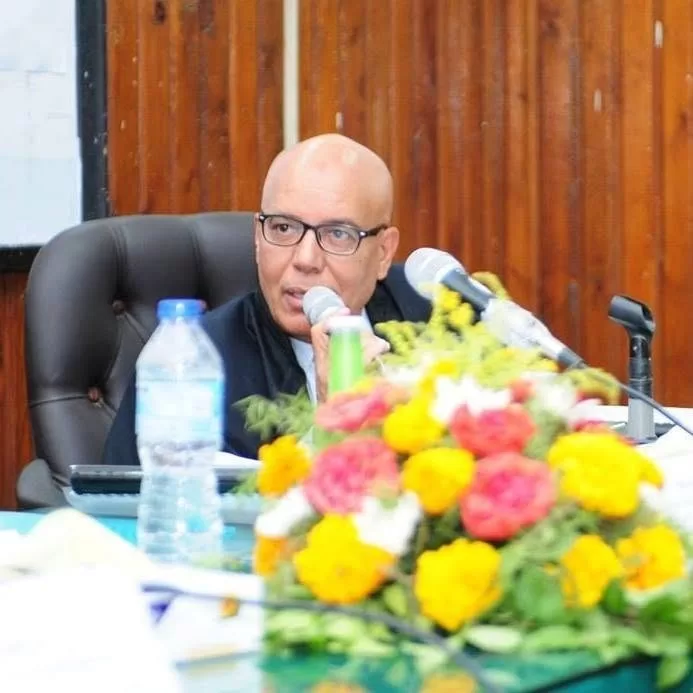
Professor Mahmoud Kamel
In my previous article, I discussed a question that many people are asking today: Will artificial intelligence replace human translators? My answer was clear. I do not believe it will. Translation is much more than changing words from one language into another. It is about understanding ideas, cultures, intentions, and the people behind the text.
But another question is just as important.
If translators still have an important future, how should universities prepare them for a profession that is changing so quickly? And what should students do to build successful careers in a world where artificial intelligence is becoming part of almost every translation project?
After more than forty years as a translator, interpreter, and university professor, I believe translation education is entering a new stage. The basics have not changed, but the profession certainly has. Today, knowing two languages is no longer enough. Future translators need a wider set of skills if they want to succeed.
For many years, translation programmes focused on language. Students spent years studying grammar, vocabulary, writing, reading, and translation practice. These subjects are still the foundation of the profession. No software can compensate for weak language skills, and no artificial intelligence can fully understand a text if the translator does not understand it first.
However, today’s translation market expects much more.
Employers are looking for translators who can work confidently with technology, solve problems, carry out research, and deal with specialised texts. Translation has become a profession where language and technology go hand in hand.
This is why universities need to review how they prepare future translators.
Technology should no longer be treated as an optional subject. It has become part of everyday professional life. Every translation student should graduate with practical experience in computer-assisted translation tools, translation memories, terminology management, and quality assurance software. Students should also become familiar with artificial intelligence and learn how to use it wisely and responsibly.
Artificial intelligence should be presented as a useful assistant, not as a replacement for the translator.
Students need to understand when machine translation can save time, when it requires careful editing, and when it should not be used at all. They should learn how to evaluate AI-generated translations, identify their weaknesses, and improve the final text. These skills are already becoming part of professional translation.
Another area that deserves more attention is post-editing.
Many companies now ask translators to review and improve machine translation instead of translating every document from the beginning. At first glance, this may seem like an easier task. In reality, it requires careful reading, sound judgment, and a good understanding of both languages. A translator must be able to recognise inaccurate terminology, awkward expressions, missing information, and cultural references that artificial intelligence may overlook.
This is why post-editing should become a normal part of translation training at university.
Specialisation is another important issue.
Years ago, many translators worked successfully as general translators. Today, clients usually look for specialists. Medical organisations prefer translators who understand medical terminology. Law firms need translators who are familiar with legal language. Financial institutions and technology companies also expect translators to understand the language of their fields.
Students do not have to choose a speciality from their first year, but they should start exploring different areas before graduation. Doing so will make the transition to the job market much easier.
Research skills are equally important.
Every professional translator knows that a large part of the job involves searching for information. Finding the right term, checking reliable sources, and understanding unfamiliar concepts are all part of everyday translation work. Good research often makes the difference between a good translation and an excellent one.
Communication skills also deserve more attention.
Some students imagine that translators spend their days working alone in front of a computer. In fact, professional translators communicate regularly with clients, project managers, editors, reviewers, and fellow translators. They ask questions, discuss terminology, explain translation choices, and sometimes negotiate deadlines. Being a good communicator is becoming as important as being a good translator.
At the same time, students themselves have an important role to play.
No university can teach everything. A degree is only the beginning of professional life, not the end of learning.
Languages continue to grow and change.
New expressions appear every day.
Technology develops at an amazing speed.
Artificial intelligence itself is changing from one year to the next. Translators who stop learning soon find themselves falling behind.
One of the best habits students can develop is regular reading.
Reading newspapers, books, academic articles, business reports, and professional magazines in both languages helps expand vocabulary, improve writing, and deepen cultural understanding. These are experiences that no software can provide.
Students should also begin building a professional portfolio while they are still at university.
Volunteer translation, subtitles for educational videos, internships, translation competitions, or personal projects all provide valuable practical experience. Employers often appreciate real examples of work as much as academic qualifications.
Networking has also become part of professional success.
Creating a professional LinkedIn profile, joining translation associations, attending conferences, and participating in online discussions can open doors that students may not expect.
Perhaps the most important quality of all is the willingness to keep learning.
Artificial intelligence will continue to improve.
Translation technology will continue to evolve.
But qualities such as sound judgment, cultural awareness, creativity, ethical responsibility, and critical thinking remain human strengths. These are the qualities that will continue to distinguish excellent translators.
As I often tell my students, a university degree is not the finish line. It is simply the first step in a lifelong professional journey.
The future of translation does not belong to those who ignore artificial intelligence.
Nor does it belong to those who depend on it completely.
It belongs to translators who know how to combine strong language skills with modern technology, professional ethics, and a genuine commitment to continuous learning.
Artificial intelligence is changing our profession, but it is also creating new opportunities.
Universities have an important role in preparing the next generation of translators.
Students have an equally important responsibility to prepare themselves.
When both sides do their part, the future of translation looks not only secure, but also full of exciting possibilities.
By Dr Mahmoud Kamel
Professor at the Academy of Arts

