



Egypt’s Minister of Industry, Khaled Hashem, has announced plans to launch an Egyptian–Indian industrial integration platform designed to connect companies from both countries. The initiative aims to identify opportunities for joint production, component exchange, supplier development, and manufacturing for export to regional markets.
Hashem emphasised that Egypt has the potential to serve as a manufacturing hub for Indian products targeting Middle Eastern and African markets. He noted that Indian firms have strong expertise in producing high‑quality goods at competitive costs, particularly for middle‑income consumers.
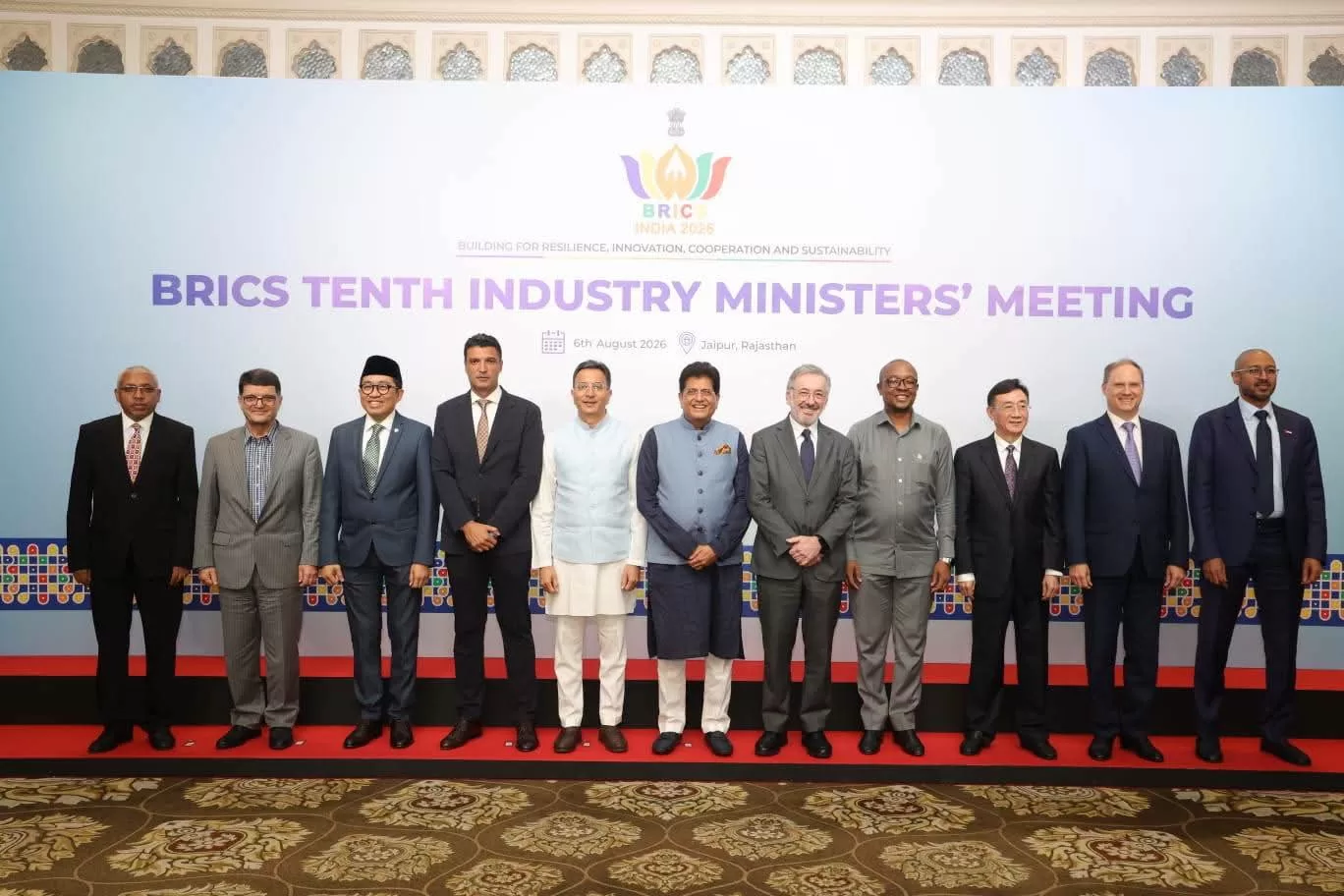
The minister made the remarks during a meeting with Indian Minister of Commerce and Industry Piyush Goyal on the sidelines of the BRICS Industry Ministers’ Meeting in Jaipur, India. The talks were attended by Egyptian Ambassador to India Kamel Galal and Assistant Minister of Industry for International Co-operation Ahmed Maghawry.
The two ministers discussed ways to deepen industrial and investment collaboration, highlighting the need to establish productive partnerships that leverage the industrial capabilities and technological expertise of both nations. Hashem said current co-operation levels do not reflect the significant opportunities available.
He pointed out shared development priorities, including support for SMEs, rural development, streamlined procedures, boosting the industry’s role in economic growth and employment, deepening local manufacturing, and diversifying supply chains. Egypt, he added, seeks to benefit from India’s experience in regulatory reform, investor support, and reducing administrative burdens on SMEs.
Minister Hashem highlighted several promising areas for co-operation, such as automotive and auto components, pharmaceuticals and medical devices, renewable energy, fertilisers and mineral‑based industries, machinery and engineering industries.
Egypt is also keen to attract more Indian investment in these sectors, particularly from SMEs with technologies suited to Egyptian and African market needs.
The two sides agreed to prepare a joint study to identify priority sectors for industrial and investment integration, in collaboration with Egyptian authorities and Invest India. The study will examine market needs, value chains, joint manufacturing opportunities, investment incentives, and tariff and non‑tariff barriers.
Discussions also covered digital payments, linking payment systems between Egypt and India, and exploring the use of local currencies in trade settlements to reduce transfer costs and facilitate investment flows.
Both ministers agreed to work towards convening the seventh session of the Egyptian–Indian Joint Trade Committee, potentially alongside Goyal’s upcoming visit to Egypt with a delegation of major Indian companies and industrial groups.
Goyal underlined the complementarity between the two economies, describing it as a strong foundation for a long‑term strategic partnership. He stressed the importance of translating discussions into concrete projects with private sector and financial institution involvement. He also shared India’s experience with its insolvency and bankruptcy law, which has helped restructure distressed assets, strengthen banks, and improve financial efficiency. India expressed readiness to share technical expertise with Egypt in this field.

