






The gleaming skyscrapers and brights lights of the United Arab Emirates (UAE) draw the eyes of all who travel there, a sign of the Arabian Peninsula nation’s rapid, oil-fuelled development over the last decades into a major hub for commerce and tourism.
But something has been lost over that period: a clear vision across nearly all of the country’s inhabited lands of the stars in the night sky that once guided Bedouin across the shifting desert dunes of its vast interior, known as the Empty Quarter.
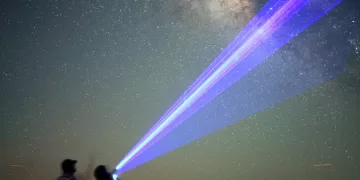
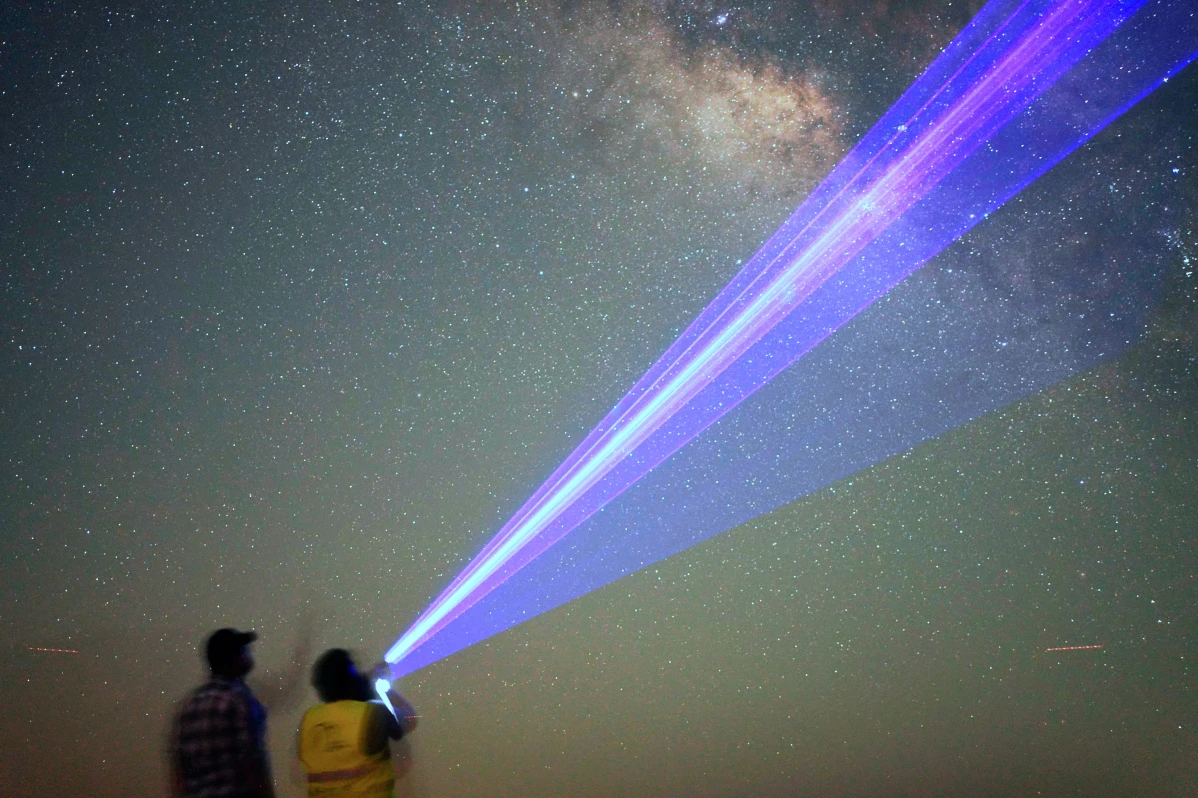
A group of volunteers from the Dubai Astronomy Group recently has been helping people reconnect with the sight of stars and the Milky Way by taking them on nighttime excursions to Al Quaa Desert, one of the darkest spots remaining in the Emirates.
“It causes us to appreciate our existence in this galaxy,” Sheeraz Awan, the general manager of the astronomy group, said as he guided participants through a weekend view of the stars in late May.
The UAE ranks among the world’s most light-polluted countries, along with several other Gulf Arab states whose populations largely live in major cities.
A 2016 scientific study concluded “humanity has enveloped our planet in a luminous fog” and suggested 99% of the Emirates population could not see the Milky Way from their homes because of artificial lights.
That illumination ranges from street lights on roadways to the LED light show thrilling tourists at Dubai’s Burj Khalifa, the world’s tallest building. Abu Dhabi plans to build a $1.7 billion version of the Sphere, the Las Vegas attraction, on its Yas Island.
In Abu Dhabi, capital of the UAE, authorities have acknowledged the light pollution problem, coming up with what it calls a “Dark Sky Policy” in 2024 on lighting and other issues across its entire emirate.
In Dubai, increasingly more buildings have LED displays and LED billboards have become more common. Authorities in the emirate did not respond to a request for comment, though Dubai also is home to the Al Qudra Lakes, a rural area with fewer areas of light pollution.
City lights don’t reach Al Quaa Desert.
The desert is easily reachable by vehicle, about 100 kilometres (62 miles) southeast of the city of Abu Dhabi along a major highway to the oasis city of Al Ain, then another road south far out into the desert.
Despite overhead road lights on the stretch known as Razeen Road, with a heavily lit prison along the way, the desert stretches just beyond in total darkness, unburdened by the bright illumination of the city.
Razeen Road finally jogs east, but an automatic gate opens to allow drivers onto an unpaved road leading deeper into the desert.

