
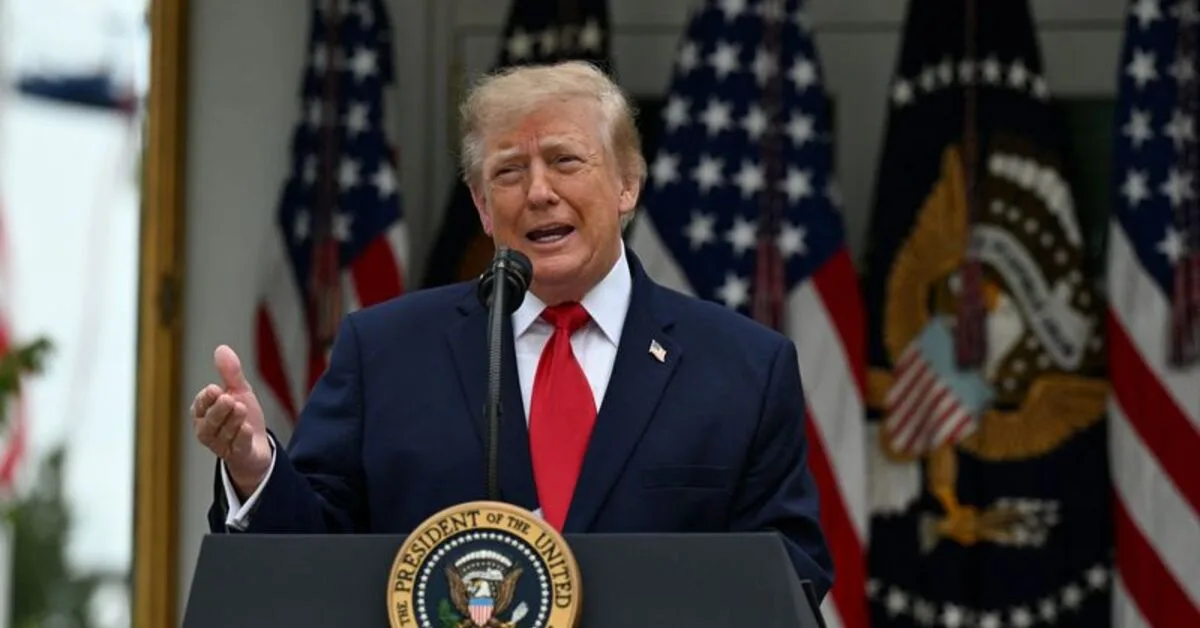



WASHINGTON (Reuters) – The International Monetary Fund (IMF) said on Thursday that it welcomes the initial positive dialogue between U.S. President Donald Trump and Chinese President Xi Jinping, adding that reducing tension and uncertainty between the world’s two largest economies was good for the world.
“It’s very important, of course, that the world’s two largest economies are engaging at the highest level,” IMF spokesperson Julie Kozack told a news briefing when asked about the Trump-Xi summit’s initial outcomes in Beijing.
“We certainly welcome the fact that there’s a constructive dialogue between the two countries. Anything that is going to help reduce trade tensions and reduce uncertainty is good for both of those large economies, and, of course, good for the global economy as well,” Kozack added.
She said that because of pressures from the Middle East war and Iran’s closure of the Strait of Hormuz, which has kept crude oil prices above $100 per barrel, the global economy is clearly moving into the middle of the three economic scenarios that the IMF outlined in its April World Economic Outlook.
The IMF’s middle “adverse scenario” would see global real GDP growth falling to 2.5% this year, compared with 3.1% in the more benign “reference forecast” that assumes a quick end to the conflict, from 3.4% growth in 2025.
The adverse scenario assumes $100-per-barrel oil for the full year but also a tightening of financial conditions and rising inflation expectations.
Kozack said that although higher energy prices have pushed up expectations of short-term price increases, the IMF views medium-term inflationary expectations as remaining well-anchored. And financial conditions in the global economy remain “accommodative,” she said.
The IMF continues to discuss possible financial assistance for member countries that are struggling with higher energy and commodity costs due to the Middle East conflict. But she did not provide any details on specific countries, nor comment on a Reuters report that Iraq has sought financial assistance.
International Monetary Fund Managing Director Kristalina Georgieva said during IMF and World Bank spring meetings in April that at least 12 countries were expected to need assistance totaling $20 billion to $50 billion from the two institutions, which are consulting on how best to aid member countries.

