









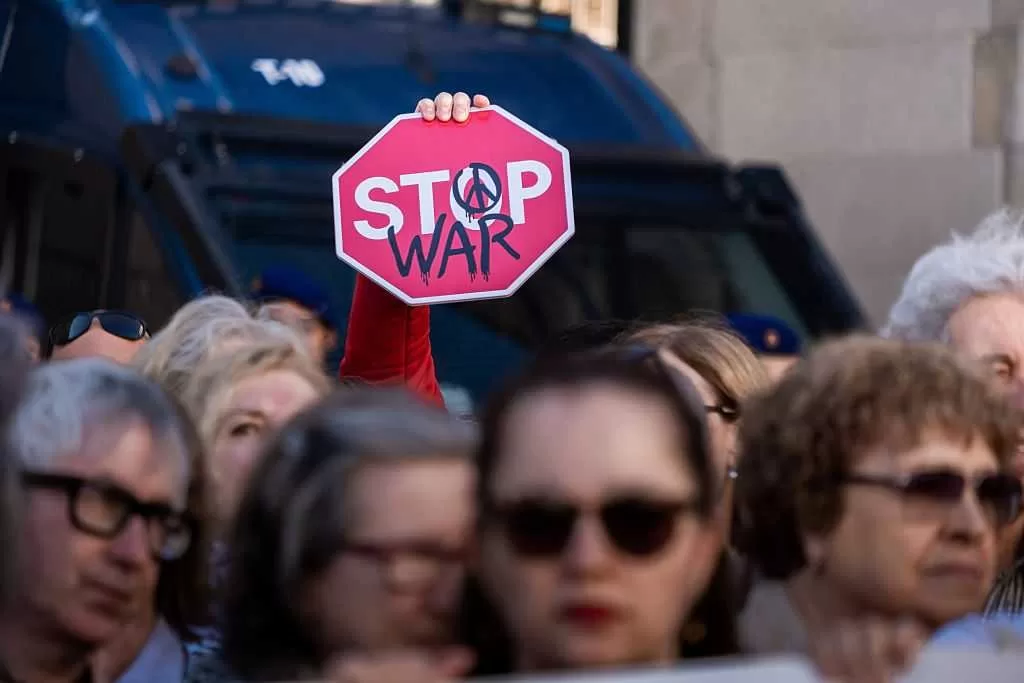
The world experienced more state-involved conflicts in 2025 than at any time since the end of World War II (WWII), according to a Norwegian study released Tuesday, which also warned of a sharp rise in attacks aimed at civilians.
The Peace Research Institute Oslo (PRIO), in its annual “Conflict Trends” report, recorded 65 conflicts involving at least one state last year — the highest number since 1946.
Conflicts between states surged to an 80-year high, doubling from the previous year to reach eight. These included border skirmishes between India and Pakistan, Afghanistan and Pakistan, and Cambodia and Thailand, as well as Russia’s war in Ukraine and Israeli military actions in Syria.
“Unfortunately, there’s not a lot of positive news,” researcher Siri Aas Rustad told journalists. “I can usually find something hopeful, but this year the numbers are truly shocking.”
2025 was the third deadliest year since the Cold War ended, with an estimated 245,000 deaths directly linked to warfare or political violence. Nearly 76,500 of those fatalities came from deliberate attacks on civilians, a dramatic rise from 14,200 in 2024.
The spike in civilian deaths was largely driven by fighting between Sudan’s army and paramilitary forces, particularly the siege and massacres in El-Fasher in the Darfur region, which are believed to have killed around 60,000 people.
Only 1994 and 2021 saw greater levels of bloodshed, due to the Rwandan genocide and the conflict in Ethiopia’s Tigray region.
“In the past five or six years, several major conflicts have been happening simultaneously, and they seem to replace each other without pause. The world gets no break,” Rustad said. “That’s what differs from earlier periods — this sustained, high-intensity level of global conflict.”
The PRIO report is based on data from the Uppsala Conflict Data Program (UCDP) at Uppsala University. It categorises organised violence into three main types: conflicts involving at least one state, non-state conflicts, and one-sided violence against civilians.
Africa remained the most affected region for state-involved conflicts, with 29 recorded, followed by Asia, the Middle East, the Americas, and Europe.
Rustad noted that Israel is “clearly one of the most aggressive countries in the world right now,” citing its involvement in conflicts in Gaza, Syria, Lebanon, with Iran, and with Houthi forces.
She also mentioned the United States, saying President Donald Trump’s return to office had led to “not just more attacks and rising violence, but also the trade barriers they’re imposing.”
“We’re putting a lid on co-operation. The UN Security Council isn’t functioning at the moment. We’re seeing a far more polarized world,” she said.

