







A fresh round of negotiations over the Middle East conflict was set to begin Sunday, with Iranian envoys and US Vice President JD Vance arriving in the Swiss host city. Their arrival came as Tehran announced it was once again closing the Strait of Hormuz in response to Israeli strikes in Lebanon.
Before flying to Europe, Vance told reporters he hoped to “make progress on the nuclear issue” and on securing “a Lebanon ceasefire,” describing those as the two main priorities for US negotiators.
Talks originally scheduled for Friday in Switzerland were abruptly postponed after Israel launched lethal attacks in Lebanon following the deaths of four Israeli soldiers in combat.
Washington later declared a renewed ceasefire on Friday — a requirement under its preliminary agreement with Iran — but clashes erupted again on Saturday between Israeli forces and Hezbollah, with both sides accusing the other of violating the truce.
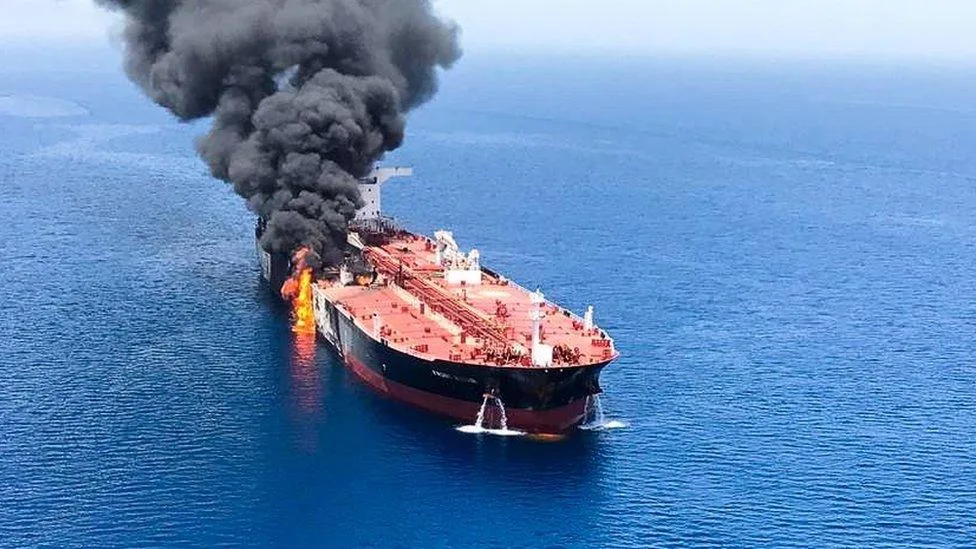
Accusing the United States of a “breach of contract” and condemning what it called “the Zionist regime’s continuous and relentless violation of the ceasefire in southern Lebanon,” Iran’s central military command announced that “the Strait of Hormuz will be closed to vessel traffic.”
The strait, a crucial route for global oil and gas shipments, had been blockaded by Iran for much of the conflict, rattling international energy markets.
Tehran had agreed to reopen the passage under the preliminary accord signed by US President Donald Trump and Iranian President Masoud Pezeshkian, and shipping activity had begun to resume.
Following Iran’s announcement, US Central Command said safe passage through the strait “remained intact” and that American forces were “present and vigilant.”
Trump later warned that the United States could impose its own tolls on vessels passing through Hormuz if negotiators failed to finalize the agreement.
“There will be no tolls unless they are imposed by and for the United States of America,” he wrote on Truth Social.
An Iranian delegation arrived in Switzerland late Saturday, according to state media and the Swiss foreign ministry.
Iran’s state broadcaster reported that the group included parliamentary speaker Mohammad Bagher Ghalibaf and Foreign Minister Abbas Araghchi.
Foreign ministry spokesman Esmaeil Baqaei said the delegation would insist on “the other party’s commitments” being honored under the agreement.
“Otherwise, the entire understanding will be in trouble,” he warned, according to the IRNA news agency.
Vance landed at Emmen Air Base on Sunday morning, noting earlier that he could remain “a day or two” at most.
US negotiators Jared Kushner and Steve Witkoff were already on the ground working on “some of the technical elements,” and had reported that “things are going well,” Vance told Fox News on Saturday.
Pakistan, which has been assisting with mediation efforts, said Sunday that Prime Minister Shehbaz Sharif and army chief Asim Munir had departed for Switzerland to join high-level talks involving US and Iranian officials, along with other mediators from Qatar.
The discussions are intended to launch a two-month negotiation period aimed at resolving outstanding issues from the initial accord, particularly those related to Iran’s nuclear program.

