








Airstrike on Hamas delegation disrupts ceasefire talks, sparks Gulf concern over security guarantees, heightens risk of escalation across the Middle East
Recent Israeli airstrikes in Qatar are deeply concerning. They are expected to have far-reaching consequences that may unravel the fragile regional security landscape.
This unprecedented attack on the territory of a key US ally, exactly when it was heavily involved in ceasefire and hostage release talks in Gaza, does not only undermine prospects for peace but also severely damages US credibility and its strategic partnerships in the region.
The ramifications of such an act of aggression are profound. They will likely shape the geopolitical dynamics of the Middle East for many years to come.
Blow to diplomacy
The airstrikes in Doha send a clear message that Israel prefers to achieve its objectives through force rather than diplomatic means.
The attack targeted Hamas leaders who were in Qatar to deliberate on a ceasefire proposal made by US President Donald Trump.
By striking the Hamas leadership in a neutral country that has long served as a key mediator, Israel has signalled its disdain for the diplomatic process and its intent to pursue a military-first approach.
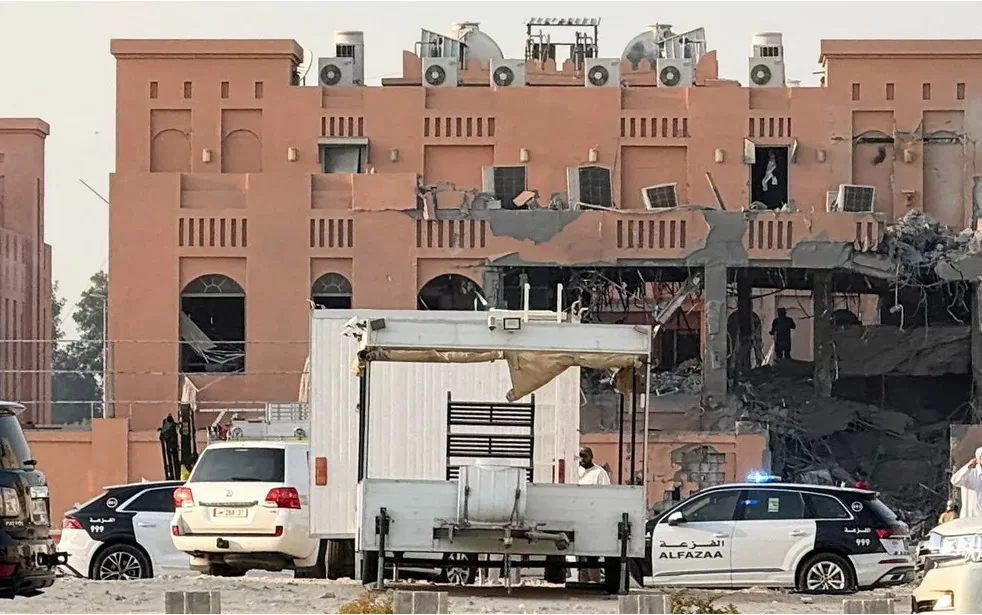
This act of violence, which reportedly killed five people, including four security escorts of the Hamas leaders and a Qatari policeman, not only violated Qatar’s sovereignty but also created a lasting image of chaos and destruction.
The plumes of dark smoke resulting from the attack over Doha need to be seen as a powerful symbol to the Arab world and beyond.
They validate the widespread scepticism that Israel is not genuinely interested in a ceasefire and instead seeks to escalate the conflict.
This action will be seen as a refusal to respect the sanctity of a sanctuary for negotiations, which is a fundamental tenet of conflict resolution.
It is a dangerous precedent that will make it harder to de-escalate tensions and resolve disputes in the future.
US credibility erosion
The US has much to lose from this strike. With Washington’s prior awareness and apparent sanctioning of the attack, the US has jeopardised its role as a trusted and influential partner in the region.
For years, the US has worked to build a strategic balance with its Arab partners, a delicate status that is now in serious jeopardy.
This is particularly damaging in the context of recent diplomatic gains, such as the Abraham Accords and President Trump’s efforts to foster closer ties with Gulf States.
The attack on Doha will force Gulf States to reassess the value of their security partnerships with the US and whether hosting American military bases, such as Qatar’s Al Udeid Air Base, the largest concentration of US forces in the region, provides them with a genuine security guarantee.
The perception is that Washington is either unwilling or unable to rein in its closest ally, Israel.
This could lead to a diversification of security partnerships and a push for greater strategic autonomy among Gulf states.
Beyond the military aspect, the attack also undermines US economic and technological partnerships with Gulf states, many of which have made significant commitments to invest in the US and collaborate on emerging technologies.
Any goodwill generated by recent diplomatic outreach has been depleted, and the prospect of additional Arab states normalising relations with Israel has been all but extinguished.
Consequences for regional stability
Israel’s strike on Doha is a dangerous escalation that will likely lead to an increase in violence across the region. It sends a clear message that political negotiations are not to be trusted.
The most likely and immediate outcome is an escalation of violence against Israel in Gaza, the West Bank, and beyond.
With the diplomatic path seemingly closed, resistance groups may feel they have no option but to resort to force.
The attack may also cause Arab partners to reconsider their participation in regional security initiatives aimed at countering threats from Iran.
The lack of trust could hinder efforts to enhance coordination and interoperability on matters of mutual concern.
The strike also makes US and Israeli diplomats and officials less safe across the region, as it signals that they are not immune from targeted attacks, even in neutral territories.
This strike reinforces the dangerous notion that Washington has effectively outsourced its Middle East strategy to Israel, a country that has yet to articulate a comprehensive vision for a stable and secure region.
The pursuit of perpetual tactical victories at the expense of long-term strategic stability is a flawed approach that will only perpetuate conflict.
To regain its status as a trusted interlocutor, the US will need to make it clear that such incursions will not be tolerated. It must also articulate its own strategic vision for the region that respects the collective interests of its partners.
Mohamed Fahmy is the editor-in-chief of The Egyptian Gazette and Egyptian Mail newspapers

