


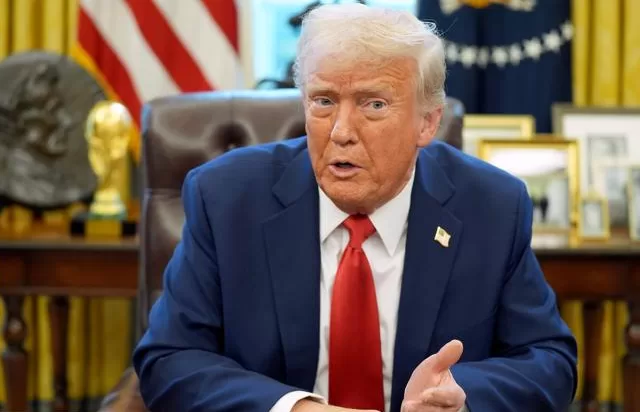
DUBAI — Israel and Iran seemed to uphold their fragile ceasefire for a second consecutive day Wednesday, as US President Donald Trump asserted that American and Iranian officials are scheduled to hold talks next week, raising cautious optimism for longer-term peace.
Trump, who helped negotiate the ceasefire that took hold Tuesday on the 12th day of the war, told reporters at a NATO summit that he was not particularly interested in restarting negotiations with Iran, insisting that US strikes had destroyed its nuclear programme. Earlier in the day, an Iranian official questioned whether the United States could be trusted after its weekend attack.
“We may sign an agreement, I don´t know,” Trump said according to AP. “The way I look at it, they fought, the war is done.”
Iran has not acknowledged any talks taking place next week, though US Mideast envoy Steve Witkoff has said there has been direct and indirect communication between the countries. A sixth round of US-Iran negotiations was scheduled for earlier this month in Oman but was canceled after Israel attacked Iran.
Earlier, Trump said the ceasefire was going “very well,” and added that Iran was “not going to have a bomb, and they´re not going to enrich.”
Iran has insisted that it will not give up its nuclear programme. In a vote underscoring the tough path ahead, its parliament agreed to fast-track a proposal that would effectively stop the country´s cooperation with the International Atomic Energy Agency, the UN watchdog that has monitored the program for years.
Ahead of the vote, Parliament Speaker Mohammad Bagher Qalibaf criticized the IAEA for refusing “to even pretend to condemn the attack on Iran’s nuclear facilities” that the US carried out Sunday.
“For this reason, the Atomic Energy Organization of Iran will suspend cooperation with the IAEA until security of nuclear facilities is ensured, and Iran´s peaceful nuclear program will move forward at a faster pace,” Qalibaf told lawmakers.
IAEA Director General Rafael Mariano Grossi said he wrote to Iran to discuss resuming inspections of their nuclear facilities. Among other things, Iran claims to have moved its highly enriched uranium ahead of the US strikes, and Grossi said his inspectors need to reassess the country´s stockpiles.
“We need to return,” he said. “We need to engage.”
French President Emmanuel Macron said he hoped Tehran would come back to the table. France was part of the 2015 deal with Iran that restricted its nuclear program, but the agreement began unraveling after Trump pulled the US out in his first term. Macron spoke multiple times to Iranian President Masoud Pezeshkian during the war.
International Atomic Energy Agency Director Rafael Grossi said that Iran must quickly resume cooperation with international inspectors, telling French broadcaster France 2 that the IAEA had lost visibility over sensitive nuclear materials since the onset of hostilities.
Grossi said Iran is legally obligated to cooperate with the IAEA under the Non-Proliferation Treaty.
“During a war, inspections are not possible. But now that hostilities have ceased, and given the sensitivity of this material, I believe it is in everyone´s interest that we resume our activities as soon as possible,” he said.

