






DOHA/WASHINGTON – US President Donald Trump said on Thursday he had told Israel not to repeat its attacks on Iranian natural gas infrastructure as tit-for-tat strikes on energy plants sent energy prices spiralling, sharply escalating the US-Israeli war on Iran.
Trump’s comment came as energy prices jumped sharply higher on Thursday after Iran responded to an Israeli attack on a major gas field by hitting Qatar’s Ras Laffan Industrial City, which processes around a fifth of the world’s liquefied natural gas, causing damage that will take years to repair.
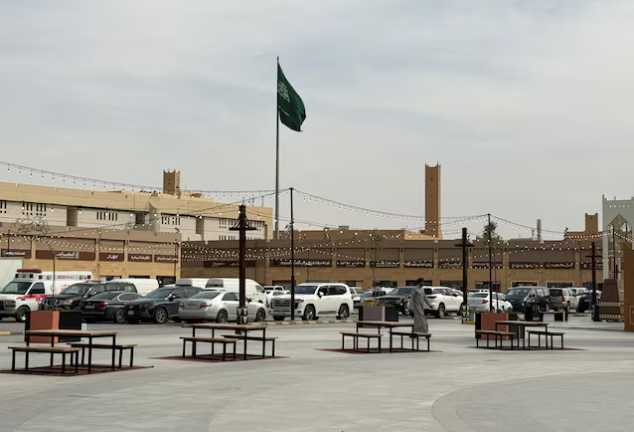
Saudi Arabia’s main port on the Red Sea, where it has been able to divert some exports to avoid Iran’s closure of the Gulf’s exit point, the Strait of Hormuz, was also attacked.
The strikes underscored Iran’s continued ability to exact a heavy price for the US-Israeli campaign, and the limits of air defences in protecting the Gulf’s most valuable and strategic energy assets.
Trump, politically vulnerable to rising fuel prices among his core voters, has lashed out at allies who have responded cautiously to his demands that they help secure the Strait of Hormuz, the conduit for around a fifth of the world’s oil.
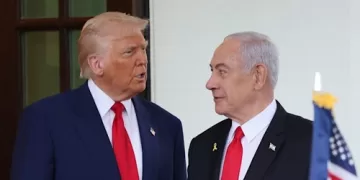
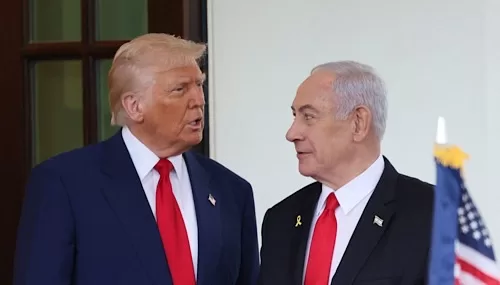
But he said he had told Israeli Prime Minister Benjamin Netanyahu not to repeat the attack on energy infrastructure.
“I told him, ‘Don’t do that’, and he won’t do that,” he told reporters in the Oval Office, where he met Japanese Prime Minister Sanae Takaichi.
A US official and three other people familiar with the planning told Reuters that Trump was considering sending thousands more U.S. troops to the Middle East. But at his meeting with Takaichi, Trump said he had no plans to deploy ground forces.
“I’m not putting troops anywhere,” he said.
With no end in sight almost three weeks into the war, and the threat of a global “oil shock” growing by the day, Britain, France, Germany, Italy, the Netherlands and Japan issued a joint statement expressing “our readiness to contribute to appropriate efforts to ensure safe passage through the Strait”.

