



BEIJING – US President Donald Trump left China on Friday with no major breakthroughs on trade or tangible help from Beijing to end the Iran war, despite two days spent heaping praise on his host, Xi Jinping.
Trump’s visit to America’s main strategic and economic rival, the first by a US president since his last trip in 2017, had aimed for concrete results to lift his sagging approval ratings before the November midterm elections. Xi will visit the U.S. in the fall at Trump’s invitation, China’s Foreign Minister Wang Yi said.
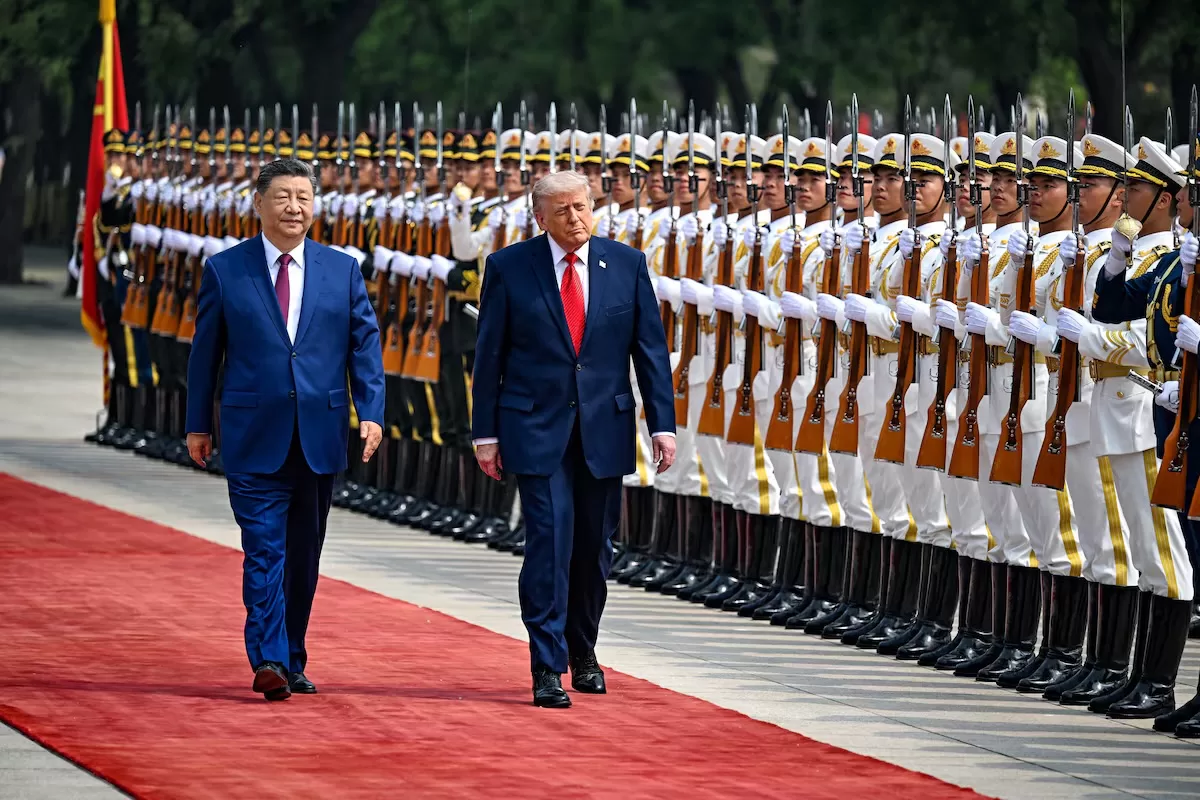
The summit was filled with pageantry, from goose-stepping soldiers to tours of a secret garden. But behind closed doors, Xi issued a stark warning to Trump that any mishandling of China’s top concern, Taiwan, could spiral into conflict.
During a huddle with reporters on the way back to the U.S., Trump said Xi told him he opposed Taiwan’s independence.
“I heard him out. I didn’t make a comment … I made no commitment either way,” said Trump. He added that he will decide on a pending arms sale to Taiwan shortly, after speaking to “the person that right now is … running Taiwan.”
It was unclear if Trump was referring to Taiwan’s president, Lai Ching-te. A direct conversation between a sitting U.S. president and Taiwan’s leader would be unprecedented in the period since Washington shifted diplomatic recognition to Beijing from Taipei in 1979, and would likely anger China, which sees the democratically governed island as its own territory.
While Trump searched for immediate business wins, such as a deal to sell Boeing jets that did not impress investors, Xi talked up a long-term reset and pact to maintain stable trade ties with Washington, underscoring their differing priorities.
Xi pushed a new term by describing the relationship as “constructive strategic stability” – a sharp departure from the framing of “strategic competition” used by former U.S. President Joe Biden, which Beijing disliked.
“Until now, China hasn’t proposed an alternative – now they have – if the U.S. side agrees, that is progress,” said Da Wei, director of the Center for International Security and Strategy at Tsinghua University in Beijing.
A brief U.S. summary of Thursday’s talks highlighted what the White House called the leaders’ shared desire to reopen the Strait of Hormuz off Iran, and Xi’s interest in American oil purchases to pare its dependence on the Middle East.
But just before the leaders met for tea on Friday, China’s foreign ministry issued a blunt statement that supported efforts to reach a peace deal but said the conflict should never have happened and had no reason to continue.
At Zhongnanhai, Trump said the leaders had discussed Iran and felt “very similar”, though Xi did not comment. On the flight back home, Trump added that he wasn’t “asking for any favors” on Iran.
“What’s notable is that there’s no Chinese commitment to do anything specific with regards to Iran,” said Patricia Kim, a foreign policy fellow at the Brookings Institution.
- Latest
- Trending

