








Should the US decide to send in military forces to secure Iran’s uranium stockpile, it would be a complex, risky and lengthy operation, fraught with radiation and chemical dangers, according to experts and former government officials.
US President Donald Trump has offered shifting reasons for the war in Iran but has consistently said a primary objective is ensuring the country will “never have a nuclear weapon.” Less clear is how far he is willing to go to seize Iran’s nuclear material.
Given the risks of inserting as many as 1,000 specially trained forces into a war zone to remove the stockpile, another option would be a negotiated settlement with Iran that would allow the material to be surrendered and secured without using force.
Iran has 440.9 kilograms (972 pounds) of uranium that is enriched up to 60% purity, a short, technical step from weapons-grade levels of 90%, according to the International Atomic Energy Agency, the UN’s nuclear watchdog agency.
That stockpile could allow Iran to build as many as 10 nuclear bombs, should it decide to weaponise its programme, IAEA Director General Rafael Grossi told The Associated Press last year. He added it doesn’t mean Iran has such a weapon.
Iran long has insisted its programme is peaceful, but the IAEA and Western nations say Tehran had an organized nuclear weapons program up until 2003.
IAEA inspectors have not been able to verify the near weapons-grade uranium since June 2025, when Israeli and American strikes greatly weakened Iran’s air defenses, military leadership and nuclear program. The lack of inspections has made it difficult to know exactly where it is located.
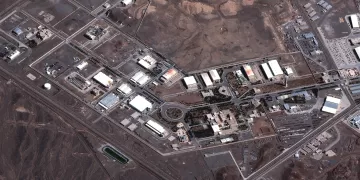
Grossi has said that the IAEA believes a stockpile of roughly 200 kilograms (about 440 pounds) of highly enriched uranium is stored in tunnels at Iran’s nuclear complex outside of Isfahan. The site was mainly known for producing the uranium gas that is fed into centrifuges to be spun and purified.
Additional quantities are believed to be at the Natanz nuclear site and lesser amounts may be stored at a facility in Fordo, he has said.
It’s unclear whether additional quantities could be elsewhere.
US Director of National Intelligence Tulsi Gabbard told a House hearing March 19 that the US intelligence community has “high confidence” that it knows the location of Iran’s highly enriched uranium stockpiles.

