



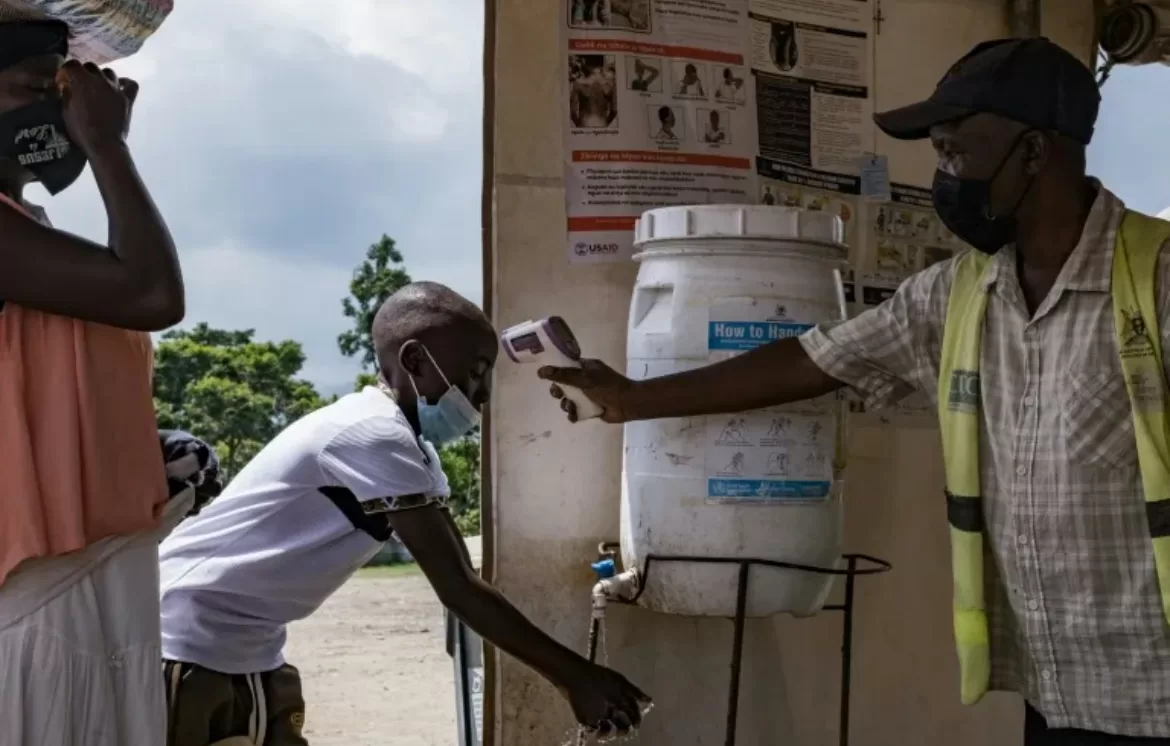
An escalating outbreak of a rare Ebola strain in the Democratic Republic of Congo has kicked off a race to find vaccines and treatments that can be quickly tested and rolled out to save lives and stem the crisis.
More than l30 people have died so far during the outbreak, the World Health Organization said on Tuesday, as the United States warned its citizens not to travel to the affected region.
It is the 17th Ebola outbreak in DR Congo, but just the third caused by the Bundibugyo strain, for which there are no approved vaccines or treatments.
However scientists have developed numerous candidates for vaccines and treatments that have not yet been tested in humans.
The WHO has said it will examine the options, including a vaccine called Ervebo that targets the more common Zaire strain and has already been deployed in numerous countries.
Virologist Thomas Geisbert, who helped develop the Ervebo vaccine, has designed a similar, single-injection jab targeting the Bundibugyo strain that research on monkeys has found offers protection against the virus.
However trialling vaccines in humans and mass manufacturing doses is a lengthy and expensive process, Geisbert told AFP, comparing the market for a Bundibugyo jab to that of the Andes hantavirus strain that recently sparked global alarm.
“There hasn’t been an incentive for big pharma to jump in, because it’s not a money-maker,” said the researcher at the University of Texas Medical Branch at Galveston.
Geisbert first published a study about his Bundibugyo vaccine candidate back in 2013, but it has since “just sat there”, he said.
It was a similar story when he first published research in 2005 about what would eventually become the Ervebo vaccine.

