





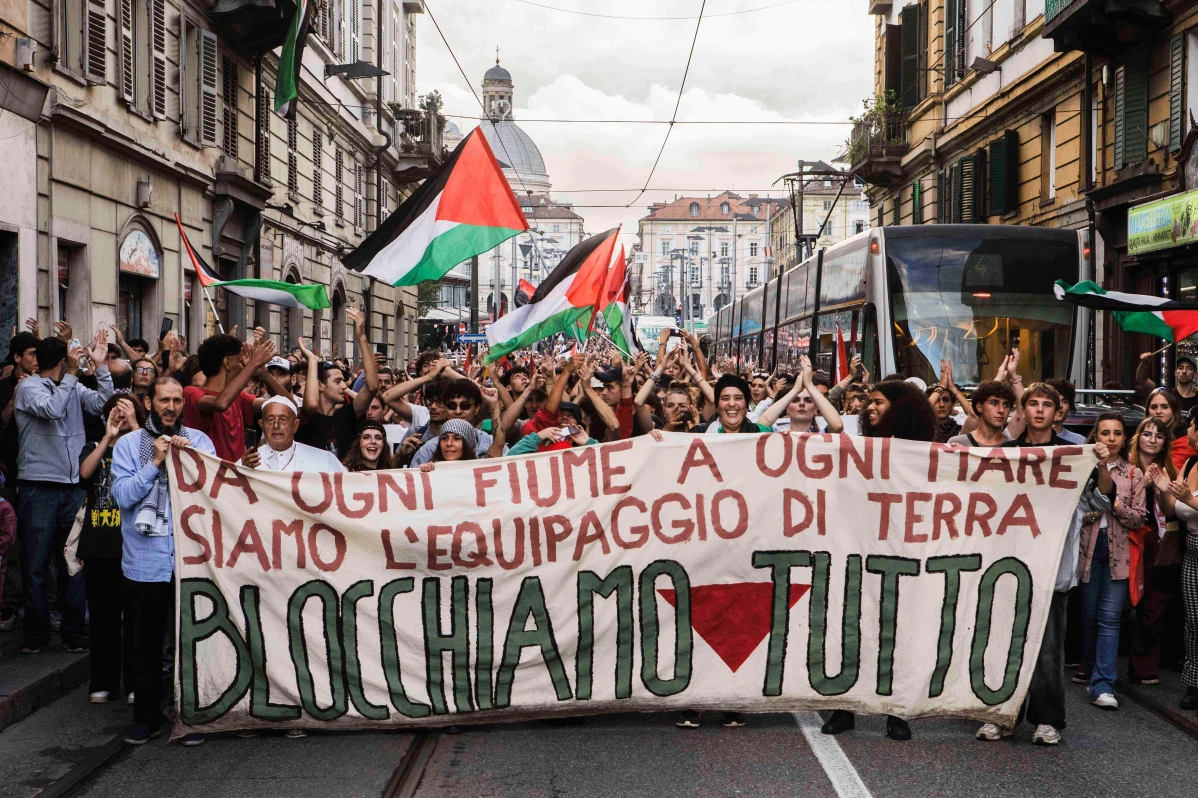
Pro-Palestinian protests are shaking major European cities, and calls are growing to ban Israel from sporting and cultural events. European navies have been deployed to protect activists trying to get aid into Gaza — and a wave of countries have done the once-unthinkable and recognized a Palestinian state.
As outrage over the humanitarian catastrophe grows, more European leaders, sometimes driven by pressure from their populations, have openly condemned Israel’s war conduct and sought to push Prime Minister Benjamin Netanyahu’s government to agree to a ceasefire and allow in aid.
“There has been a ground-breaking shift in Europe where somewhere over the last year populations have been putting more pressure on their governments, which has helped break taboos at the top over criticism of Israel,” said Sanam Vakil, director of the Chatham House think tank’s Middle East and North Africa program.
Italian Premier Giorgia Meloni, one of Israel’s closest EU allies, said last week that she would support European Union sanctions against Israel. It was her toughest position yet, and followed a nationwide strike in Italy and pro-Palestinian protests from Palermo to Milan.
Speaking at the U.N. General Assembly in New York, Meloni said: “Israel ended up violating humanitarian norms, causing a massacre among civilians.”
Since Oct. 7, 2023, when Hamas-led militants launched air and ground attacks on Israel, killing some 1,200 people and taking more than 250 hostages, Israel’s military campaign in Gaza has killed more than 66,000 people, according to Gaza’s Health Ministry. The ministry, part of the Hamas-run government and staffed by medical professionals, doesn’t differentiate between civilians and combatants, but says women and children make up around half.
The war has also destroyed vast areas of Gaza, killed 289 journalists, according to the Committee to Protect Journalists, displaced around 90% of Gaza’s population, and caused a catastrophic humanitarian crisis, including an outbreak of famine in Gaza City.

