



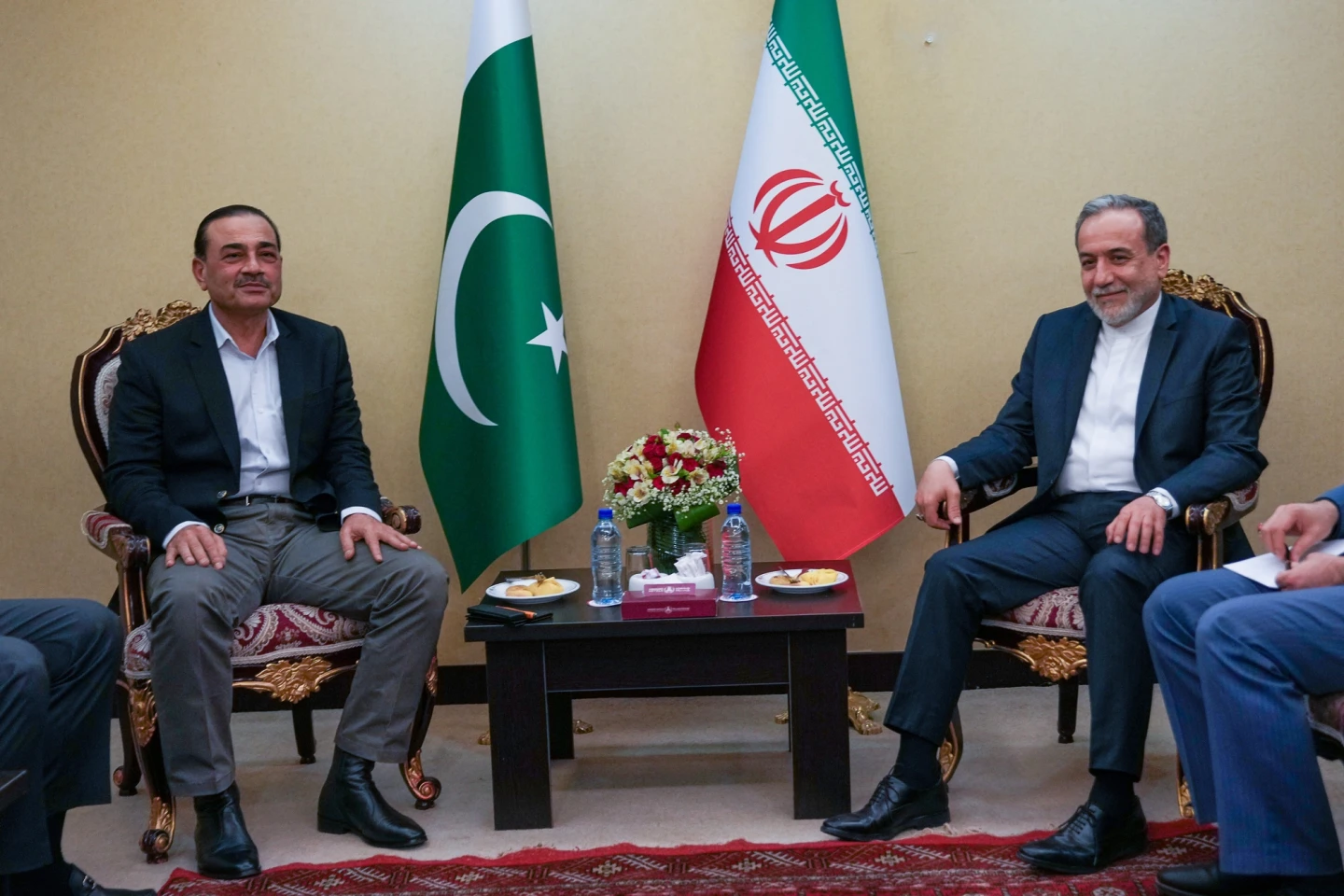
Pakistan’s army chief is set to meet with Iranian officials in Tehran on Thursday in a bid to extend the ceasefire which paused almost seven weeks of war between Israel, the US and Iran that have killed thousands of people and upended global markets by disrupting the flow of oil.
Uncertainty remains whether the frantic diplomacy can lead to a deal as the ceasefire passes the half-way mark in the original two-week agreement.
The meeting comes as President Donald Trump announced the leaders of Israel and Lebanon will speak later on Thursday about halting the fighting between them.
If it takes place, the conversation would be the first time the leaders of the two countries have spoken directly in more than 30 years.
Both Israeli and Lebanese governments refused to confirm a conversation. Meanwhile, the Lebanese group Hezbollah and Israel’s military continued cross-border attacks on Thursday.
The White House said any further talks would likely take place in the Pakistani capital of Islamabad, though no decision had been made on whether to resume negotiations.
The fragile ceasefire, which halted the fighting in the Middle East a week ago, is holding despite a US naval blockade of Iranian ports and Iranian counter-threats to target regional ports across the Red Sea.
Pakistan has emerged as a key mediator after it hosted direct talks between the US and Iran in Islamabad that authorities said helped narrow differences between the two sides.
Mediators are seeking a new round before the ceasefire expires next week.
The war has jolted markets and rattled the global economy as shipping has been cut off and airstrikes have torn through military and civilian infrastructure across the region.
Oil prices have fallen amid hopes for an end to fighting, and US stocks on Wednesday surpassed records set in January.
Trump said that Israel and Lebanon are expected to speak later on Thursday about a possible ceasefire, but did not elaborate which leaders would speak.
Officials from Netanyahu’s office and the Lebanese government refused to confirm the possible conversation.
An Israeli minister said Netanyahu will speak with Lebanese President Joseph Aoun on Thursday.
“Today the prime minister will speak for the first time with the president of Lebanon, after so many years of a complete disconnection in the dialogue between the two countries,” Gila Gamliel, Israel’s Minister of Science and Technology, told Army Radio Thursday morning.
Gamliel, who was at a cabinet meeting late Wednesday night about negotiations with Lebanon, is part of Israel’s security cabinet. She said the talks “will hopefully ultimately lead to prosperity and flourishing” between the two countries.
Lebanon and Israel held their first direct diplomatic talks in decades on Tuesday in Washington following more than a month of war between Israel and Iran-backed Hezbollah.
But the two countries continued exchanging fire across the border on Thursday, with Hezbollah targeting towns in northern Israel with rockets and drones.
Israeli fire against southern Lebanon intensified, especially around the cities of Tyre, Nabatieh, and the strategic town of Bint Jbeil near the border with Israel.
Israel and Lebanon have technically been at war since Israel was established in 1948, and Lebanon remains deeply divided over diplomatic engagement with Israel.
Even as the US blockade on Iranian ports and renewed Iranian threats strained the ceasefire agreement, regional officials reported progress, telling AP the United States and Iran had an “in-principle agreement” to extend it to allow for more diplomacy. They spoke on condition of anonymity to discuss sensitive negotiations.
But while mediators worked for peace, tensions simmered.
The commander of Iran’s joint military command, Ali Abdollahi, threatened to halt trade in the region if the US does not lift its naval blockade, and a newly appointed military adviser to Iranian Supreme Leader Mojtaba Khamenei said he doesn’t support extending the ceasefire.

