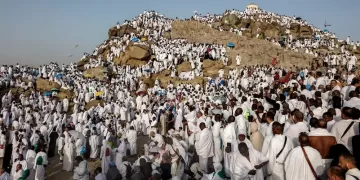







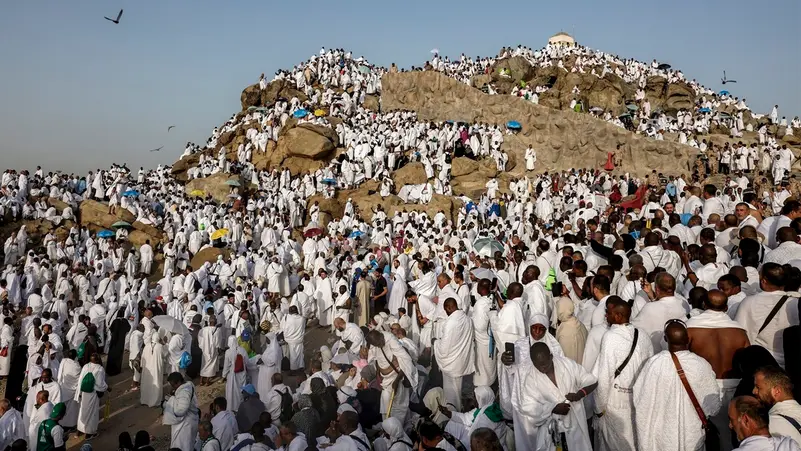
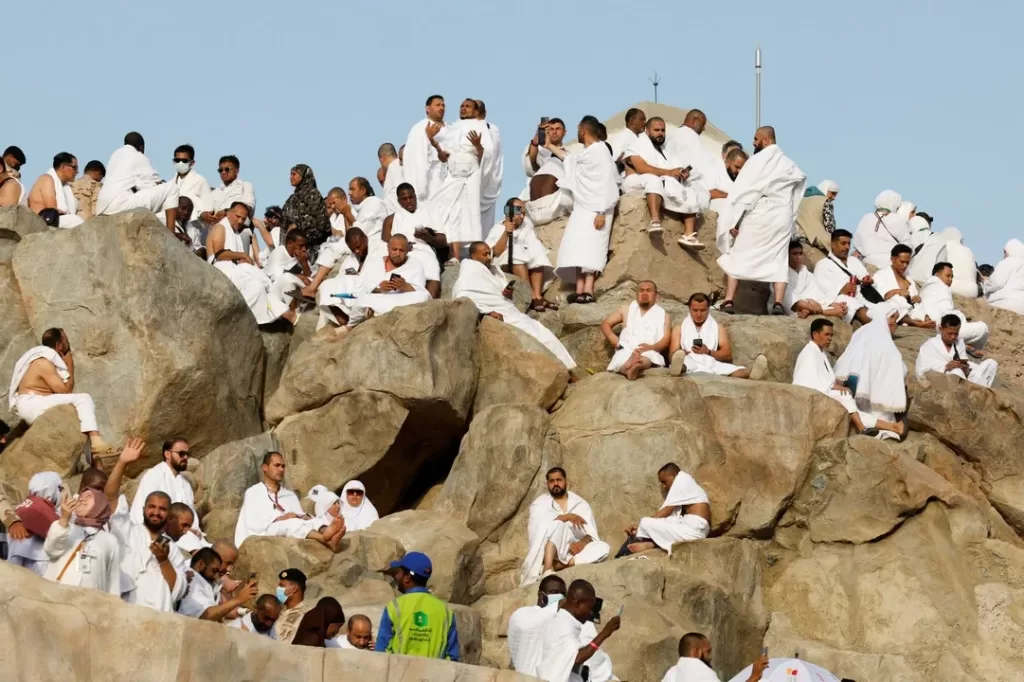
Muslim pilgrims from around the world congregated on Mount Arafat in Saudi Arabia on Tuesday, the second official day of the annual Islamic pilgrimage, considered the pinnacle of Hajj.
Despite the sweltering heat, the pilgrims gathered on the rocky hill and the surrounding plains for intense prayers that often mark a spiritual peak.
Typically, they fervently murmur prayers and pour their hearts out in supplications, asking God for forgiveness, mercy, blessings and good health. It is common for many pilgrims on that day to raise their hands in worship, with tears streaming down their faces, on the slopes of the rocky hill and in the surrounding area.
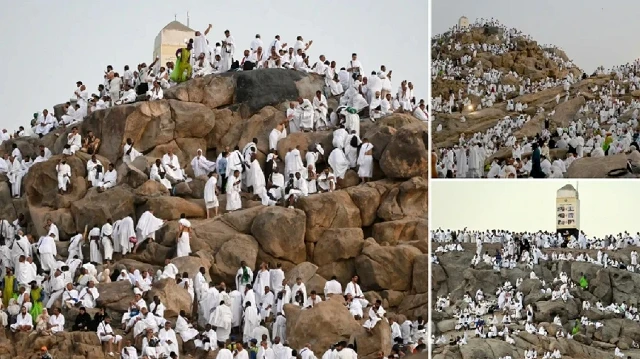
Hajj, one of the five pillars of Islam, is required once in a lifetime for every Muslim who can afford it and is physically able to perform it.
For pilgrims, Hajj, performed over several days, can be a deeply moving spiritual experience and a chance to seek God’s forgiveness and the erasure of past sins. Over 1.5 million Muslims are perforing Hajj rituals this year.
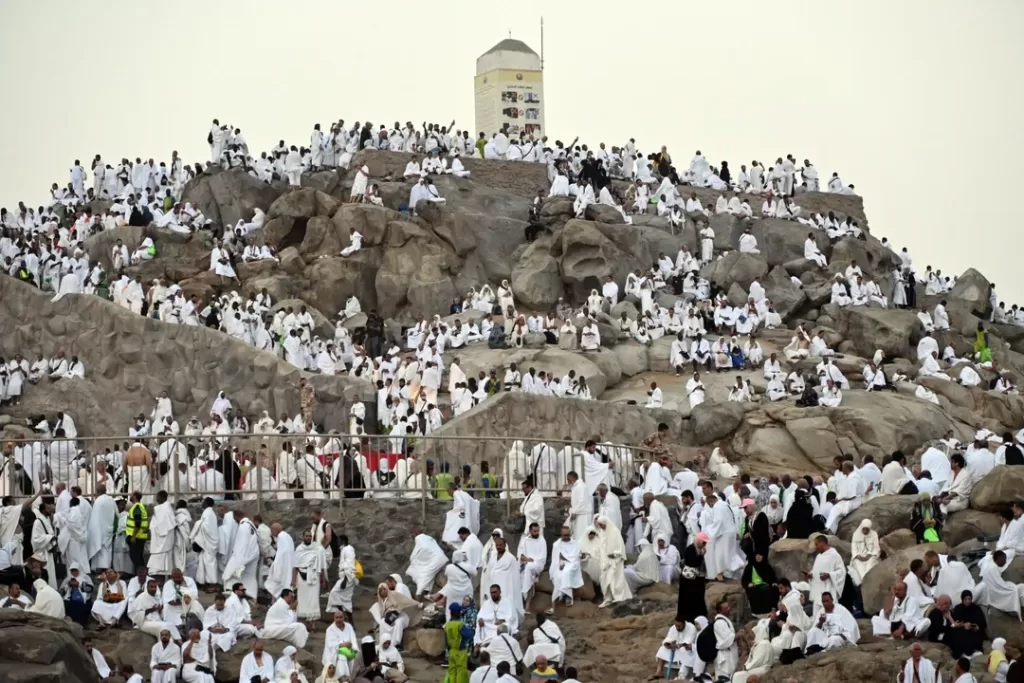
At sunset, they will proceed to Muzdalifah, where they will perform the sunset and night prayers, then remain overnight until dawn of the next day.
Hajj rituals officially began on Monday with pilgrims arriving in Mina, western Saudi Arabia, amid extensive services and security measures aimed at facilitating the pilgrimage.
The six-day Hajj season includes the standing at Arafat on Tuesday, overnight stays in Muzdalifah, the symbolic stoning ritual and the farewell circumambulation of the Kaaba at the Grand Mosque in Mecca.
The ritual consists of several rites, which are meant to symbolise the essential concepts of the Islamic faith, and to commemorate the trials of Prophet Abraham and his family.
Saudi authorities have expanded organisational and security measures for the 2026 Hajj season, including the use of surveillance technologies and crowd-monitoring systems to manage pilgrim movement and prevent unauthorised entry into the holy sites.

