



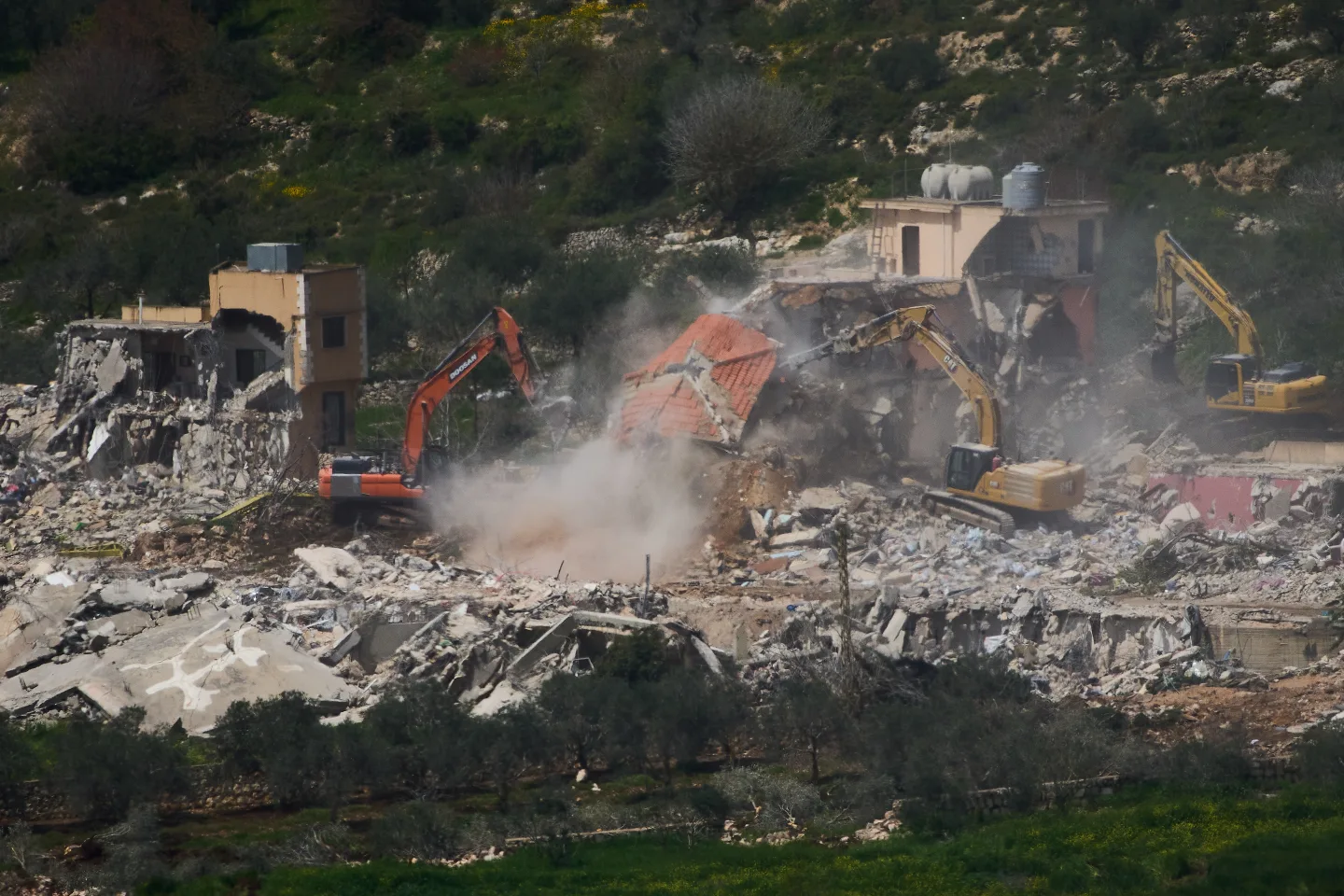
Spread across a hillside of southern Lebanon, the tiny village of Beit Lif had been almost entirely flattened. Once home to a few thousand people, nearly every house had been reduced to piles of concrete by Israeli military demolitions.
“They were demolishing it gradually until they reached the main square and now, as you can see, there are no more houses,” said Hassan Sweidan, a resident of a neighboring village looking across at Beit Lif — about 4 kilometers (2.5 miles) north of Lebanon’s border with Israel — from a nearby hill.
Since agreeing last week to a ceasefire with Hezbollah, the Israeli army has been leveling neighborhoods in towns and villages near the Lebanese-Israeli border. The military says it destroys buildings that were used as outposts by the Iran-backed militant group.
But in many cases, like Beit Lif, the demolition is almost complete. The wide scale of destruction has Lebanese officials and residents increasingly worried that large numbers of people displaced by the latest war will have nowhere to return if the fragile truce holds.
Because of security concerns and limited access, neither UN peacekeepers nor Lebanese officials have been able to conduct a detailed survey of the villages where demolitions are taking place. But observers have described entire residential neighborhoods in multiple villages being systematically destroyed.
The demolitions mirror what has happened in the Gaza Strip, where Israeli bulldozers and controlled explosions have almost entirely razed the city of Rafah and other towns under Israeli control. There, Israel says it is removing structures used by Hamas.
Lebanese officials plan to raise the issue of widespread demolitions on Thursday when they hold ceasefire talks with their Israeli counterparts in Washington — part of the first direct negotiations between the two countries in decades.

