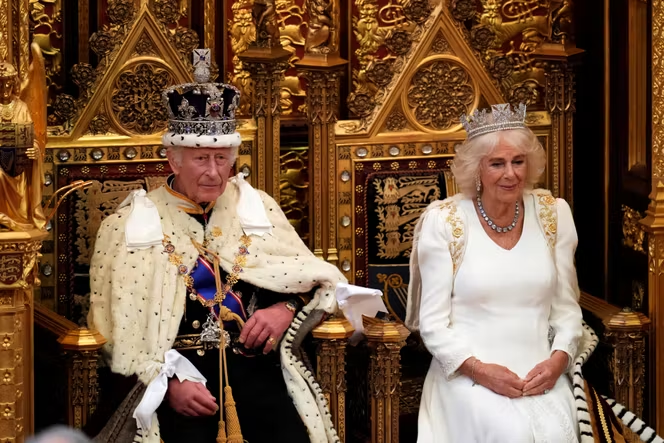




King Charles III on Wednesday will deliver the government’s legislative programme for the coming year to lawmakers with all the pomp and historic trappings that accompany the ceremonial opening of Britain’s Parliament.
The question is whether Prime Minister Keir Starmer will be around to implement it and, even if he survives the latest government crisis, whether he will have the authority to push his proposals through Parliament.
The King’s speech will be Starmer’s second attempt to save his premiership after his Labour Party suffered huge losses in local and regional elections last week. That weakened his already tenuous grip on power and fueled calls for him to step down from members of his own party who believe Starmer has been too timid in attacking the rising cost of living, wealth inequality and the country’s creaking public services.
The pressure on Starmer has only increased since a Monday speech to party supporters, promoted as the first leg of his fight back. But it was criticized as “tone deaf” and lacking the bold policies needed to tackle Britain’s problems. Former Safeguarding Minister Jess Phillips resigned from the Cabinet on Tuesday, saying the government needed to “have a row, push back, make arguments, bring people along.”
The King’s Speech will be a moment when the historic power and grandeur of Britain will collide with the reality of the modern United Kingdom, a mid-sized country with an underfunded military, rising debt and waning international influence. It’s a country struggling to control immigration and pay for public services such as health care and education.
The speech is just one element of the state opening of Parliament, a traditional set piece of the political calendar that uses carefully choreographed pageantry to showcase Britain’s evolution from an absolute monarchy to a parliamentary democracy where real power is vested in the elected House of Commons.
This year’s edition will be closely watched because of Starmer’s precarious position.

