


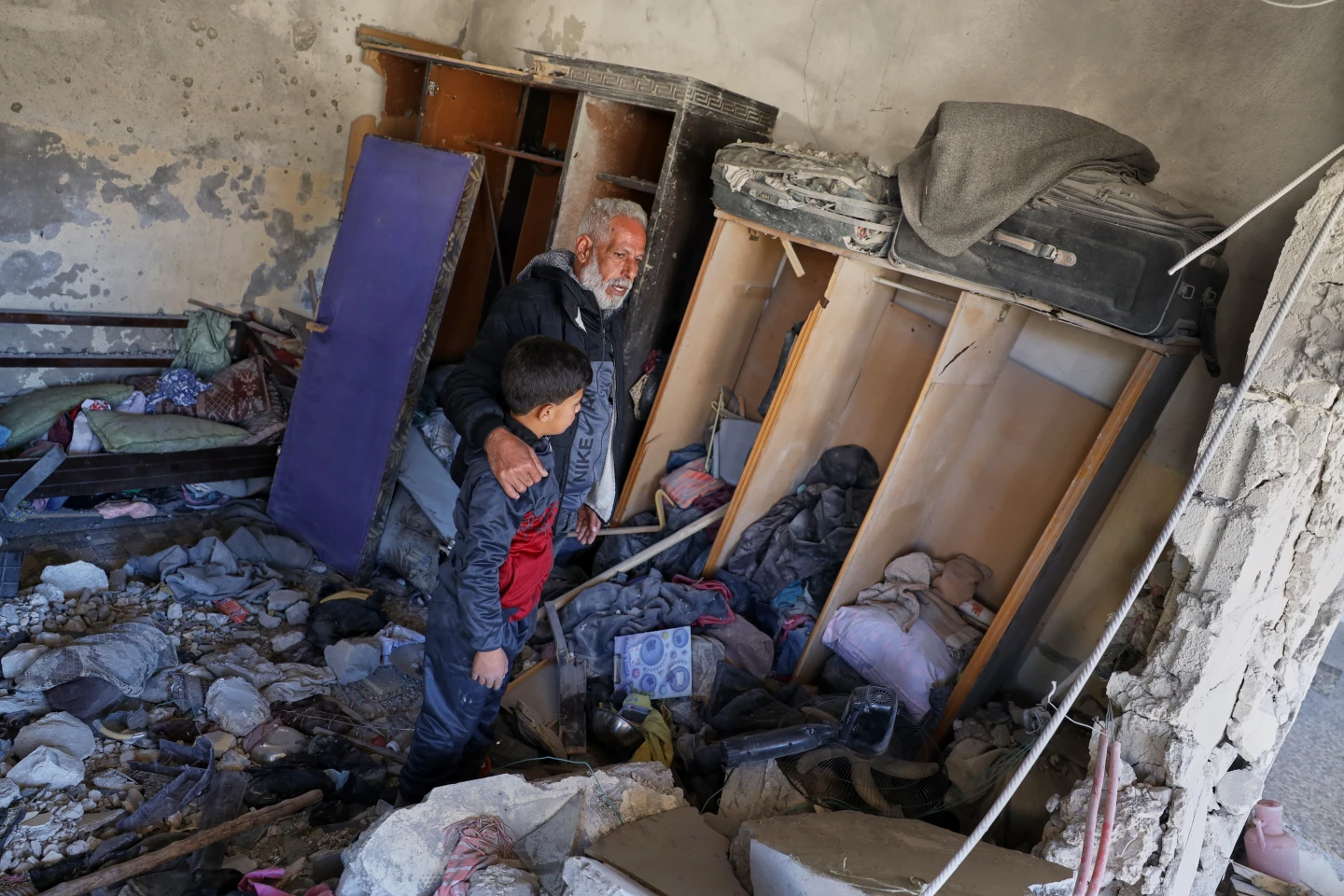
Qassim Hamadeh woke to the sounds of gunfire and explosions in his village of Beit Jin in southwestern Syria last month. Within hours, he had lost two sons, a daughter-in-law and his 4-year-old and 10-year-old grandsons. The five were among 13 villagers killed that day by Israeli forces.
Israeli troops had raided the village — not for the first time — seeking to capture, as they said, members of a militant group planning attacks into Israel. Israel said militants opened fire at the troops, wounding six, and that troops returned fire and brought in air support.
Hamadeh, like others in Beit Jin, dismissed Israel’s claims of militants operating in the village. The residents said armed villagers confronted Israeli soldiers they saw as invaders, only to be met with Israeli tank and artillery fire, followed by a drone strike. The government in Damascus called it a “massacre.”
The raid and similar recent Israeli actions inside Syria have increased tensions, frustrated locals and also scuttled chances — despite U.S. pressure — of any imminent thaw in relations between the two neighbors.
Israeli forces quickly moved to impose a new reality on the ground. They mobilized into the U.N.-mandated buffer zone in southern Syria next to the Golan Heights, which Israel captured from Syria during the 1967 Mideast war and later annexed — a move not recognized by most of the international community.
Israeli forces erected checkpoints and military installations, including on a hilltop that overlooks wide swaths of Syria. They set up landing pads on strategic Mt. Hermon nearby. Israeli reconnaissance drones frequently fly over surrounding Syrian towns, with residents often sighting Israeli tanks and Humvee vehicles patrolling those areas.

