


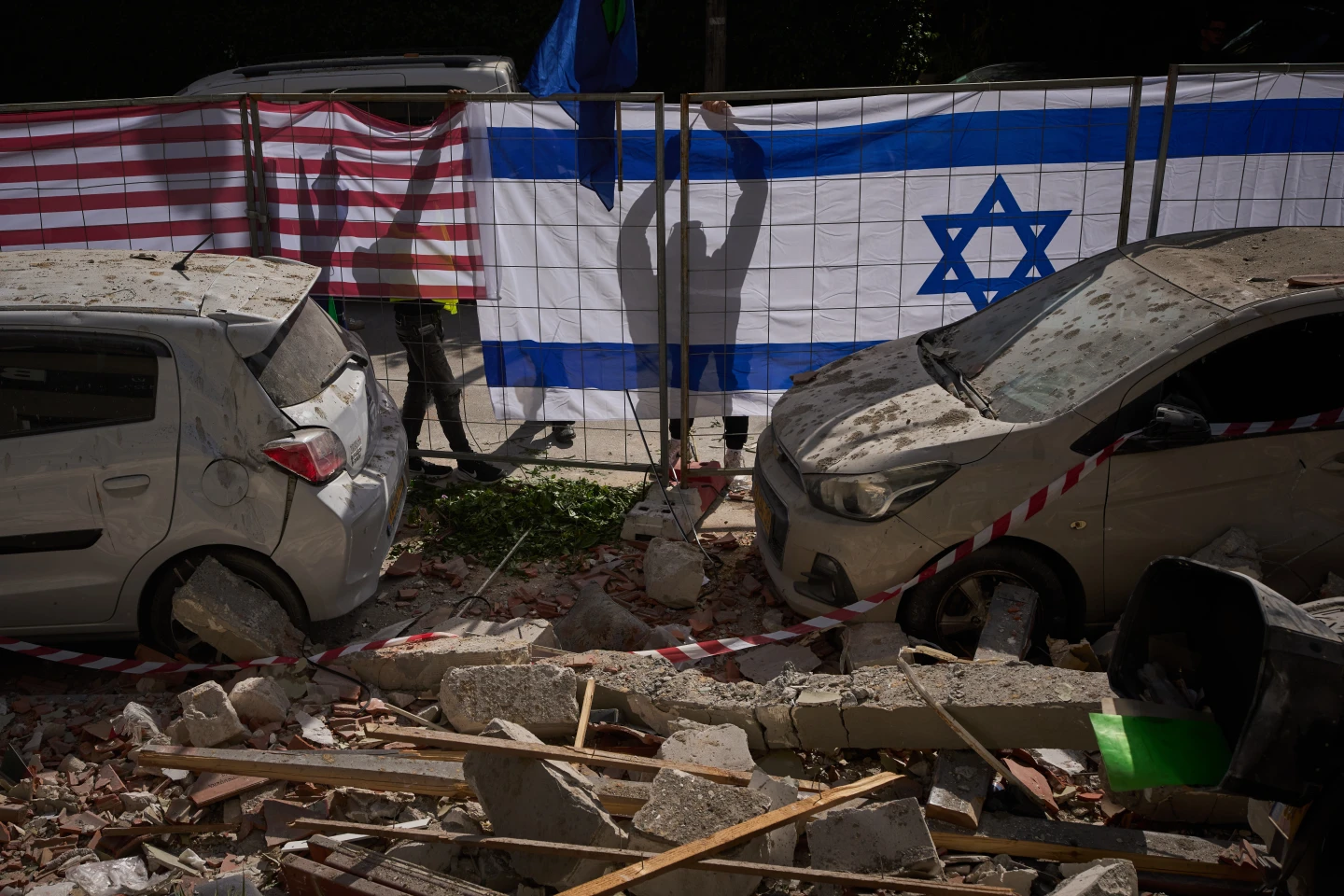
Israel said Wednesday it killed another top Iranian official, the third in two days, while Iran lashed out with attacks on its Persian Gulf neighbours and Israel, using some of its latest missiles to evade air defenses and killing two people near Tel Aviv as the war in the Middle East showed no signs of slowing.
Israeli Defense Minister Israel Katz said Iranian Intelligence Minister Esmail Khatib had been killed in an overnight strike and promised that “significant surprises are expected throughout this day on all fronts,” without elaborating.
Iran did not immediately confirm Khatib’s death. Israel killed top Iranian security official Ali Larijani and the head of the paramilitary Revolutionary Guard’s Basij force on Tuesday.
In Lebanon, Israel kept up its intense pressure with strikes it said targeted Iran-backed Hezbollah, hitting multiple apartment buildings in Beirut and killing at least a dozen people.
In Iran, the Bushehr nuclear power plant complex was hit by a projectile the night before but there were no injuries and the plant suffered no damage, the International Atomic Energy Agency said after receiving a report from Tehran. The IAEA chief Rafael Grossi reiterated his call “for maximum restraint during the conflict to prevent risk of a nuclear accident.”
Since the United States and Israel attacked Iran to start the war on February 28, Iran has been targeting the energy infrastructure of its Gulf Arab neighbours, as well as military bases, as part of a strategy to drive up oil prices and put pressure on Washington to back down.
On Wednesday, Iranian state-run media also reported an attack on facilities associated with its offshore South Pars natural gas field. It didn’t elaborate and it wasn’t clear if Israel or the United States had carried out the attack, though the US has been operating primarily in southern Iran.
Tehran also is keeping up its stranglehold on the Strait of Hormuz, the shipping lane through which a fifth of the world’s oil transits, giving rise to growing concerns of a global energy crisis.
The price of Brent crude oil, the international standard, remained stubbornly over $100 per barrel in early trading Wednesday, up more than 40% from the start of the war.

