


TEL AVIV/DUBAI/WASHINGTON (Reuters) – Israel and Iran launched fresh attacks on each other on Friday, a day after Tehran struck an Israeli oil refinery and after US President Donald Trump warned Israel against further attacks on an Iranian offshore gas field shared with Qatar.
Israel struck Tehran, targeting the “infrastructure of the Iranian terror regime”, the military said in a brief statement that did not provide details. Iran fired a barrage of missiles at Israel, the Israeli military said, triggering air raid sirens in Tel Aviv as explosions from air defence interceptors echoed across the city.
The war on Iran has killed thousands, mostly in Iran and Lebanon, spilled across the Middle East, and hit the global economy since the US and Israel launched their joint attack on February 28.
The United Arab Emirates also reported a “missile threat” early on Friday, as Muslims began celebrating the Eid al-Fitr holiday, marking the end of the holy month of Ramadan. Kuwait said an oil refinery in the Gulf state was hit by a drone attack.
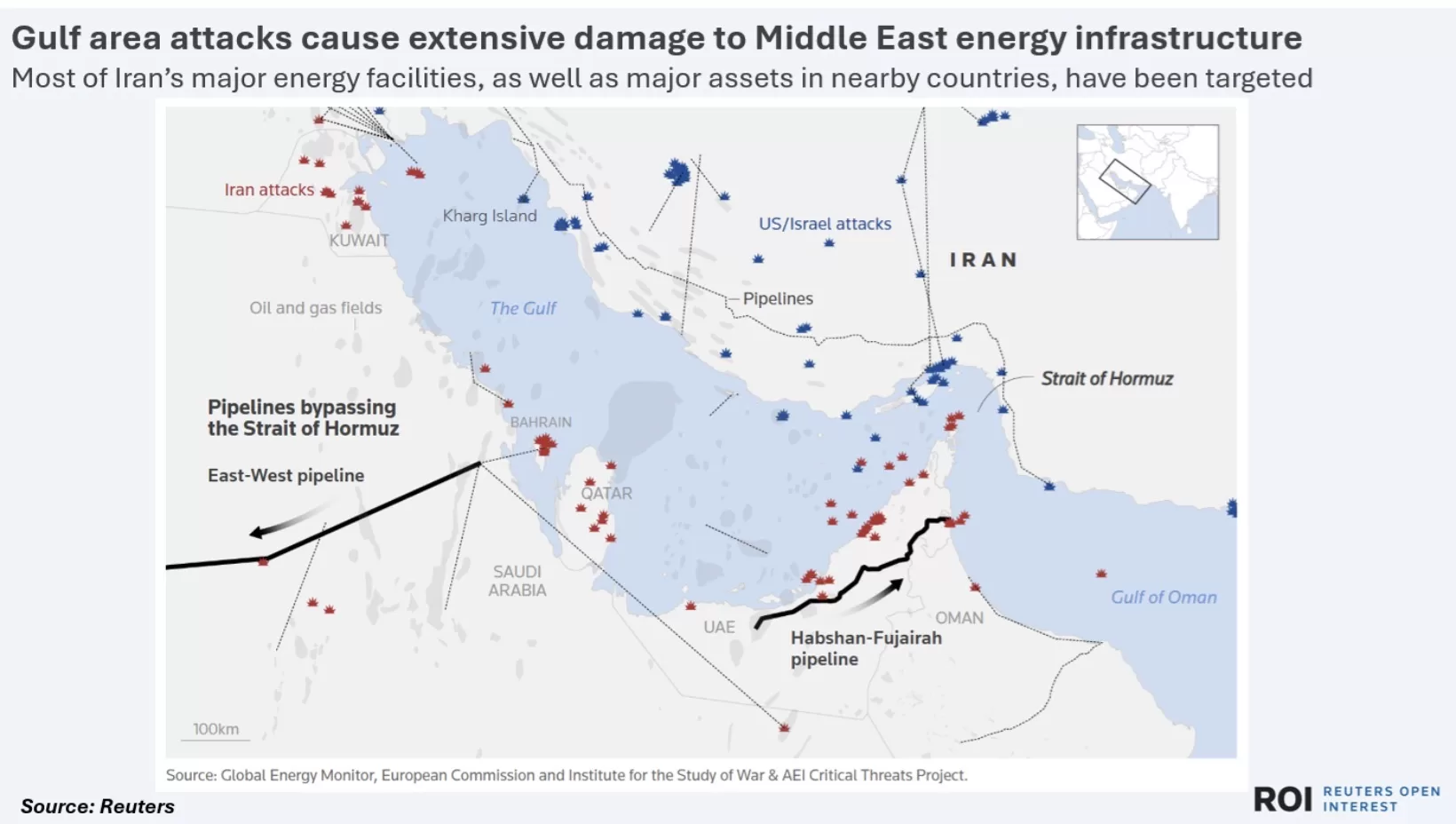
The latest attacks follow days of Iranian strikes on regional energy infrastructure that has roiled global markets.
Energy prices jumped on Thursday after Iran responded to an Israeli attack on a major gas field by hitting Qatar’s Ras Laffan Industrial City, which processes around a fifth of the world’s liquefied natural gas, causing damage that will take years to repair.
Saudi Arabia’s main port on the Red Sea, where it has been able to divert some exports to avoid Iran’s closure of the Gulf’s exit point, the Strait of Hormuz, was also attacked on Thursday.
Oil prices fell on Friday as Western nations and Japan offered to help secure safe passage for ships through the strait – normally the conduit for a fifth of the world’s oil supplies – and the US outlined moves to boost oil output.
The strikes on regional energy facilities underscored Iran’s continued ability to exact a heavy price for the US-Israeli campaign, and the limits of air defences in protecting the Gulf’s most valuable and strategic energy assets.
Trump, politically vulnerable to rising fuel prices among his core voters ahead of November’s midterm elections, has lashed out at allies who have responded cautiously to his demands that they help secure the strait.
He said Israeli Prime Minister Benjamin Netanyahu would not repeat the attack on energy infrastructure. “I told him, ‘Don’t do that’, and he won’t do that,” Trump told reporters in the Oval Office on Thursday.
Netanyahu later said Israel had acted alone in bombing Iran’s South Pars gas field.
Iran is being “decimated” and no longer had the capacity to enrich uranium or make ballistic missiles, but a revolution in the country would require a “ground component”, he said, without elaborating.

