





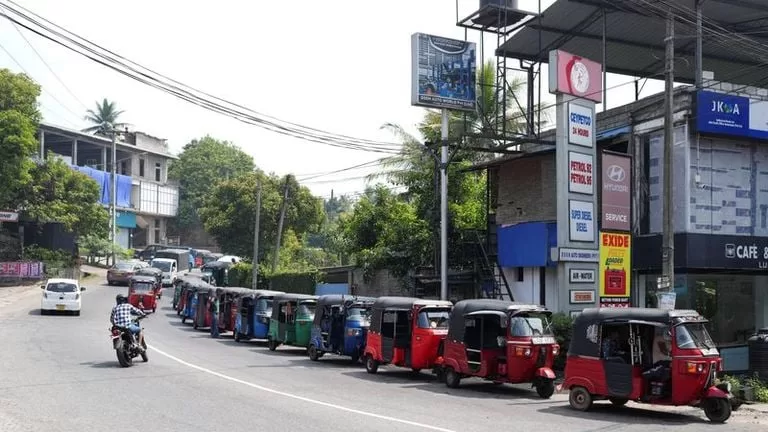
Kelum Dissanayaka, a 37-year-old Sri Lankan ride-hailing and delivery app driver, starts work as at 4am.
But the country’s spiralling costs and fuel rationing mean he has skipped his tuk-tuk’s leasing payment two months running.
“My spouse is a housewife, and I have three school going children and now it’s very difficult to live.”
Along with countries like Egypt and Pakistan, Sri Lanka is in a group of import-reliant, lower-income countries…Analysts fear they face ripple effects from the US-Israeli war with Iran, which has caused oil prices to rise and hit trade.
Despite this week’s fragile ceasefire, Colombo has just reintroduced some fuel subsidies.
And negotiated a temporary easing of the terms of its International Monetary Fund bailout.
Next week in Washington at the IMF and World Bank’s Spring Meetings, there are likely to be other countries trying to do the same.
The Fund’s chief said on Thursday it is ready to listen…and expects to have to provide between $20 billion to $50 billion of emergency support.
Former Pakistan central bank governor Reza Baqir, who now advises governments in debt distress, says the conflict has hit vulnerable countries from almost every angle.
“The call to action here really in my view is for institutions like the International Monetary Fund to deploy their war chest of liquidity, to provide financial support to countries like these, that are the bystanders of this conflict and have a good track record of their macroeconomic policies.”
The 40% surge in oil prices means import bills are soaring just as remittance and tourism inflows come under pressure.
As current account deficits widen, currencies come under strain – Egypt’s pound has plunged over 10% since the war.
Dollar-denominated oil and debt payments become even more costly.

