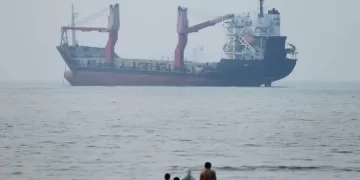




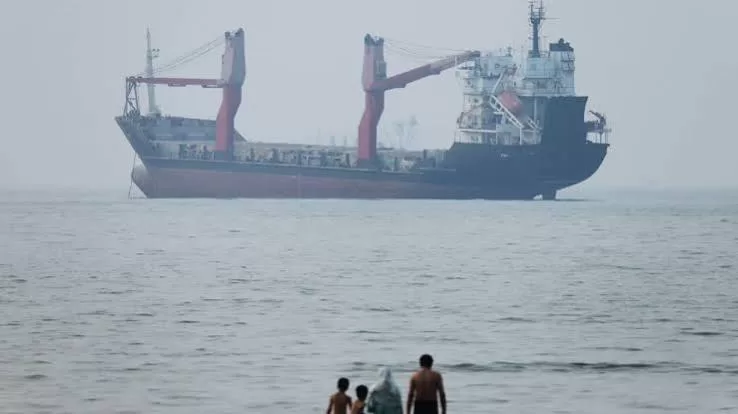
Iran targeted American military sites in the Gulf on Wednesday after the US launched strikes on several places in Iran and reinstated sanctions on its oil sales. Washington said it was responding to Iranian attacks on ships in the Strait of Hormuz.
The crossfire raised fears that the war in Iran could reignite, and US President Donald Trump fueled those concerns by saying that the interim agreement to pause fighting was “over,” although he added that he would allow negotiations to continue.
Attacks have repeatedly threatened the shaky ceasefire, but Trump’s comments add new uncertainty, and oil prices shot up after he spoke. A renewed conflict could engulf the wider Middle East and would likely again halt energy shipments through the strait that are crucial to the global economy.
“For me, I think it’s over,” Trump responded when asked about the status of the ceasefire. He added that US representatives can continue negotiations, but he cast doubt on the outcome. “They can talk, but I think they’re wasting their time,” he said.
Negotiations to reach a final deal had been due to start after the dayslong funeral for Iran’s Supreme Leader Ayatollah Ali Khamenei, who was killed Feb. 28 in the war’s first moments. The funeral, which ends Thursday, was supposed to be a period of lower tensions.
The talks are meant to focus on the toughest matters, including fully reopening the strait and rolling back Tehran’s disputed nuclear program.
“The era of bullying and extortion is over,” Iran’s Parliament Speaker Mohammad Bagher Qalibaf wrote on X. “It leads nowhere. We don’t fold.”
The US military’s Central Command said American forces launched strikes “to impose heavy costs for targeting and attacking commercial shipping crewed by innocent civilians in an international waterway.”
It said it hit Iranian targets including air defense systems, radars and over 60 small boats used by Iran’s paramilitary Revolutionary Guard.
Those boats have been key to threatening ships in the strait, through which a fifth of the world’s traded oil and natural gas passed before the war. Iran’s ability to bring shipping in the waterway to a near halt during the war proved its greatest strategic advantage as rising prices for energy supplies, fertilizer and food put pressure on the US to make a deal. On Wednesday, the price of Brent crude, the international standard, spiked over 6% after Trump’s comments.
The US military remains “prepared to hold Iran accountable when the agreement is not adhered to or obeyed,” it added, saying this round of attacks had ended.

