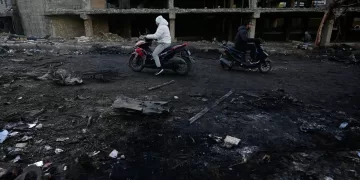






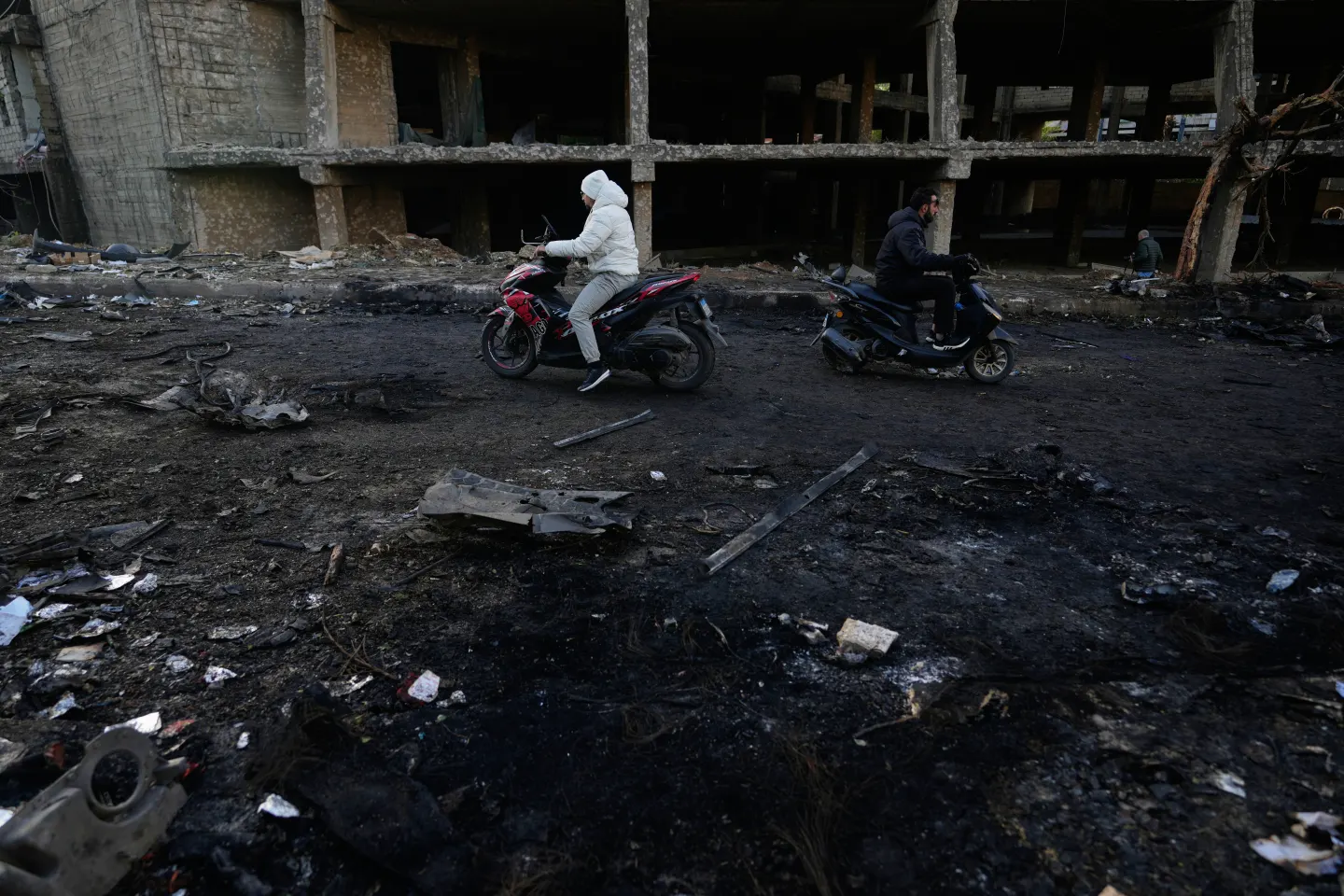
Iran hit a tanker off the coast of Qatar and Kuwait International Airport early Wednesday as Tehran remained unrelenting in its attacks on its Gulf Arab neighbours, while acknowledging for the first time that Washington had been in direct contact about a possible ceasefire.
Israel sounded warnings of incoming fire from both Yemen and Iran, while launching its own attacks in Lebanon that killed at least five people.
An airstrike on Tehran appeared to have hit the former US Embassy compound, which has been controlled by Iran’s Revolutionary Guard since the 1979 hostage crisis.
Witnesses said buildings outside the massive compound had their windows blown out and that it appears the strike happened inside the walled facility.
With no sign of the war abating and more than 3,000 lives already lost, US President Donald Trump suggested it could be over within two weeks even as he moved to bring thousands more troops to the region.
Trump has been under growing pressure to end the war as Iran’s grip on shipping through the Strait of Hormuz and its attacks on regional energy infrastructure have sent gas prices skyrocketing to their highest level since 2022 and caused broad stock market fluctuations.
Iran throttled ship traffic through the strait, which leads from the Persian Gulf to the open ocean, after it was attacked by the US and Israel on February 28. In peacetime, a fifth of the world’s oil transits the strait and the spot price of Brent crude, the international standard, is up more than 40% since the start of the war, trading at more than $104 a barrel.
The US has presented Iran with a 15-point plan aimed at bringing about a ceasefire, which includes a demand for the strait to be reopened. Iran’s own five-point response includes it retaining sovereignty over the waterway, and Trump on Tuesday suggested that the war could be brought to an end even with Iran still controlling the strait.
The US “will not have anything to do with” what happens in the Strait of Hormuz, instead telling reporters that the responsibility for keeping the vital waterway open would belong with countries that rely on it.
“That’s not for us. That’ll be for France. That’ll be for whoever’s using the strait,” Trump said.
It was not clear why Trump brought up France, since Europe receives very little oil shipped through the strait, with most going to Asian countries. The president plans a prime-time address on Wednesday.

