







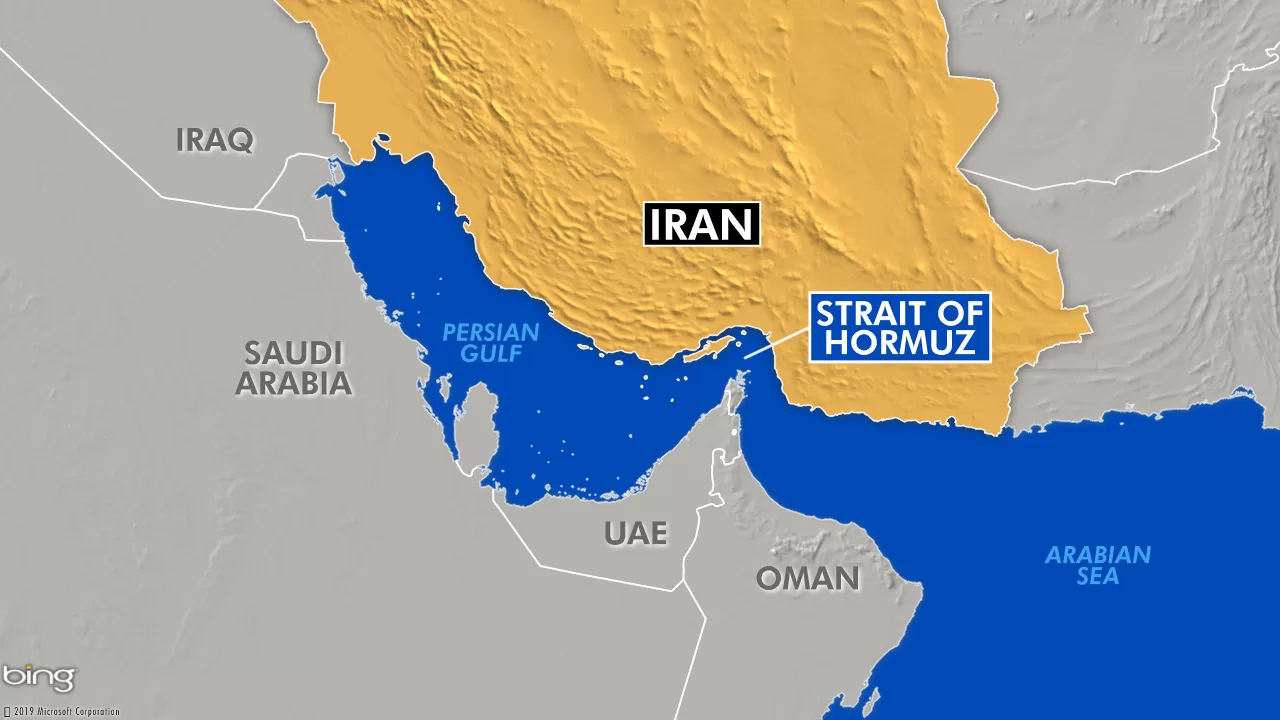
In response to the US and Israeli strikes, Iran has closed the Strait of Hormuz, the Iranian Navy announced on Saturday, effectively prohibiting all vessels from entering or passing through the area.
The strait is a vital artery for global energy supplies, and analysts caution that a complete shutdown could drive oil prices to as high as $250 per barrel, a dramatic jump from the current range of about $80, according to The Caspian Post citing Russian sources.
Situated in the Indian Ocean, the Strait of Hormuz links the Persian and Oman Gulfs with the Arabian Sea, with Iran bordering one side and Oman the other.
Recognised as one of the most essential shipping corridors on the planet, the strait serves as the primary route for tankers transporting crude oil from Iraq, the UAE, Saudi Arabia, Kuwait, Bahrain, and Qatar.
Approximately 15–20% of the world’s oil, condensates, and petroleum products—and more than 30% of global liquefied natural gas—move through this narrow channel.
Roughly 82% of the oil that passes through the strait heads to Asian markets, while the remainder is shipped to Europe. About 24% of China’s LNG imports also rely on this route. With 200 to 300 ships transiting daily—and sometimes every six minutes at peak times—the strait ranks among the busiest maritime passages worldwide.
Iranian analysts warn that a closure would significantly reduce global oil supply, likely sending prices sharply higher. Because oil underpins much of the global economy, such a surge could disrupt supply chains across multiple sectors.

