








While Washington, Moscow and Beijing are locked in a high-stakes race to dominate the stars, a silent, “primitive” threat is lurking just beneath the waves. In an era of hypersonic missiles and space-based interceptors, the world’s most powerful navies are facing a humbling truth is a simple piece of rusted metal can still bring a superpower to a standstill.
The global arms race is accelerating. Military spending has surged past $2.4 trillion, marking a historic high, according to international defence research estimates such as those from the Stockholm International Peace Research Institute (SIPRI).
Major powers—including the United States, Russia, and China—are no longer competing in a single domain. Instead, they are building multi-domain deterrence, combining air, sea, land, and space. The goal is simple :”Stop the enemy before the first strike.”
Controlling sky, Beyond
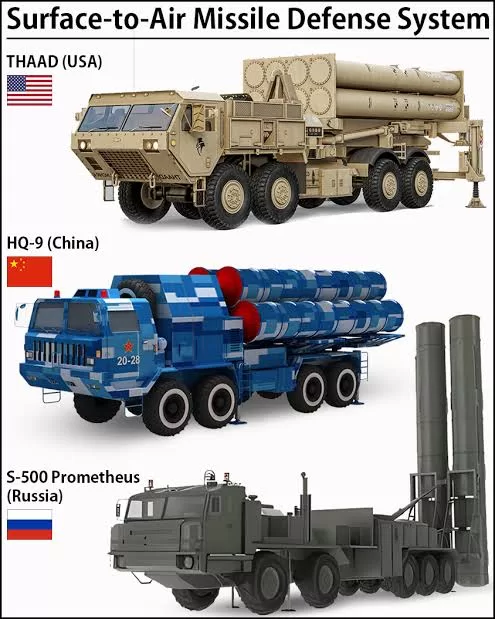
At the centre of Russia’s strategy is the S-500 Prometheus, one of the most advanced air and missile defence systems currently deployed.
According to the CSIS Missile Defense Project, the system has a range of up to 600 kilometres, while its interceptors can reach speeds of Mach 25.
It is capable of engaging targets at altitudes of up to 200 kilometres, extending into near space, and is designed to intercept ballistic missiles, hypersonic weapons, stealth aircraft, and low-orbit satellites.
The system entered service in 2021, with estimated unit costs of around $2.5 billion according to Russian defence disclosures.
It marks a significant shift towards integrated aerospace defence, as the system is not just about shooting down aircraft, but about denying the enemy access to the skies—and even space.

Dominating seas
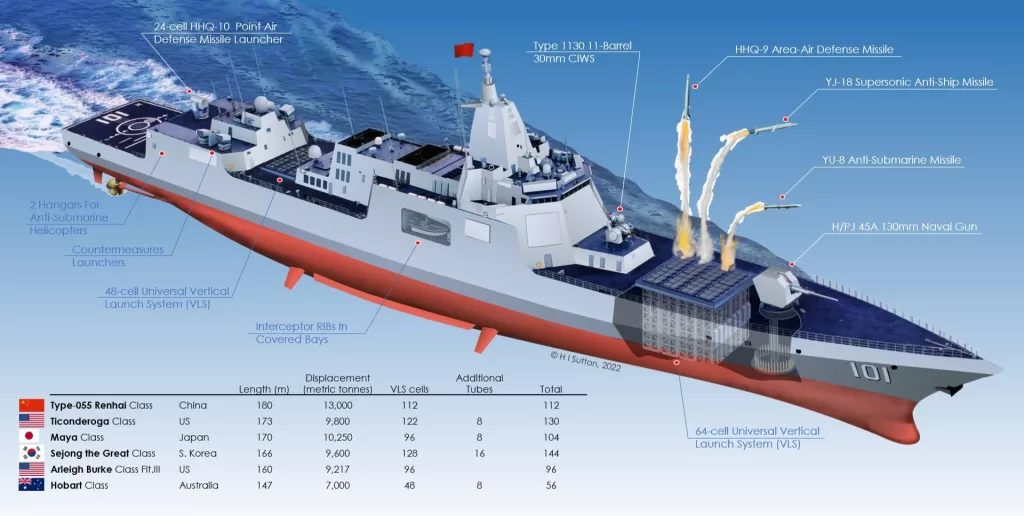
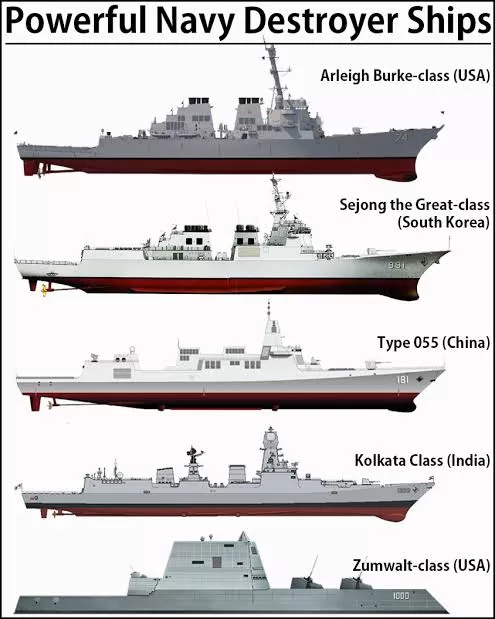
China, meanwhile, is expanding its naval reach with platforms like the Type 055 destroyer.
According to Naval News, the warship displaces between 12,000 and 13,000 tonnes and measures around 180 metres in length, while carrying 112 vertical launch system (VLS) cells and having been in service since 2020.
The vessel is equipped with a wide range of weapons, including long-range air defence missiles, anti-ship cruise missiles, and land-attack cruise missiles such as CJ-10, as well as advanced systems believed to include hypersonic capabilities like YJ-21.
It escorts aircraft carriers, protects fleets, and extends China’s reach far beyond its shores. It is a cornerstone of Beijing’s power projection strategy.
Mine threat
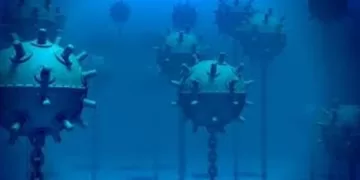
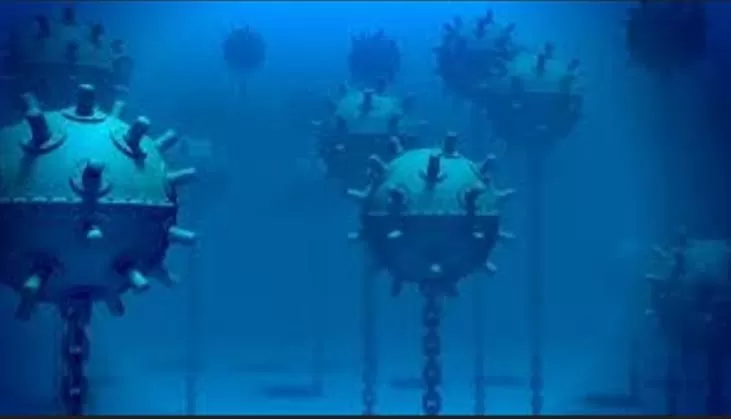
Yet, amid this high-tech competition, a far simpler weapon continues to shape strategic calculations like Naval mines.
According to the Stimson Center and the Foreign Policy Research Institute (FPRI), Iran possesses between 2,000 and 6,000 naval mines, which can be deployed rapidly using small boats.
The stakes are global. Roughly 20 million barrels of oil pass daily through the Strait of Hormuz, accounting for about 20 per cent of global consumption data from the US Energy Information Administration.
Even a limited mining operation could halt maritime traffic, drive up insurance costs, and disrupt global energy markets. A single mine may cost only thousands of dollars, but its impact can reach billions.
Why mines still matter
There are three key reasons why naval mines remain a persistent strategic threat.
First, they are difficult to remove; destroying the vessel that deployed them does not eliminate the mines themselves reports by FPRI, and clearance operations can take days or even weeks (Stimson Center).
Second, they create what is described as “denial zones”, where, when combined with drones, fast attack boats, and coastal missile systems, mines can turn narrow waterways into highly dangerous operational environments.
Third, they are technologically adaptable, as modern mines can be triggered by magnetic signatures, acoustic signals, or changes in water pressure, with some even buried in seabeds, making detection extremely challenging.
Can technology solve the problem?
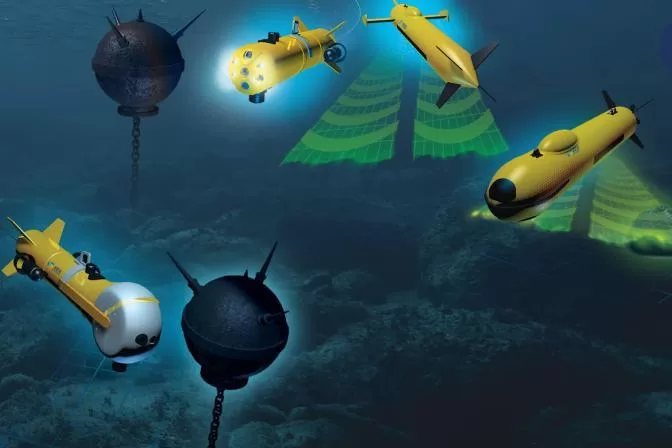
The United States and its allies are investing in a range of countermeasures, reports by Defense News, including unmanned underwater vehicles (UUVs) for detection and disposal, AI-powered sonar analysis, mine-clearing helicopters, and specialised ships such as Littoral Combat Ships (LCS).
However, the results remain mixed. While these systems help reduce risk, they do not eliminate it, and mine clearance operations continue to be slow, costly, and inherently dangerous.
New deterrence equation
The emerging global model of deterrence is increasingly layered and multi-domain in nature.
Russia’s S-500 Prometheus is designed to protect the skies and near space by intercepting advanced aerial and space-based threats.
China’s Type 055 destroyer extends power projection across oceans, securing carrier groups and enabling long-range maritime operations.
At the same time, naval mines add an asymmetric dimension by disrupting movement and imposing disproportionate strategic costs on even the most advanced naval forces.
Together, these elements form a complex system of multi-domain deterrence that blends high-end military technology with low-cost but high-impact disruptive tools.
Military power is no longer defined solely by the most advanced system. It is defined by balance.
High-end technology provides precision, speed, and extended reach, while low-cost weapons generate uncertainty, disruption, and strategic delay.
In today’s conflicts, both dimensions matter equally, as modern warfare increasingly blends sophistication with simplicity.
In an age of hypersonic missiles and space-based defence systems, a simple naval mine can still disrupt the operations of a superpower by threatening critical maritime routes.
Deterrence is not always about the most expensive weapon, but about the one that creates the greatest uncertainty in the mind of the adversary in pursuit of victory.

