


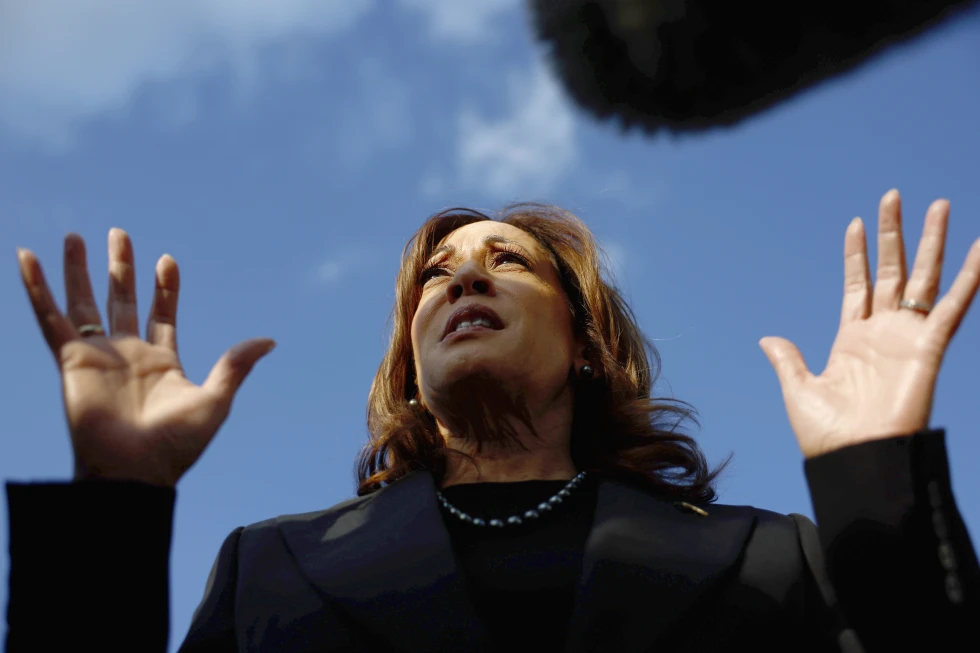
NEW YORK — When Vice President Kamala Harris sat down for an interview with podcaster Alex Cooper, the conversation didn’t start by parsing policy positions. The goal, Cooper told the Democratic nominee, was “to get to know you as a person.”
And that was just fine with Harris, who said she was on the popular “Call Her Daddy” podcast because “one of the best ways to communicate with people is to be real.”
Long past the midway point of her unexpected presidential campaign and with voting already underway, Harris is still introducing herself to Americans who will determine her fate in this year’s presidential election, AP reported.
On Tuesday, her media blitz will take her to studios across Manhattan as the Democratic nominee tries to reach as many people as possible in the shortest period of time. It’s a sharp shift after largely avoiding interviews since replacing President Joe Biden at the top of the ticket, and it’s an implicit acknowledgment that she needs to do more to edge out Republican candidate Donald Trump.
Harris will sit for a conversation with the women of ABC’s “The View,” speak with longtime radio host Howard Stern and tape a show with late-night comedian Stephen Colbert. The trio of appearances comes after Harris granted interviews to CBS’ “60 Minutes,” which aired Monday night, and Cooper’s podcast, which was released Sunday.
“Call Her Daddy” is often raunchy, with frank talk about sex, but Harris and Cooper began by talking about their mothers.
Harris said her mother’s first instinct was never to comfort her eldest daughter when she ran into problems. Instead, she asked, “What did you do?”
Although that might sound cold, the vice president said, “she was actually teaching me, think about where you had agency in that moment, and think about what you had the choice to do or not do. Don’t let things just happen to you.”
It’s interactions like those that Harris’ team is prioritizing for the vice president in the final four weeks before Election Day. She has yet to give an interview to a newspaper or magazine, but her staff is pondering additional podcasts where they believe Harris can reach voters who aren’t following traditional news sources.
Anna Greenberg, a Democratic pollster, said Harris has to energize people who have tuned out politics because they believe “all the politicians are the same, they all say the same thing, they don’t know anything about my life, I can’t relate to them at all.”
“They want to like and trust you,” she said.
Jennifer Harris, the former White House senior director of international economics, said Harris has a steeper hill to climb because of the way she became the Democratic nominee.
“We did not have a good long primary to meet Kamala Harris in the way most voters are accustomed to,” she said. Harris has to find a way to demonstrate the instincts and principles that ”will be guiding any number of hundreds of specific policy questions that will come up in the course of the presidency.”
While Harris has unveiled some policy proposals during her two and half months at the top of the ticket — such as increasing the child income tax credit and taking a range of actions to help lower the cost of housing — she’s given prime billing to speeches about her “economic philosophy,” like one she delivered in Pittsburgh two weeks ago.


Discussion about this post