



Leaders of the BRICS nations will meet in New Delhi this weekend as wars in Ukraine and the Middle East and US-China tensions test the group’s ability to act together.
Host India will seek to balance its ties with China and Russia against its growing partnerships with the United States and other Western powers.
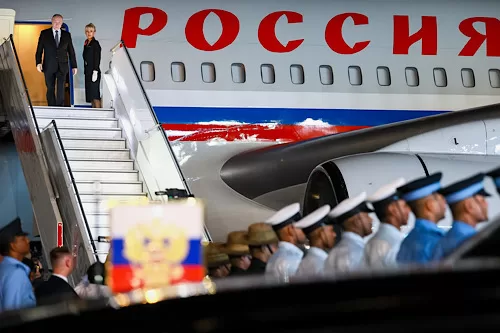
Russian President Vladimir Putin, Chinese President Xi Jinping and Iranian President Masoud Pezeshkian are among the leaders expected to attend.
BRICS is a grouping of major emerging markets and developing countries, named after an acronym for Brazil, Russia, India, China and South Africa.
It has expanded from its original membership to include 11 countries that together represent about half the world’s population and a large share of its energy, resources and economic output.
Experts say its growing size has also exposed divisions as its members want greater influence in the global order but often have competing political, economic and foreign-policy interests.
The conflicts in Iran and Ukraine are likely to highlight those divisions. Iran is a member of the expanded BRICS, while Russia remains one of its most influential members. China has close ties with both countries, while India maintains relations with Russia, Iran, the United States and Europe.
That diversity makes it difficult for BRICS to take a strong common position on major conflicts. The grouping includes countries with competing regional ambitions, including India and China, Iran and Saudi Arabia, and Egypt and Ethiopia, as well as other nations from the Global South.
“The Global South is not a homogeneous entity,” said Praveen Donthi, senior analyst with the International Crisis Group. “Hence, the grouping will find it hard to manage and mediate in these conflicts.”
Russia’s war in Ukraine has already exposed the limits of India’s ability to balance competing interests. New Delhi has maintained close ties with Moscow, including through energy and defense pacts, while also deepening its strategic relationship with Washington.
The South Asian nation has consistently called for dialogue and diplomacy rather than taking sides.
The Iran-US conflict poses a similar challenge. BRICS members have differing ties with Washington and interests in the Middle East, making a unified response difficult.
China and Russia have backed Iran in international forums, while India has taken a cautious approach. Saudi Arabia and the UAE have their own tensions with Tehran.
Reducing dependence on the US dollar is a major issue for BRICS. Members have discussed increasing trade in their own currencies and creating payment systems that would reduce their reliance on Western financial institutions.
The idea has gained momentum as countries such as Russia face sweeping Western sanctions. But replacing the dollar will be difficult, as it is deeply embedded in global trade and finance, while BRICS members have different currencies, financial systems and economic priorities.
Mahesh Sachdev, a retired Indian diplomat, said the goal should not be a direct confrontation with the dollar. Instead, he said, countries want to reduce their exposure to the current financial system that can be used for political pressure.
“It’s a challenge, but we’re not talking about frontal confrontations. It’s not a binary situation,” he said.

