




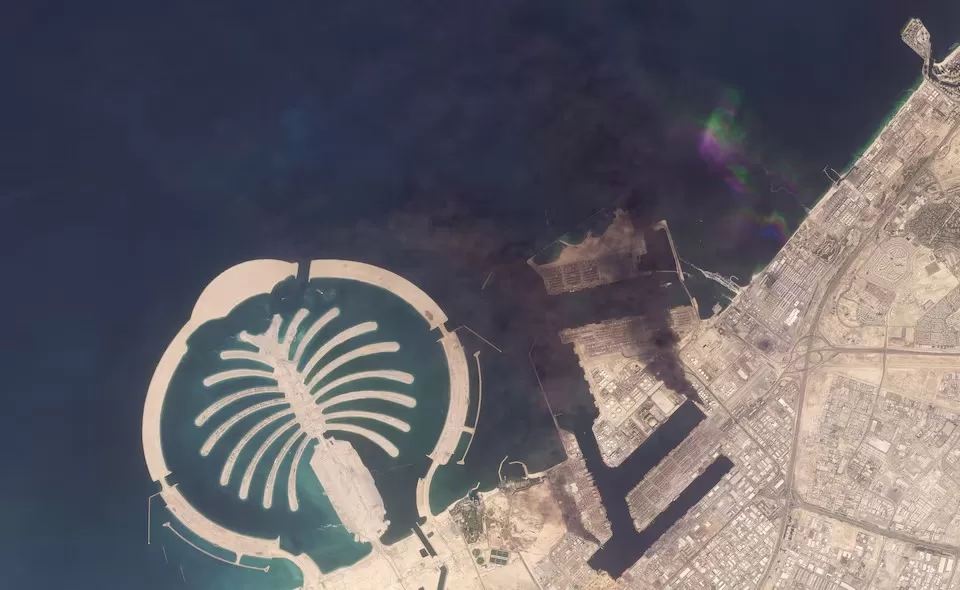
DUBAI (Reuters) – Iranian airstrikes on Gulf states could push them into a broad coalition aligned with the United States and widen the war against Iran, Middle East analysts said, after attacks on ports, cities and oil facilities in a vital energy-producing region.
By striking at the Gulf’s economic lifelines in its response to U.S. and Israeli airstrikes on Iran, Tehran may be driving wary Gulf states closer to Washington and towards coordinated action against the Islamic Republic, the analysts said.
The aim of the strikes against six Gulf states, all of which are U.S. allies and host American military bases, was to ensure those countries put pressure on U.S. President Donald Trump to halt the war, but Iran appears to have miscalculated, they said.
“The Gulf states now face stark choices: to join the United States more openly in its war effort – allowing their skies and territory to be used and potentially participating in military operations – or risk further escalation on their own soil,” Abdulaziz Sager, Chairman of the Saudi-based Gulf Research Center think tank told Reuters.
The option of neutrality receded when Iranian missiles started landing and “forced us to be their enemies,” pushing states that once hedged their position into open alignment with Washington and a readiness to defend their territory and interests, he said.
Iran unleashed its missile barrages after Supreme Leader Ali Khamenei was killed on Saturday, the first day of U.S. and Israeli military strikes that Trump said were intended to prevent a security threat to the U.S. and stop Iran developing nuclear arms.
The Gulf Cooperation Council (GCC) – Saudi Arabia, the UAE, Qatar, Bahrain, Kuwait, and Oman – held an emergency ministerial meeting on Sunday, invoking Article 51 of the U.N. Charter, setting “red lines” and signalling readiness for collective self-defence as energy disruptions and security risks mount.
The GCC message to Tehran was unequivocal – that Iran’s attacks had served to strengthen unity among the Gulf states.
It said continued strikes would risk transforming the Gulf from a defensive shield into an “active theatre of response”, and the Gulf states have activated joint air-defence systems and reconnaissance flights across regional airspace.
The choice is stark: respond and risk a wider war, or hold back and accept the erosion of security, economic stability and international credibility under repeated attacks, analysts say.
Gulf officials say messages have been conveyed to Tehran, directly and indirectly, warning that further attacks would carry far greater consequences for the Islamic Republic.
“Practically, they’re going to try and wait as much as possible. The Americans are hitting them and the Israelis are hitting them,” said one Gulf insider.
He said it was unclear who was directing events in Iran – whether strikes on oil facilities were centrally ordered or carried out by rogue units. Two scenarios appeared to be emerging: either command has fractured, with units acting autonomously, or decisions are still being coordinated at the top.

